

December 11, 2025
JAKARTA – Human Rights Day which falls today should remind nations of the promises they make to their citizens: dignity, safety and justice. This year, however, Indonesia faces the commemorative day with the uneasy recognition that its human rights foundations are steadily weakening.
Under the current administration, rights are not being dismantled through dramatic repression but through a slow and steady decline, a pattern that is harder to detect but ultimately more corrosive.
The appointment of Natalius Pigai as human rights minister once carried the hope of renewed seriousness. Yet the ministry’s mandate has not expanded, its authority remains narrow and its capacity unchanged.
As a result, Pigai’s presence appears symbolic within a structure that has long been sidelined. Tokenism does not reflect on him as an individual, but is a symptom of a system that treats human rights as a lowly political gesture rather than a governing priority.
When the minister himself dismisses public concerns about creeping militarism or shrinking civic space as products of “imagination”, it reinforces the perception that the portfolio is being used to pacify, not to protect.
This erosion becomes more visible when viewed alongside recent governance choices.
The ease with which graft convicts have been pardoned or the decision to elevate divisive historical figures to national hero status are not isolated actions. They form a pattern of shifting institutional norms, each step subtle enough to appear procedural, yet collectively amounting to a redefinition of accountability.
As with democracy, human rights rarely collapse overnight. They fade in increments, each cut small enough to escape alarm until the whole fabric is frayed.
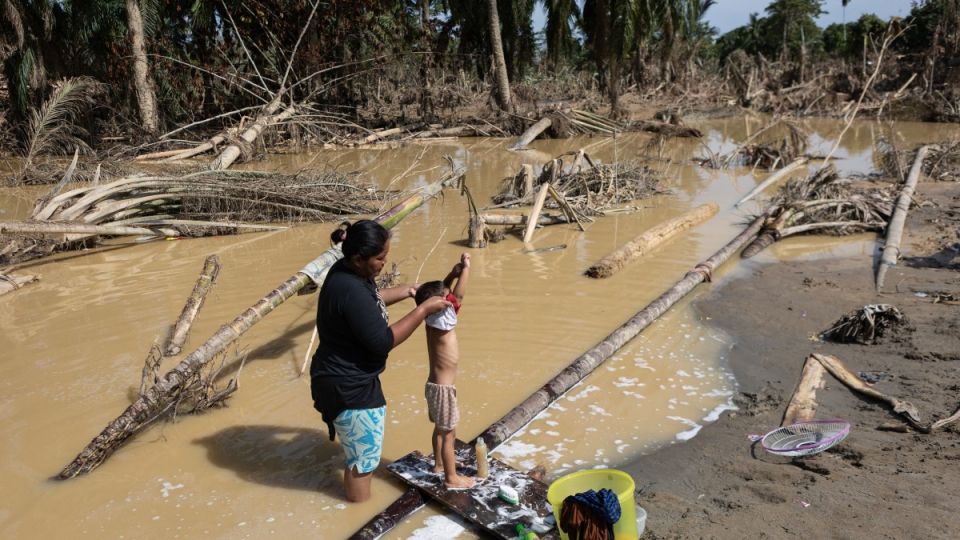
Nothing illustrates this more urgently than the state’s disaster response in Sumatra. Hundreds have died and remain unaccounted for and thousands have been displaced.
In humanitarian terms, the state’s core obligations are clear: ensure safety, deliver immediate assistance, provide accurate information and mobilize all available resources.
Yet many affected communities have reported delayed aid, continued isolation due to damaged infrastructure, shortages of drinking water and overstretched medical facilities. These are not just operational shortcomings, they are failures of the rights to life, health and protection during emergencies.
Context matters. Indonesia has endured devastating disasters before, yet past administrations demonstrated stronger coordination and clearer command structures.
After the 2004 Indian Ocean tsunami that obliterated Aceh, the government swiftly established a national rehabilitation and reconstruction agency and collaborated transparently with international partners.
During the 2018 Palu earthquake and liquefaction, emergency deployments began within days despite collapsed communication networks. Even the widely criticized 2015 forest fires ultimately triggered decisive interagency action and legal follow-through.
These responses were far from perfect, but they reflected a governing instinct: act first, argue later.
Today that instinct appears muted. No senior official has resigned or been held accountable for the rising toll.
The contrast is stark: recently at a state-owned enterprise, an employee can be dismissed over a missing tumbler, yet no political responsibility is called for when hundreds perish in otherwise preventable circumstances.
Accountability has been inverted, directed downward rather than upward.
To be fair, the scale and severity of recent disasters pose immense logistical challenges. But rights-based governance does not demand perfection, it demands urgency, transparency and a clear chain of responsibility.
Without these, the state risks accusations of neglect, a breach of its duty of care under both domestic law and international norms.
Today, this country must confront the difficult truth that rights do not vanish through a single act of repression. They disappear quietly when leaders treat them as negotiable, when institutions shy away from scrutiny and when victims of crisis receive sympathy instead of structural support.
If this trajectory continues, the damage may become irreversible.
Indonesia still has time to course correct. But rights, once placed on borrowed time, rarely return on their own. They must be restored through accountability, stronger institutions and a government willing to put people’s dignity above political convenience.