

July 17, 2026
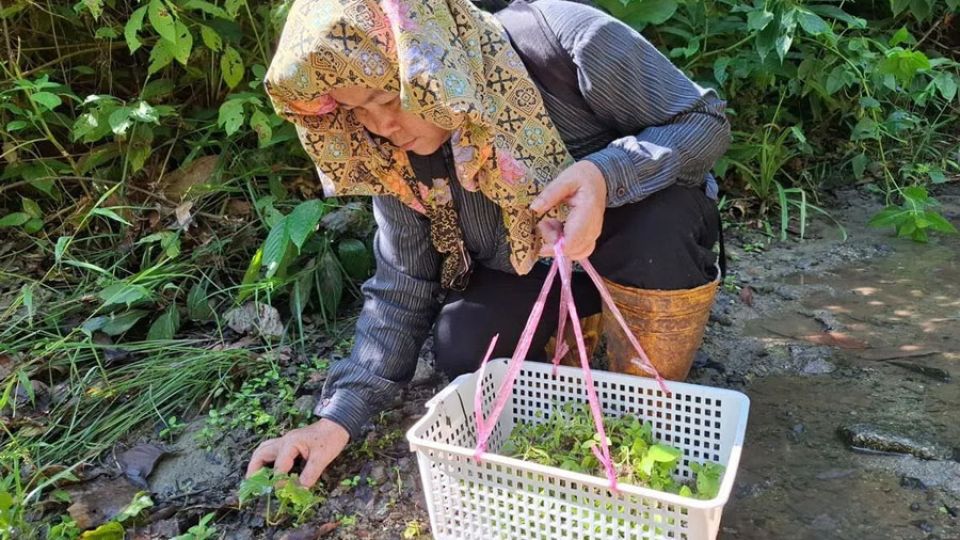
LAHAD DATU – As Taisa Mating, a grandmother of nine, bends down to pick up a seed from the forest ground, she sometimes pauses and whispers to it.
“Please don’t die. I’m going to take care of you,” she would tell the seed. “When you’re big enough, I’m going to give you a big playground where you can grow into the tree you’re meant to be.”
The seeds that Taisa, 67, gathers are destined for Lower Kawag, part of the Ulu Segama-Malua Forest Reserve, where Sabah is restoring one of its most degraded rainforest landscapes. Decades of intensive logging between the 1980s and 2007, together with major El Nino-induced fires, have left large swathes of the forest degraded and vulnerable to recurring fires.
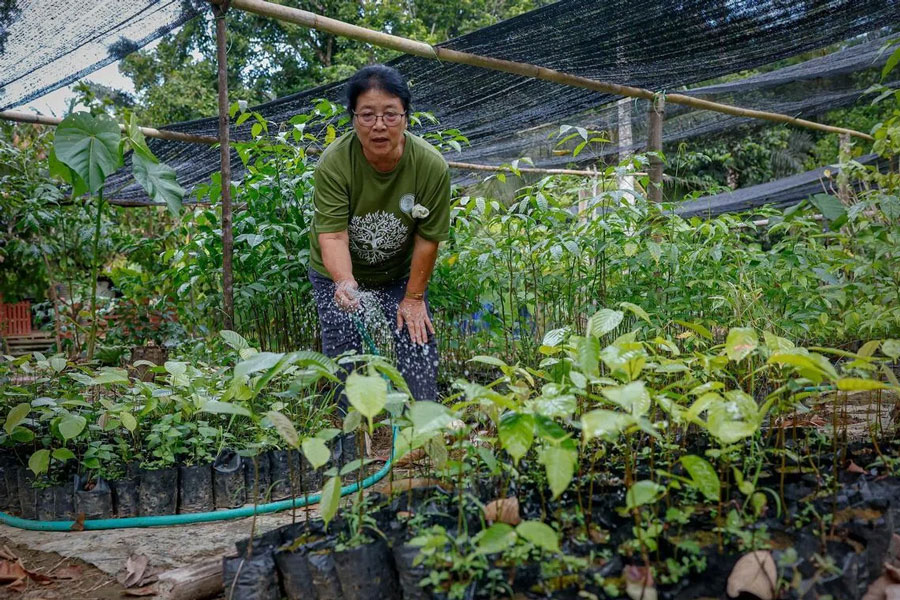
Taisa is one of the women from Kampung Tampenau, a small village on the edge of Sabah’s rainforest, who have been trained to sow the seeds of forest regeneration under a scheme that started in 2021. The seeds collected are sown in backyard nurseries in their villages and eventually grown into young trees to replenish the rainforest.
Whenever their backyard nurseries run low on seedlings, the Kampung Tampenau women head to the forest’s edge carrying plastic pails or any containers they have at hand. Their eyes scan the ground for fallen seeds – hidden beneath leaves and forest debris.
Taisa Mating, 67, a grandmother of nine, is one of the women from Kampung Tampenau, a small village on the edge of Sabah’s rainforest, who have been trained to sow the seeds of forest regeneration under a programme that started in 2021. PHOTO: MALAYSIA PALM OIL GREEN CONSERVATION FOUNDATION/THE STRAITS TIMES
Most of the seeds are collected from forest fringes surrounding the village, where many native species naturally regenerate. On other days, when certain species can no longer be found nearby, the villagers obtain permits to venture deeper into the shaded forest reserve to gather “wildings” – fragile, inch-tall sprouts which can be found growing quietly in the damp, silt-rich earth where the river slows.
Sabah
Sabah, in eastern Malaysia, was home to nearly 1.5 million ha of oil palm plantations in 2025, which is about 20 times the size of Singapore. It is Malaysia’s largest producer of the crop while also ranking among the world’s richest biodiversity areas.
The palm oil industry has long faced international scrutiny over its role in tropical deforestation. However, through the Malaysian Palm Oil Green Conservation Foundation (MPOGCF) – funded by levies collected from the industry – Sabah has brought the sector into initiatives to help the rehabilitation of 2,500ha of degraded forest in collaboration with local communities.
In Kampung Tampenau, the seeds are nurtured in small nurseries beside the villagers’ homes. The community nursery raises native seedlings for the restoration programme, which began replanting degraded areas of Lower Kawag in early 2022.
To the untrained eye, one seedling looks much like another. The women of Tampenau know better.
Long before the nursery programme began, they already understood the forest. The training, conducted jointly by MPOGCF and the Sabah Forestry Department, focused on nursery management and improving the survival of seedlings rather than teaching them how to recognise the trees.
Since the programme began five years ago, the community has produced about 80,000 native saplings.
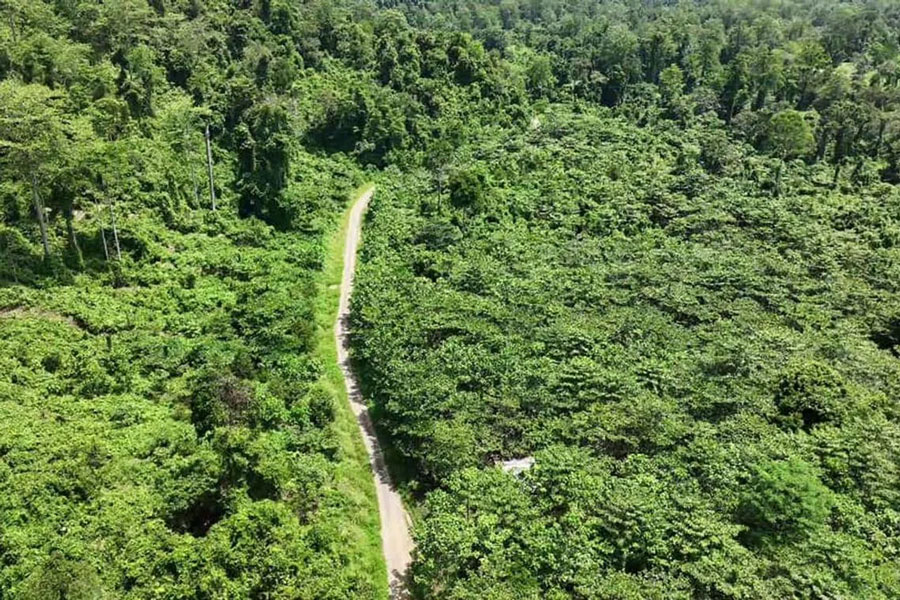
An aerial view of the restoration site at Lower Kawag within Ulu Segama-Malua Forest Reserve after replanting, in October 2025. PHOTO: SABAH FORESTRY DEPARTMENT/THE STRAITS TIMES
Villagers receive a total of RM7 (S$2.20) for every sapling. Out of this, they earn RM5, while the remaining RM2 covers operational and transportation costs.
Once the saplings reach between 1m and 1.5m tall, they are moved deep into the forest.
Restoring native vegetation improves the habitat of Sabah’s estimated 10,800 critically endangered orangutans and other wildlife while helping reduce human-wildlife conflict around the reserve.
Firebreaks, which are non-flammable gaps in vegetation, have also been incorporated into the restoration area to reduce the risk of future fires in a landscape that remains vulnerable during prolonged dry spells.
Fast-growing native species like Laran, Binuang and Talisai Paya – termed pioneer trees – are the first type of trees to be replanted. They quickly establish a canopy over degraded land, shielding the ground from direct sunlight and creating favourable conditions for slower-growing hardwoods to take root. In just three years, some pioneer trees can reach the height of a two-storey building.
“You cannot start with hardwoods because they need shade,” explained Daniel Pamin, conservation specialist at MPOGCF.
“The pioneer trees prepare the forest for everything that comes after.”
Only after the canopy is established are hardwoods such as Seraya and Kapur, members of the dipterocarp family that dominate Borneo’s lowland rainforests, introduced. They may take between 10 and 20 years to mature but can live for centuries, gradually restoring the layered structure of a tropical rainforest.
Fauna benefit too
The sequence is equally important for wildlife.
Orangutans prefer building nests in the softer branches of pioneer trees because they are easier to bend and break, a Sabah Forestry official said. As the forest matures, the returning mix of native trees gradually restores food, shelter and nesting habitats not only for orangutans, but also for sun bears, rhinoceros hornbills and many other species that depend on an intact rainforest.
“Rainforests can regenerate naturally, but the process is much slower once they have been severely degraded,” Daniel added.
“Human intervention helps accelerate that recovery.”
Jackly Ambrose, a conservation officer at the Sabah Forestry Department, said the primary hurdles in natural regeneration in degraded areas include a severe lack of seed sources, nutrient-depleted soils, and invasive weeds that choke out saplings.
So far, restoration work has been carried out across 225ha under the pilot project, which comprises the first and the second phases of the 10-year conservation plan launched in 2019. The pilot project is about 90 per cent complete.
The third phase, to commence in October 2026, aims to rehabilitate another 332ha through the planting of about 132,800 native saplings, many of them raised in Tampenau’s community nurseries.
For Taisa, however, the work has never been about making money.
The payment is modest, she said, but caring for each seedling over months demands patience more than anything else.
“If you have no interest, you would not be able to do it,” Taisa told The Straits Times.
“You have to love the forest.”
She knows she may never sit beneath the shade of many of the trees she has helped nurture. But she hopes future generations will.