

January 15, 2026
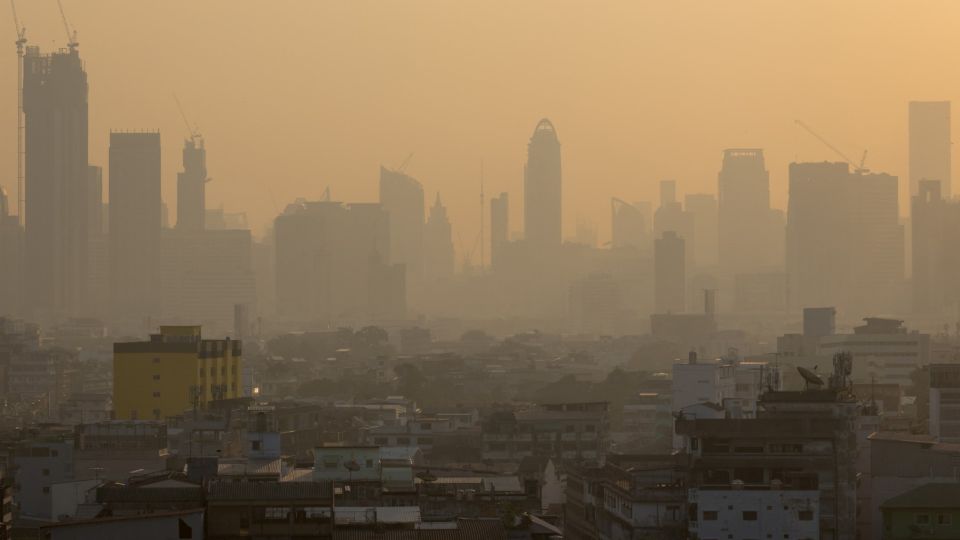
BANGKOK – The Bangkok Air Quality Information Centre reported that PM2.5 levels in Bangkok reached their highest point of the year as of January 14, 2026. The situation has significantly worsened in areas such as Bang Rak, Pathum Wan, and Sathorn, with Bangkok’s average PM2.5 level reaching 58.1 micrograms per cubic meter, which is far above the safety standard of 37.5 micrograms per cubic meter.
PM2.5 levels in key zones across the city include:
- Bang Rak: 86.9 µg/m³
- Pathum Wan: 83.4 µg/m³
- Sathorn: 78.5 µg/m³
- Chatuchak: 74.1 µg/m³
- Ratchathewi: 64.5 µg/m³
- Lat Krabang: 63.9 µg/m³
- Bang Sue: 63.8 µg/m³
- Prawet: 63.7 µg/m³
- Lak Si: 62.6 µg/m³
- Nong Kham: 62.4 µg/m³
- Bang Khen: 61.4 µg/m³
- Khlong Sam Wa: 61.2 µg/m³
Areas of concern
The air quality index in six key districts is now showing impacts on public health. PM2.5 levels are especially high in the north, east, and central areas, making the air quality harmful to health. Bangkok’s northern and central areas report readings from 53.7 to 74.1 µg/m³, which could cause health problems.
Advice for the public:
- General public should wear PM2.5 masks when outside, limit outdoor activities, and stay alert for symptoms like coughing or difficulty breathing.
- At-risk groups, including the elderly or those with pre-existing health conditions, should avoid strenuous outdoor activities and follow medical advice.
What to do in red zones
In areas with severe air quality, avoid outdoor activities. If essential, ensure to wear protective equipment, such as PM2.5 masks. Seek medical attention immediately if you experience unusual symptoms.
Residents with pre-existing health conditions should stay in areas protected from air pollution and have medications and necessary equipment ready.