

January 7, 2026
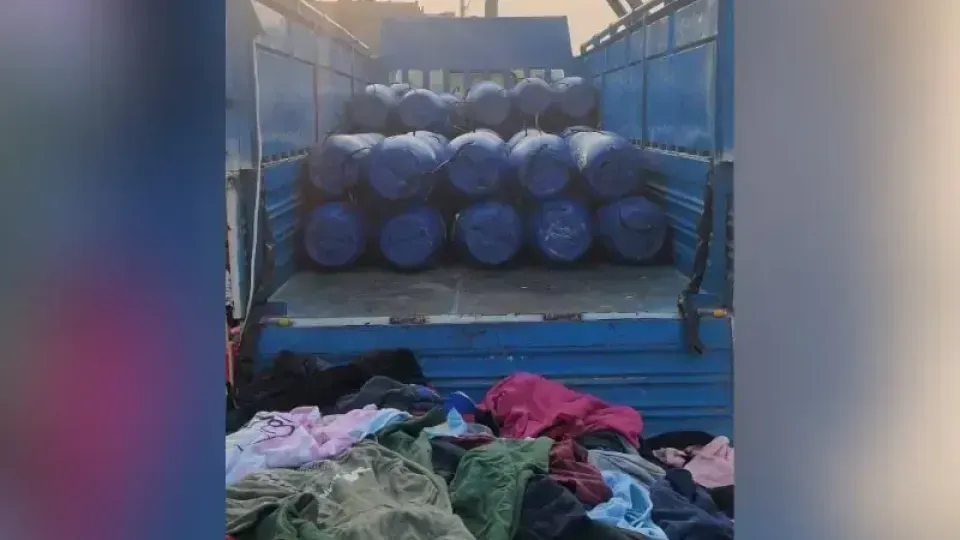
KARACHI – The images and information coming out about the failed attempt are enough to send shivers down the spine — 2,000kg of explosive material, packed into blue plastic drums and faux gas cylinders was found hidden under a pile of clothes on a ready-to-blow vehicle based improvised explosive device (VBIED).
The vehicle in question was a truck — known locally as a ‘Mazda’. Although VBIEDs are not often used by local terror outfits — given the logistical difficulty involved in preparing and transporting them — some of the deadliest attacks in the country’s history were perpetrated using them as a delivery mechanism.
The most obvious parallel can be drawn with the 2008 bombing of the Marriott Hotel in Islamabad, one of the deadliest attacks ever perpetrated in the capital.
I covered the aftermath of that bombing, which left a crater 34 feet deep and 59 feet wide at the main entrance to the hotel building.
At the time, I had interviewed a witness who told me that he was standing near the gate when a man started firing and at the same time a dumper appeared at the main gate. “I ran away from the scene to save my life but later heard an explosion.” The dumper caught fire and the security guards started extinguishing the fire. That was when the vehicle exploded.
The explosion had been heard clear across the city; there were casualties in Balochistan House — located across the road — and nearby PTV Headquarters as well.
Follow-up investigations revealed that around 1,000kg of explosive material had been used — a mix of ammonium powder, RDX and TNT, as well as mortar shells and artillery rounds.
Given the scale of that bombing, one can safely assume that if the attack on Karachi had occurred, the potential death and destruction it would have wreaked would have been off the charts.
The fact that the plot was foiled following a tip-off from intelligence agencies — a fact alluded to during the official CTD presser on Monday — is also a heartening development, indicating that security agencies are actively working to keep Karachi safe from terrorists.
In recent years, urban centres such as Karachi and Lahore had been largely spared any major attack on civilian targets, as was the norm in the late 2000s and early 2010s.
Over the past couple of years, terror outfits across the country had seemingly shifted their focus to security forces, targeting their positions rather than softer, civilian targets.
However, the discovery of the Karachi terror plot seems to indicate a return to form for these nefarious groups.
Talking to Dawn, security analyst Imtiaz Gul said that it was quite likely that militants would again start targeting civilians.
“If we believe the official version, that it was the BLA that planned this subversion, it makes things pretty obvious that they have chosen to inflict damage in non-Baloch areas so as to not to annoy their own population.”
This, he recalled, is what happened to the TTP, Ahrarul Hind and similar smaller groups after they targeted both civilians and the security apparatus — it generated widespread resentment and rejection among the masses and they were forced to change their tactics.
Given the scale and ambition of the terror plot, one of the theories doing the rounds alludes to a possible collaboration between multiple terror outfits, since it would be quite a challenge for any one group to assemble a VBIED of this scale and smuggle it into a well-guarded city like Karachi.
When asked about the possibility, Mr Gul said there was “very obvious operational synergy among groups such as the TTP, BLA and BLF who are believed to be the critical links in the externally-driven proxy terrorism that Pakistan is facing”.
This also means these groups and their handlers are imparting training and techniques for subversive activities, he noted.