

March 30, 2026
SEOUL – South Korean lawmakers are seeking legal means to limit exposure of “algorithm-driven” content to children as concerns over the influence digital content have on minors grow.
In March, two lawmakers, Rep. Lee Yeon-hee of the ruling Democratic Party of Korea and Rep. Hwang Un-ha of the minor liberal Rebuilding Korea Party, floated bills to restrict the personalized recommendation functions powered by artificial intelligence algorithms on social media for minors.
Both are revisions to the Act on Promotion of Information and Communications Network Utilization and Information Protection. One of the two bills, by Democratic Party’s Lee, was tabled to a subcommittee-level meeting Tuesday at the National Assembly’s Science, ICT, Broadcasting and Communications Committee.
These bills are designed to grant the media watchdog Korea Media and Communications Commission the authority to impose a set of obligations on social media platform operators, by providing a legal definition of social network service providers, which does not yet exist in South Korean law.
The revision would penalize social media platfoms if they fail to to verify a user’s age, and require them to restrict algorithm-selected content without parental discretion for users aged under 19.
In addition to Lee’s bill, Hwang’s bill proposes that the media watchdog come up with guidelines to stem adolescents’ use of social media. It also proposes that social media platforms inform adolescent users of the risks of social media addiction through push notifications.
Hwang’s bill was designed to grant social media platforms greater responsibilities without restricting adolescents’ basic rights, an official of Hwang’s office said, adding that bills that are solely focused on regulating platforms would create a regulatory haven.
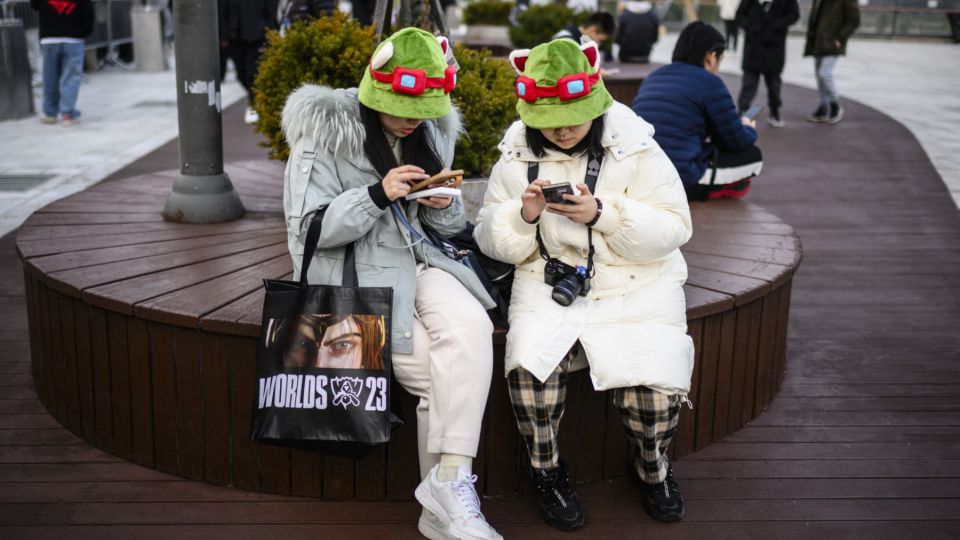
Meanwhile, the government is taking heed on the impact of children’s growing exposure social media.
According to the Science Ministry’s 2025 survey on 10,000 South Korean households released on Thursday, 43 percent of South Korean adolescents aged between 10 and 19 were either prone to smartphone overuse or already at the high-risk group, up by 0.4 percentage point compared to the 2024 figure.
The Science Ministry cited the changing digital environment, amid growing popularity of short form videos and generative AI services on social media. The figure for adolescents has been on a constant rise since 2018, when it came to 29.3 percent.
By contrast, the overall figure for all respondents aged between the ages of 3 and 69, stood at 22.7 percent, and it has been on a steady decline for the past five years since 2021.
The Science Ministry said in a statement that the government would provide state support for digital detox programs and in-school counseling services for children at high risk of addiction.