

April 20, 2026
SEOUL – South Korean author Han Kang, the country’s first Nobel laureate in literature, has emerged as the country’s most commercially successful writer of the past decade, with her novels taking the top two spots on a 10-year cumulative bestseller list compiled by major bookstore chain Kyobo Book Center.
According to the data released Sunday, Han’s “The Vegetarian” and “Human Acts” ranked first and second, respectively, in total sales between April 17, 2016, and April 16, 2026. The rankings combine both online and offline sales.
Originally published in 2007, “The Vegetarian” gained global recognition after Han became the first Korean writer to win the Man Booker International Prize in 2016. The win triggered a surge in domestic readership, with the novel topping weekly bestseller charts for 12 consecutive weeks and becoming the best-selling book of that year.
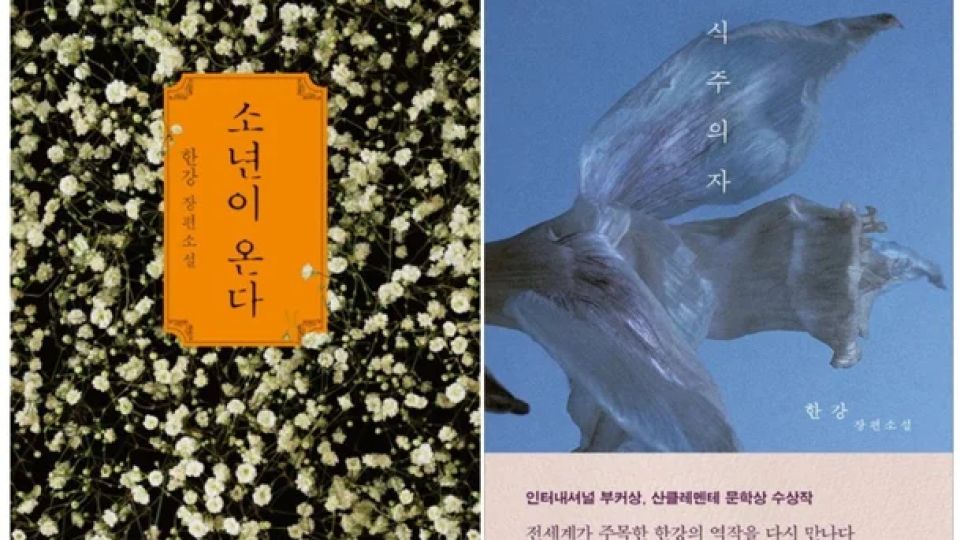
Nearly a decade later, Han’s readership saw a renewed surge following her receipt of the Nobel Prize in Literature in 2024 — the first for a Korean author. This “second wave” was led by “Human Acts,” her 2014 novel centered on the Gwangju Democratic Uprising of 1980, which ranked as the country’s annual bestseller in both 2024 and 2025.
A Kyobo official noted that while “The Vegetarian” leads in cumulative sales due to its earlier boost following the Booker Prize, “Human Acts” has outpaced it in more recent years.
Han’s presence extended further down the list. Her 2021 novel “We Do Not Part,” which deals with the Jeju April 3 Incident, ranked eighth over the decade, aided by international recognition including the Prix Medicis Etranger in 2023 and the U.S. National Book Critics Circle Award this year.
Of the top 10 bestsellers, six were Korean novels, underscoring the strong domestic appetite for local fiction. Other titles in the ranking include Kim Ho-yeon’s “The Second Chance Convenience Store,” Lee Mi-ye’s “DallerGut Dream Department Store,” and Yang Gui-ja’s “Contradictions,” which placed fifth through seventh.
Nonfiction titles also featured prominently. The self-help book “Say No’s Teachings” ranked third, followed by Lee Ki-ju’s essay collection “The Temperature of Language” in fourth. Kim Soo-hyun’s “I Decided to Live as Me” came in ninth, while “Winnie-the-Pooh: Happy Things Happen Every Day” rounded out the top 10.
Meanwhile, overall reading habits in South Korea continue to show signs of decline. According to the Ministry of Culture, Sports and Tourism’s national reading survey, the proportion of adults who read at least one general book per year — excluding textbooks, exam prep materials, magazines, and comics — fell from 67.4 percent in 2015 to 38.5 percent last year.
The findings highlight a paradox in Korea’s literary landscape: While a handful of authors achieve blockbuster success and global recognition, overall reading engagement among the public is shrinking.