

December 19, 2025
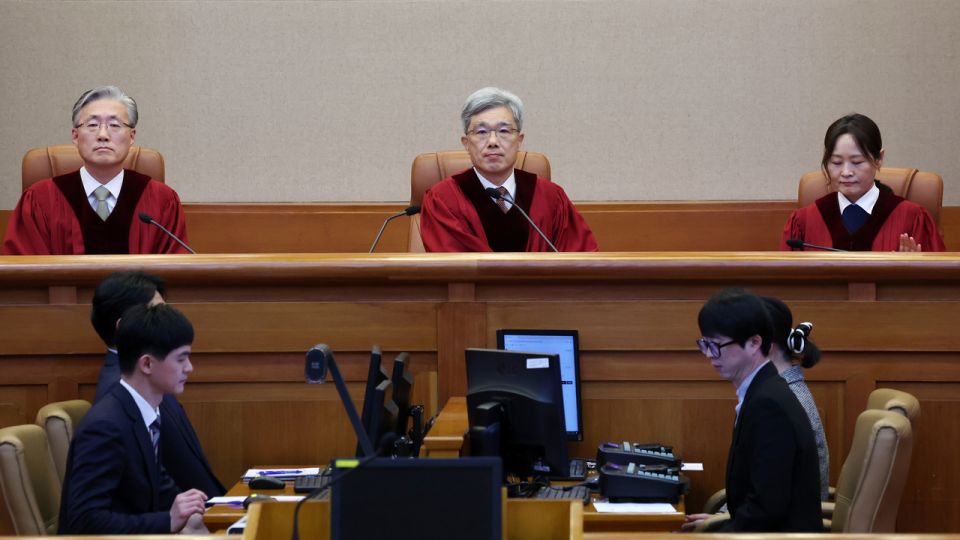
SEOUL – South Korea’s Constitutional Court unanimously ruled Wednesday to remove National Police Agency Commissioner General Cho Ji-ho from office, nearly a year after the National Assembly impeached him over his role in enforcing a police blockade of parliament during former President Yoon Suk Yeol’s martial law decree.
The ruling marks the first time a national police commissioner general has been ousted through impeachment, the court said.
In its decision, the court said Cho carried out the president’s unconstitutional and unlawful order by restricting lawmakers’ access to the National Assembly.
“(Restricting lawmakers’ access) goes against the principles of representative democracy and the division of power, and infringes upon the National Assembly’s constitutional authority to deliberate and vote,” said the court in its verdict.
The court also found that dispatching police to the National Election Commission’s office in Gwacheon, Gyeonggi Province, and its training institute infringed on the institution’s independence.
“The defendant’s violation of law is grave enough to warrant removal from office,” the court concluded.
The National Assembly passed the impeachment bill on Dec. 12, 2024, accusing Cho of participating in the execution of martial law by allegedly ordering police officers to block lawmakers from entering the assembly chamber, effectively delaying a vote to nullify the decree.
The impeachment charges also included allegations that Cho oversaw excessive use of force during a nationwide labor rally held on Nov. 9 last year.
During a court hearing in September, Cho denied the allegations, arguing that the police had played only a limited and passive role and had, in fact, contributed to the lifting of martial law. He claimed officers allowed some lawmakers to climb over perimeter walls, characterizing the police response as a “minimal fulfillment of duty” rather than an effort to enforce the decree.
Cho was indicted in January on charges of playing a key role in an insurrection related to the martial law incident. He remains on trial without detention after the court granted him bail that month, citing his treatment for blood cancer.