

April 2, 2026
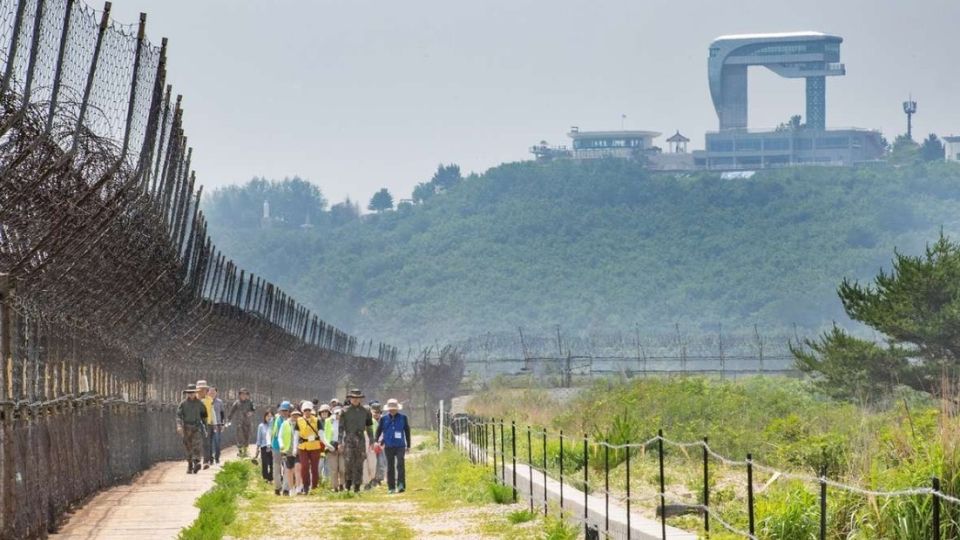
SEOUL – All 12 sections of South Korea’s DMZ Peace Trail near the inter-Korean border will reopen this year, the government said Wednesday, allowing civilians to explore sites tied to the peninsula’s ecology, history and security without entering the Demilitarized Zone itself.
According to the Ministry of National Defense and related agencies, including the Culture Ministry, the routes will operate from April 17 through Nov. 30 across border areas, with operations suspended in July and August.
Introduced in 2019, the trails run through 10 locations near the border: Ganghwado in Incheon; Gimpo, Goyang, Paju and Yeoncheon in Gyeonggi Province; and Cheorwon, Hwacheon, Yanggu, Inje and Goseong in Gangwon Province.
The DMZ, about 250 kilometers long and 4 kilometers wide, has separated the peninsula since the 1950-53 Korean War ended in an armistice rather than a peace treaty, leaving the two Koreas technically still at war.
Designed to highlight the meaning of peace and security, the routes draw on local ecological, cultural and historical resources. Some sections, operated in coordination with nearby military units, allow participants to walk along areas adjacent to barbed-wire fences, offering a rare view of the heavily fortified border.
All routes are guided, with trained interpreters — often local residents — accompanying visitors to explain the historical and geographical significance of each site. Operations are also adjusted to protect wildlife habitats and ensure participant safety.
Access is limited to South Korean nationals due to the sensitive nature of border regions. Participants must undergo identity verification, with the fee set at 10,000 won ($6.70) per person.
Applications open Wednesday via the official website — www.dmzwalk.com — and the government’s Durunubi trekking app.
The routes were open since the launch under the Moon Jae-in administration until being closed in April 2024 under the Yoon Suk Yeol government, citing security concerns.
This year, authorities said they expanded participant capacity per session and increased operating days for some courses to allow broader access.
However, the reopening does not include three previously proposed routes that would have entered areas inside the DMZ in Paju, Cheorwon and Goseong.
Entry into the southern portion of the DMZ — extending up to 2 kilometers from the Military Demarcation Line — requires approval from the United Nations Command under the armistice agreement.
The UNC has taken a cautious stance on reopening such routes, citing safety concerns.
“The announcement does not reflect a change to current activities within the Demilitarized Zone,” the UNC said.
“In accordance with the Armistice Agreement, the UNC manages and controls activities within the DMZ to ensure safety and stability. Activities inside the DMZ require prior review, coordination and authorization under established procedures.”