

June 17, 2026
SINGAPORE – A regional electricity grid, nuclear power and ramping up renewables and electric vehicles are among the ways South-east Asia could boost energy security while also meeting rising energy demand, the head of the International Energy Agency (IEA) said on June 15.
The energy crisis triggered by the war in Iran has highlighted just how exposed South-east Asia is to costly energy imports and the need for urgent, bold steps to shield the region from future shocks, IEA executive director Fatih Birol told The Straits Times.
The region is at an inflection point and what it decides now on energy policies will have a profound impact not only on its future but the rest of the world, Birol said on the eve of the release of the IEA’s South-east Asia Energy Outlook 2026 report.
The region remains heavily dependent on fossil fuels, the burning of which is driving climate change and causing more extreme weather, such as storms and floods, that threaten key infrastructure, including power plants, the report says.
“South-east Asia is at the forefront of the impact of the current energy crisis,” Birol said. “I think countries are now putting energy security very high on the agenda, and they are looking at domestic sources of energy generation as much as possible.
“In my view, the biggest winners here will be renewables and nuclear power, and also electric cars because of different factors, but including the cost advantage and the unparalleled energy security benefits.”
And an ASEAN Power Grid, long planned but yet to be achieved, would build cross-border electricity interconnections, help balance supply and demand, integrate renewable resources, and lower costs for participating countries, Birol said.
“In my view, this is a no-brainer. There are some political challenges to overcome, and I believe the current crisis will help overcome these political difficulties. And my recent discussions with the government leaders in the region have made me hopeful in this respect,” he added.
Challenges include harmonising power trading across 11 different grids in each of the 11 ASEAN nations, agreements allowing connections with other nations and overcoming technical barriers, such as transmission/distribution voltages and operating standards.
If achieved, a regional grid could help propel economic growth in a region that is home to nearly 700 million people and one of the world’s fastest-growing economic areas. The region is set to account for 20 per cent of the growth in the world’s energy demand over the next decade, ranking second only to India.
But as the region grows, so does its fuel import bill and vulnerability to energy shocks. The Middle East accounts for 60 per cent of the region’s crude oil imports, and almost half of the oil products that are refined or consumed in South-east Asia come from Middle East crude oil, the IEA said.
The region has also become increasingly dependent on liquefied natural gas imports, while coal remains central for power generation in most countries in the region.
That means South-east Asia remains exposed to future shocks, underscoring the need to diversify fuel sources and focus on domestic energy.
The region’s energy import bill is projected to reach US$160 billion (S$205 billion) this year, a record high, and is likely to keep on increasing, potentially rising to US$400 billion, or 5 per cent of its region’s economy, by mid-century based on current policies, the IEA forecast.
Policies prioritising cleaner sources of energy, electrification of transport, energy efficiency and grid investments could reduce this risk, the agency said.
Electricity demand
A key driver of the region’s hunger for energy is rising electricity demand, which is growing twice as fast as overall energy use. In the next 10 years, the region will add the equivalent of Japan’s total power generation, Birol said.
Demand in the region is coming from the rapid uptake of electric vehicles – one in five new cars is an EV – data centres, industrial and urban expansion, and air-conditioners. The number of residential air-conditioners in the region is set to triple by 2035.
Birol said the region will need about US$600 billion over the next decade to build power plants and to expand and modernise the grid, underscoring an immense financing challenge ahead.
Transmission and distribution networks need to more than double in length by 2050 to keep pace with rising demand and to cope with the addition of more wind and solar energy, the report notes. Investment in grids and storage, such as battery storage, needs to ramp up from US$13 billion in 2026 to US$50 billion in 2050.
About US$27 billion will be needed by 2040 to realise planned cross-border interconnections under the ASEAN Power Grid.
The agency notes that nuclear could become a key growth area for power generation by mid-century. Nuclear deployment could meet almost 10 per cent of electricity demand growth to 2050 if announced government targets are achieved. But this will depend on accelerating deployment and reining in long construction lead times and costs.
Vietnam, Indonesia and the Philippines have announced plans to commission nuclear reactors, with the first units scheduled to come online after 2030. Singapore is carefully investigating if nuclear energy is suitable for the country and is working with the International Atomic Energy Agency on a detailed review starting in 2027.
Renewable energy
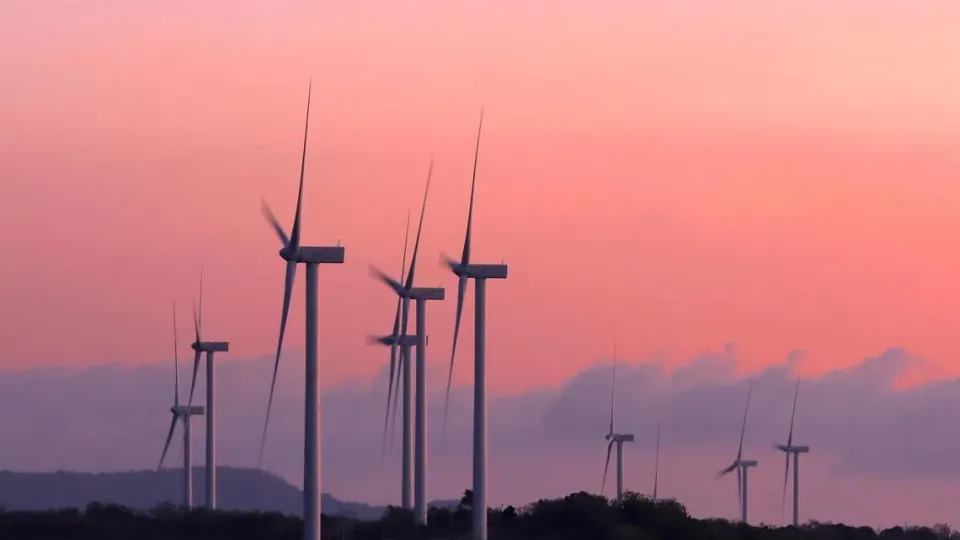
Increasing electrification of transport, homes and industry is also a key area for the region’s governments to focus on. Boosting renewable energy investment, battery storage and regional grid interconnections can cut fuel import bills while boosting regional resilience, the IEA said.
Renewable energy capacity is projected to nearly triple by 2035 under current policy settings or grow fivefold if announced targets are achieved.
Solar deployment has already increased this year: The Philippines became the second-largest destination for Chinese solar exports in the first quarter of 2026, with imports around three times higher than in 2025.
Birol expressed optimism about more rapid change in the region, attributing it to the impact of the Iran war.
He pointed to the rapid changes that occurred in Europe after Russia’s invasion of Ukraine in 2022. Before the war, Russia supplied about 40 per cent of Europe’s energy. Now, it is a fraction of that.
He said wind and solar installations in Europe have increased by a factor of three and nuclear power is now back on the energy agenda of many European countries.
“I expect this will be the same in Asia, especially in South-east Asia,” he said.