

November 18, 2025
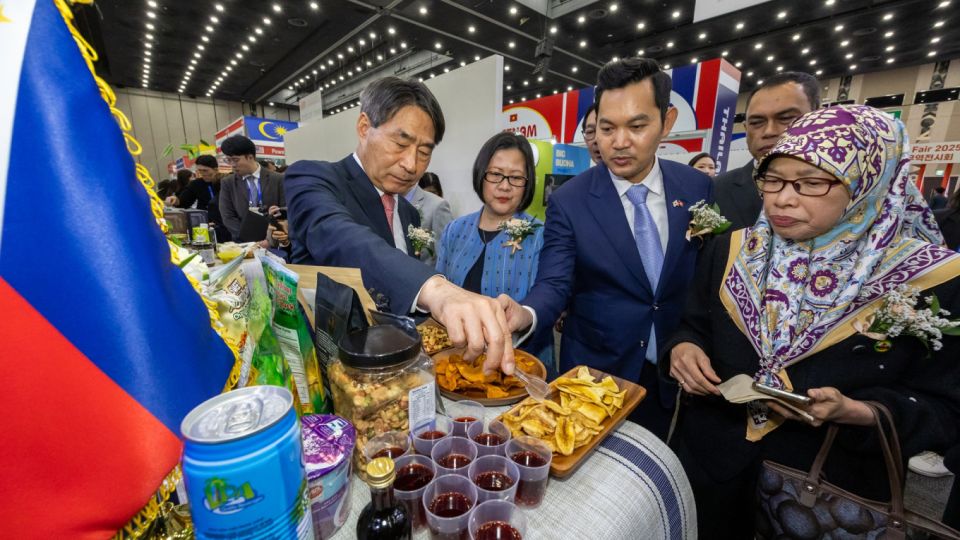
SEOUL – Southeast Asian cuisines took center stage at the ASEAN Trade Fair 2025 in South Korea, which capped off a weeklong series of events to celebrate the relationship between the regional bloc and the East Asian country.
This year’s trade fair at KINTEX Exhibition Center 2 in Ilsan, which closed on Sunday after a three-day run from Nov. 13, featured over 70 food and beverage (F&B) companies from nearly all ASEAN member states. The one exception was Timor-Leste, which only became a formal member on Oct. 26, the opening day of the 47th ASEAN Summit in Kuala Lumpur.
The F&B exhibition featured the signature products of each country, ranging from kaya (coconut) jam and dried fruits to Robusta coffee, offering South Korean visitors an opportunity to experience the authentic flavors of Southeast Asia.
In his opening remarks, ASEAN-Korea Centre (AKC) secretary-general Kim Jae-shin called the event “a meaningful occasion” to celebrate the country’s partnership with the bloc, noting that the trade fair provided a platform for both consumers and buyers to explore market trends and opportunities for future collaboration.
“Despite ongoing global economic uncertainties, it is both timely and inspiring to see 10 ASEAN member states coming together with strong determination to explore business opportunities in the Korean market,” Kim said during the opening ceremony on Friday.
He also highlighted the F&B sector as one of the most “dynamic areas” for the region’s future growth.
“I sincerely hope this event will serve as a stepping stone for new collaborations between ASEAN and Korea, and inspire Korean consumers to discover the rich diversity and flavors of ASEAN cuisine,” Kim said.
The event also included a business-to-business (B2B) meeting zone, where local buyers could hold one-on-one consultations and explore collaborations with ASEAN companies. Another featured space was the ASEAN Market Zone, where people could purchase Southeast Asian products.
Singaporean Ambassador to South Korea Wong Kai Jiun, who also chairs the ASEAN Committee in Seoul, expressed optimism for the fair’s impact.
“I have no doubt that it will further strengthen ASEAN-ROK economic collaboration and draw the people on both sides closer,” Wong said, referring to the host country by the abbreviation for its formal name, the Republic of Korea.
ASEAN and South Korea have maintained strong economic ties, with the bloc ranking as Seoul’s third-largest trading partner and the country ranking fifth among ASEAN’s partners in 2024. Two-way trade in goods between the two surpassed US$200 billion last year, up 5.9 percent compared to the figure in 2023.
According to the AKC, Southeast Asia’s F&B market was valued at more than $670 billion last year and is projected to reach around $900 billion by 2028, representing an annual growth rate of 7 percent.
Headquartered in Seoul, the center has organized the ASEAN Trade Fair every year since 2014, aiming to strengthen economic ties and help small and medium enterprises in Southeast Asia enter the South Korean market. This year’s fair highlighted the rapidly growing F&B industry, while previous editions featured sectors such as furniture, gaming and fisheries.
The trade fair was held as part of ASEAN Week, a series of cultural and economic programs focused on strengthening links between the bloc and South Korea through people and businesses. The week’s highlights included the installation of 10 ASEAN benches on the Jeju Olle Trail on Jeju Island, a UNESCO World Heritage Site, followed by a forum for Southeast Asian journalists.