

November 3, 2025
JAKARTA – On the heels of the public protests that broke out in Indonesia and other Southeast Asian countries, experts and public figures have underlined the importance of transnational solidarity to create a better digital activism landscape in the region, as social media has become the forefront of the governments’ policymaking process.
The region has seen a surge of public protests this year, with the Global Protest Tracker recording at least 17 protests as of October in Indonesia, Malaysia and Thailand, among other countries. The motivations behind the rallies range from worsening economic conditions to constitutional violations.
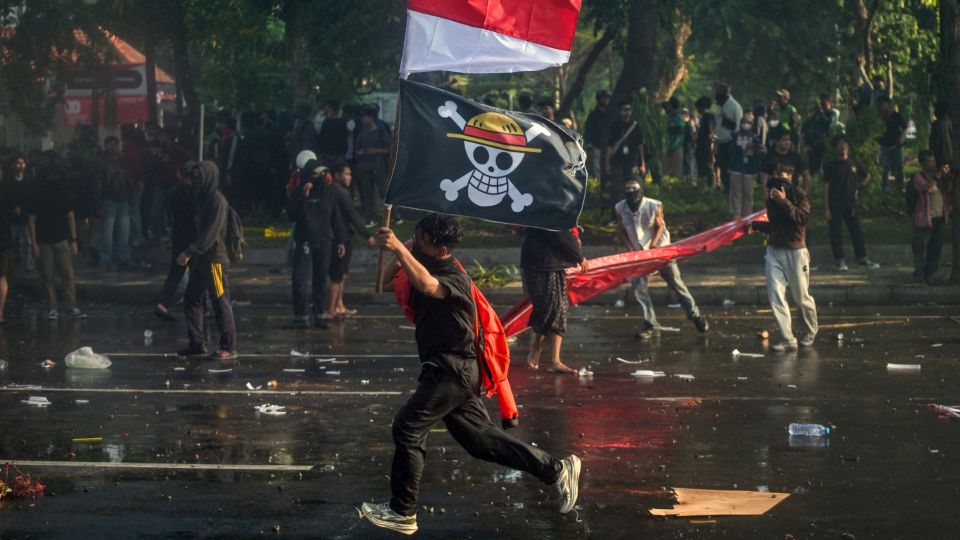
Indonesia alone saw a string of protests one year after President Prabowo Subianto took office in October 2024, with the biggest one happening in late August over lawmakers’ lavish perks amid economic inequality.
The protests in Jakarta later turned into nationwide riots over police brutality, following the death of 21-year-old ojol (online motorcycle transportation) driver Affan Kurniawan, who was run over and killed by a police tactical vehicle.
His death, caught on video and widely shared on social media, moved Thai content creator Yammi to initiate a trend on X for Southeast Asians to place food orders for ojol drivers in Jakarta through ride hailing apps.
“I felt like the struggle that I saw [among Indonesian protesters] was a reflection of my own society. Not just in Thailand, but everywhere else as well,” Yammi said during a discussion held by the Habibie Center in South Jakarta on Thursday.
The trend has since organically prompted the #SEAblings hashtag, a play on the acronym of Southeast Asia and siblings, as users from Malaysia, Singapore, the Philippines and other countries place food orders for ojol drivers from their home countries.
Read also: ‘Pink and green’ protests call for a reset in Indonesia
Regional unity
Such cross-border solidarity is something other experts at Thursday’s discussion urged fellow Southeast Asian countries to keep up, noting its importance in today’s activism landscape on social media.
Food orders for Jakarta ojol drivers are not the first case of transnational solidarity.
Nenden Sekar Arum, executive director of digital rights group Southeast Asia Freedom of Expression Network (SAFEnet), pointed to the Milk Tea Alliance emerging during the pro-democracy protests in Hong Kong between 2019 and 2020.
At that time, people in Hong Kong, Thailand and Taiwan showed their online support for each other’s fight for democracy and against China’s regional power.
“This transnational solidarity is a great example of how we can keep the spirit of the movement going to this day. And [later], we should build on it intentionally,” Nenden said, noting that more planning and preparation should be taken for future movements.
Yammi said he tested Nenden’s recommendation amid the #SEAblings trend, noting that he carefully “strategized the wording” of the food for the ojol drivers community thread on X with an anonymous person who gave him the idea.
“I knew the post was going to go viral because I knew my immediate community was going to push my tweets forward,” he said, “and I saw so many memes about Southeast Asia that helped boost my original post by tens and tens of millions.”
Having such digital literacy, Yammi went on to say, is important for content creators, legal professionals and union organizers in the region to amplify their online voices, especially among Southeast Asian nations that share many commonalities.
“When we talk about Southeast Asian movements, it’s really important to acknowledge how connected we are and that we are a very educated region, despite what our governments think of us,” he said.
Read also: How ‘Gen Z’ protests over corruption and jobs ousted Nepal PM Oli
Yammi called on the Southeast Asian people to “pull from our talent pool” to help each other’s movement.
Community platform Think Policy ecosystem and partnership head Andarini Sertianti concurred with Yammi, adding that regional solidarity among Southeast Asian people would be easily built in an organic way because of the countries’ similarities.
“Us Southeast Asians have similar types of jokes as well as similar grievances and frustrations with our governments, which has been translated well online. So why don’t we build stronger transnational solidarity?” Andarini said, noting that viral trends from other countries could help pressure the government to reach policy reforms.