

June 26, 2026
TOKYO – Fears that a species of sea turtle may become extinct are increasing as sand temperatures rise in an area known as Japan’s premier nesting grounds for the species.
According to a recent survey led by Sea Turtle Association of Japan’s Kuroshima research institute and Kochi University, the average soil temperature in July on Kuroshima Island in Taketomi, Okinawa Prefecture, has exceeded 30 C in the past few years. Sea turtle eggs are more likely to hatch as females at 29 C or higher.
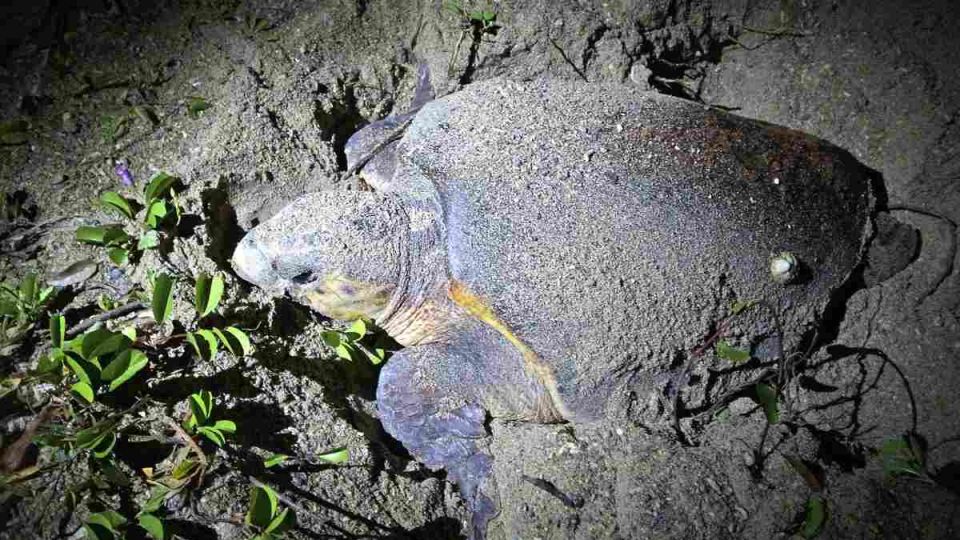
Kuroshima, a remote island with an area of about 10 square kilometers, is located around 450 kilometers southwest off Okinawa’s main island. The area features expansive white sandy beaches and is a nesting site for three species of sea turtles including the loggerhead turtle, which is classified as vulnerable on the International Union for Conservation of Nature’s Red List.
A member of the survey team said, “If global warming continues, only females may be born, raising the risk of the species becoming extinct.”
The team measured sand temperatures at a depth of 40 centimeters, where nesting holes are created by loggerhead turtles, between 2009 and 2023. The hatching season, in June and July, sees monthly average temperatures of 28.7 C and 30.5 C, respectively.
The sand temperature has been rising year by year, and estimates based on past temperature data indicate that it has increased by 1.3 C over the past 100 years.
The situation was similar at nests of other sea turtle species.
It is known that the environmental temperature where the eggs are laid determines the sex of sea turtles. Although the exact mechanism is unclear, if the temperature is below 29 C, the hatchlings tend to be male, and if it is higher, they tend to be female. A shortage of males would increase the risk of the species’ extinction.
“The difference of 1.3 C is significant for sea turtles, as their sex ratio is affected by even slight changes in temperature,” the institute’s senior researcher Kazunari Kameda said. “I hope this serves as an opportunity to consider the impact of global warming on the ecology of sea turtles.”
According to former Okayama University of Science Prof. Naoki Kamezaki, an expert on sea turtles, the latest survey was “extremely valuable” in that the temperatures of the sand was taken repeatedly and the data was analyzed.
“It is difficult to research sea turtles, which can take 20 years to reach reproductive maturity, but I look forward to continued long-term surveys and research,” he said.