

March 31, 2026
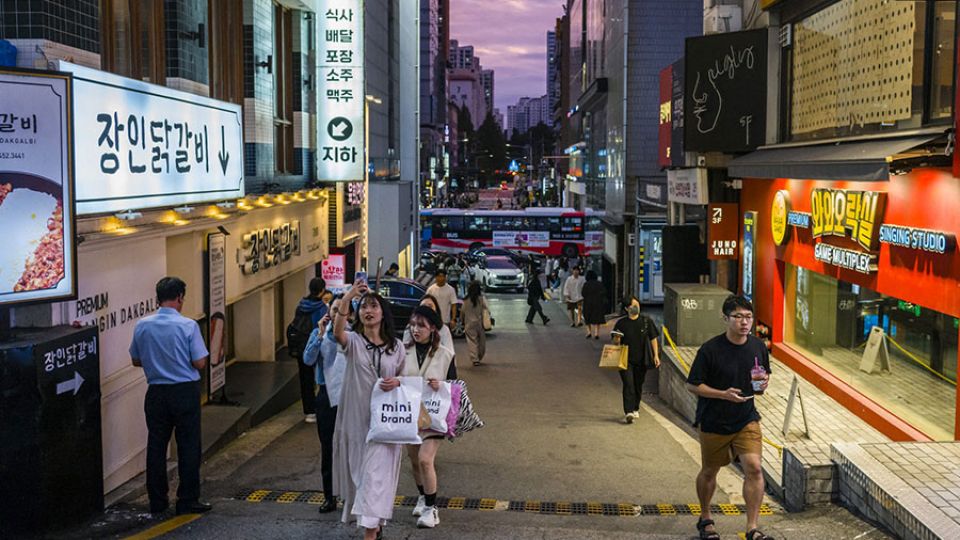
SEOUL – In Seoul’s Gangnam-gu, amid glass towers and the global pulse of K-pop, a 3.5-kilometer boulevard named Tehran-ro runs through the city’s economic core. More than a hub for technology firms and financial institutions, its name reflects a moment when Korea and Iran, both undergoing economic transformation, chose cooperation over distance. Its persistence despite decades of shifting global politics signals Korea’s diplomatic resilience and enduring respect for the Iranian people. Today, Tehran Road symbolizes Gangnam’s rapid growth and success, with high-density commercial activity and heavy investment in innovation and technology.
In 1977, Seoul named Tehran-ro following a mayoral visit to Tehran, marking a shared aspiration at a time when Korea was still developing. Iran was a key partner during the Middle East construction boom, and Korean engineers and workers contributed to projects across the region, including Iran. These efforts helped build infrastructure that supported growth on both sides. Today, Korea stands as a leading industrial economy, while Iran remains central to global energy markets, underscoring the continuing relevance of their cooperation.
This history points to a central argument: Korea’s economic security depends on maintaining reliable international partnerships and open channels, especially as Middle East tensions threaten critical supply lines.
The Strait of Hormuz, one of the world’s most critical energy corridors, has once again come into focus. A substantial share of global oil and natural gas flows through this narrow passage. For Korea, which depends heavily on imported energy, stability in this route is essential for industrial production and daily life.
Recent disruptions affecting vessels in the region, including those linked to Korea, extend far beyond shipping schedules. They disrupt economic continuity and place pressure on a highly interconnected global supply management system, in which manufacturing, logistics, and energy security are tightly linked.
Korea is not a direct party to the conflict in the Middle East. Yet its careful management of relationships and diplomacy reflects a consistent commitment to stability. This approach is shaped in part by Korea’s historical experience, in which the human cost of conflict is borne most often by civilians in their daily lives.
South Korea’s current strategy is not about geopolitical alliances but about the economic necessity of a predictable, secure energy supply. This is the core of the argument: stability in maritime routes is vital to Korea’s prosperity.
Even under complex international constraints, Korea has maintained practical engagement. In 2023, it facilitated the transfer of about $6 billion in Iranian funds frozen under sanctions, enabling their use for humanitarian purposes, such as food and medicine. This reflected not political alignment but a continued effort to sustain functional channels of cooperation.
At present, South Korean-flagged vessels and Korean crew members remain affected and strained in or around the Strait of Hormuz. This situation highlights not only energy security concerns but also the safety of Korean nationals operating in the region.
Recently, Iranian officials have outlined a structured approach to maritime access. South Korea has been described as a nonhostile country, and vessel passage has been framed as possible through prior coordination. This indicates that access through the Strait is not categorically closed but operates within a defined framework.
Further signals emerged during Ambassador Kouchaki’s recent visit to the Korean National Assembly. He emphasized de-escalation and reaffirmed that Koreans in Iran are regarded as guests whose safety remains a priority.
Taken together, these positions suggest that even in periods of tension, there is space for practical continuity. If stability can be maintained at the level of people and diplomacy, it can reasonably extend to the systems that sustain economic life.
The movement of vessels through the Strait of Hormuz directly affects energy access, industrial stability, and economic security across global markets. For Korea, disruptions in this corridor quickly translate into broader strain across manufacturing, logistics, and domestic price stability.
Thus, Korea’s commitment to securing maritime access is a fundamental pillar of economic security. The main argument is that without predictable passage, the country’s industrial base and economic well-being are at risk.
Looking ahead, the region’s longer-term trajectory will likely include growing demand for reconstruction, modernization and industrial development. Korea is well-positioned to contribute through its proven capabilities and strengths in infrastructure, energy systems, smart cities and advanced manufacturing. Iran, with its strategic location and substantial human and natural resources, will play a central role in any future regional recovery. In this context, continued cooperation offers a pathway toward shared economic opportunities.
Tehran-ro remains a tangible reminder of a relationship that once supported Korea’s development. Its presence in one of Asia’s most dynamic districts reflects connections that endure beyond changing political conditions.
Amid heightened uncertainty, stable maritime routes through the Strait of Hormuz are vital to the global supply chain and trade. For Korea, reliable access to this corridor is crucial for economic continuity and upholding international cooperation built on predictability and shared interests; conditions that also support broader regional stability and sustained economic opportunity for all stakeholders, including Iran.
Man-Ki Kim
Man-Ki Kim is a professor at the KAIST Graduate School of Future Strategy, specializing in global public procurement, defense acquisition innovation and global strategic trends. He also serves as a senior adviser at Yulchon.
The views expressed here are the writer’s own.