

January 26, 2026
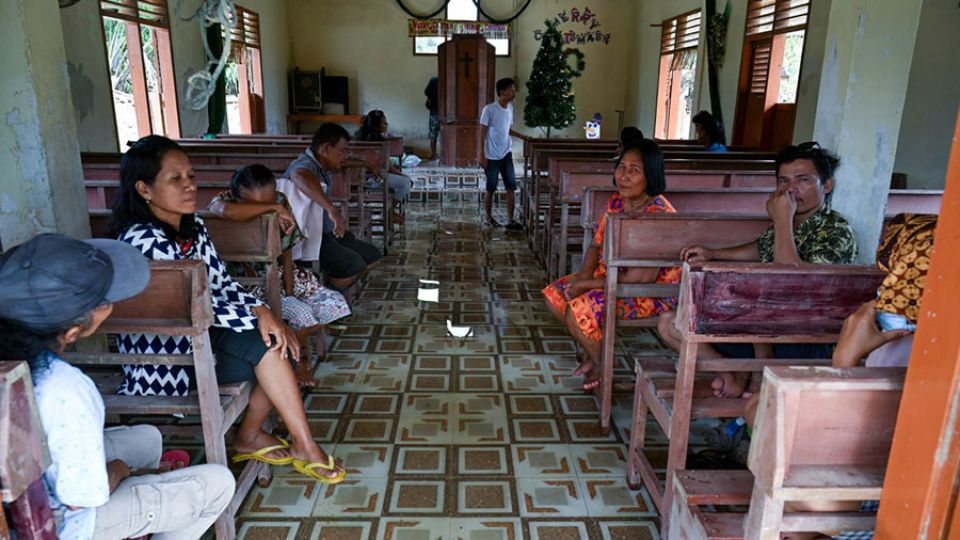
MEDAN – Nearly 92,000 people displaced by devastating floods in Aceh province remain in tents two months after the disaster, with progress on temporary housing lagging far behind survivors’ needs.
Habibah, 36, a mother of three from Simpang Tiga village in North Aceh regency, said her family has been living in a damaged tent since their home was destroyed by massive flooding on Nov. 26.
“I bought this tent with my own money, but it already has holes. We endure extreme heat during the day and cold at night, and we lack blankets,” she said, as quoted by Kompas.com.
Habibah said the National Disaster Mitigation Agency (BNPB) is in the process of constructing temporary shelters in the village, but uncertainty remains over who will benefit first.
“We don’t know whether we will be among the recipients in the first phase, because the houses will be built gradually,” she said.
Jelamat, a resident of Sahraja village in East Aceh, said he hoped the government would speed up the construction of temporary housing for him and his four family members.
“We’ve been living in tents for the past two months, and there’s still no clarity about temporary housing,” he said, as quoted by Tribunnews.com. “We’re trying to remain patient because we know the government is working, but we really hope the process can be accelerated.”
Similarly, Hayatul Husna, 26, a resident of Keude Bungkalih village in North Aceh, said she hoped her family could move into temporary housing before the holy month of Ramadan begins.
“We deeply miss celebrating Ramadan and Eid at home, breaking the fast, having sahur [predawn meal] together, and welcoming Eid under our own roof. We hope we won’t have to experience those moments in tents,” she said.
This year, Ramadan is expected to begin on Feb. 18, while Idul Fitri is projected to fall on March 19, pending the moon sighting.
Della Febriani, an evacuee from Aceh Tamiang regency who has been living in a tent since November, said government humanitarian assistance for flood victims remains limited, including in terms of temporary housing.
“In the past two months, we haven’t received any assistance from the government. Most of the help has come from volunteers,” she told The Jakarta Post.
“At the moment, volunteers affiliated with Indonesian Muslim preacher Adi Hidayat are constructing temporary shelters for evacuees in our village, not the government,” he added.
She added that displaced residents in her village are also relying on soup kitchens set up by volunteers from Malaysia, as authorities have yet to establish a public kitchen to provide meals for evacuees in the area.
Tropical Cyclone Senyar made landfall in the northern part of Sumatra on Nov. 25, 2025, bringing extreme rainfall and strong winds that triggered widespread flooding and landslides across Aceh, North Sumatra and West Sumatra.
At least 3.1 million people were affected, with 1,200 confirmed deaths, some 7,000 injured and around 143 still missing as of Friday, according to the BNPB.
Currently, nearly 114,000 people remain displaced across the three provinces.
Aceh has been the worst-hit province, accounting for nearly half of the death toll and the majority of evacuees.
According to BNPB data, the Sumatra floods damaged roughly 100,000 homes, with nearly 43,000 of them severely affected.
BNPB spokesperson Abdul Muhari, said more than 29,600 temporary houses have been requested for evacuees across the three affected provinces.
“As of Wednesday, only 1,056 temporary houses have been completed, while 7,414 are still under construction,” he said.
Sibral Malasyi, the regent of Pidie Jaya in Aceh, emphasized that constructing temporary housing is essential to support evacuees while they await permanent homes.
“Temporary housing is safer and healthier than tents or other emergency shelters, such as schools and places of worship,” he said, as reported by Antara.
“This is not just about providing a place to stay. It is about enabling communities to resume normal daily activities after the disaster, restore social and economic life and offer a clear transitional path toward permanent housing,” he added.
Observers have previously warned that prolonged stays in tents put evacuees of the Sumatra floods at significant risk. In addition to limited protection from the weather, poor hygiene and the lack of privacy in crowded tents can lead to the rapid spread of disease. Women and children are also particularly vulnerable to gender-based violence, sexual assault and exploitation.
Public Works Minister Dody Hanggodo said the government aims to accelerate the construction of temporary housing for evacuees before Ramadan.
“We are pushing to complete the houses as quickly as possible. Everyone is working hard so that, by Ramadan, ideally no residents will still be living in tents. We want communities to be able to carry out their religious practices during Ramadan in a calm and safe environment,” Dody said on Wednesday. (nal)