

June 4, 2026
THIMPHU – A quiet but powerful transformation is taking place in Bhutan’s tourism industry. Driven by innovation and digital marketing, the sector is shifting away from
dependence on large international intermediaries and moving toward a more locally owned, purpose-driven model-one that prioritises authenticity, fairness,
and human connection.
For decades, a significant portion of tourism revenue-often between 40% to 60%-was captured by foreign agents. While Bhutan remained the destination, much of the economic value left the country, limiting the growth of local businesses and communities.
Today, that model is being challenged.
Through digital platforms and direct communication, Bhutanese companies are now reaching travellers without middlemen-especially those seeking authentic and immersive experiences, rather than standard sightseeing itineraries and buffet-style travel.
At the forefront of this shift is Breathe Bhutan, a Thimphu-based company that has built a sorted-out, purpose-driven brand by combining digital innovation
with a deeply human approach to travel.
Founded in 2014 with just two guests, Breathe Bhutan has grown steadily—not by chasing volume, but by focusing on meaning.
Unlike large operators that move tourists in groups, Breathe Bhutan works primarily with independent travellers-solo guests, couples, and small groups of family and friends. The difference in impact is significant.
A group of 20 travellers in a conventional model typically employs one guide and one driver.
At Breathe Bhutan, those same 20 travellers often translate into up to 10 guides and 10 drivers, as each journey is privately curated. Under the microscope, this model distributes income more widely and creates far greater employment-demonstrating that value is not just about numbers, but about how benefits are shared.
The company has also redefined roles within the industry
Guides are intentionally called “Experience Guides” or “Experience Curators,” reflecting their role in crafting meaningful, personalised journeys rather than
simply leading tours.
Importantly, both guides and drivers are well compensated and provided with dedicated daily allowances, ensuring they can eat and rest with dignity-rather than relying on what may be informally provided by hotels or restaurants. This shift brings professionalism, respect, and long-term sustainability to roles that have traditionally been undervalued.
Beyond employment, Breathe Bhutan actively supports its team to grow as entrepreneurs. Guides and drivers are encouraged to start their own small businesses, with access to investment and loan opportunities. Today, some operate ventures such as cycling rentals, national dress services, and traditional outdoor hot stone bath experiences run with their families-creating additional income streams and deeper ownership.
The company’s approach extends to its partners as well.
Small, family-run hotels and homestays are personally mentored and guided to improve quality, food, and overall experience. Rather than competing on price, they are encouraged to charge higher while delivering better, building a more sustainable and value-driven hospitality ecosystem.
For travellers, this translates into something fundamentally different.
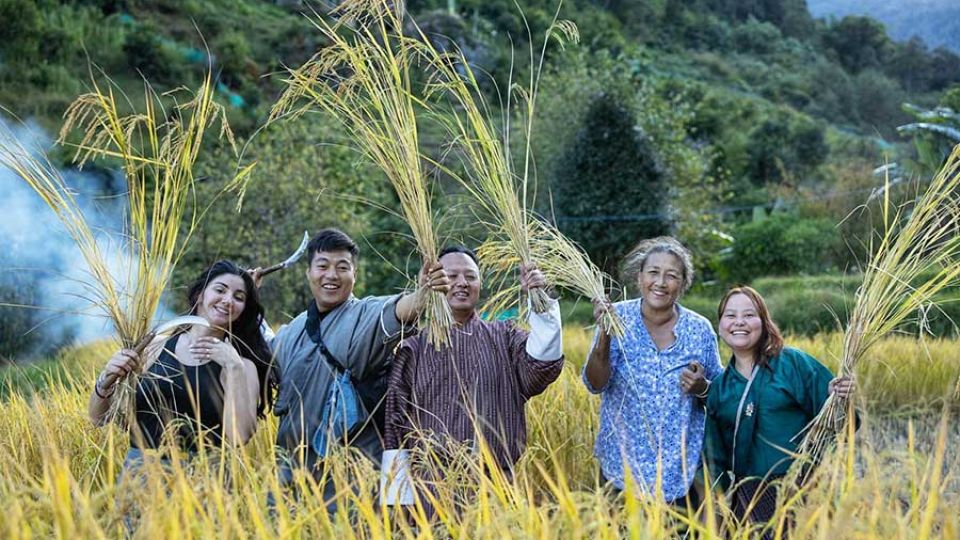
Each journey is privately curated around personal preferences, pace, and what guests wish to feel-whether that is peace, connection, inspiration, or adventure. Experiences go beyond sightseeing to include time in local homes, village life, spiritual encounters, and nature immersion. Food and accommodation are thoughtfully selected, ranging from character-filled family lodges to globally respected properties such as Aman, &Beyond, and Gangtey Lodge.
At its core, this model is enabled by digital marketing-not just as a tool for visibility, but as a way to communicate values, build trust, and connect directly with the right kind of traveller. It also ensures that 100% of tourism revenue remains within Bhutan, supporting communities, artisans, farmers, and cultural preservation.
There are likely other companies in Bhutan moving in a similar direction. But the real question is:
What would happen if the majority did?
The impact would be transformative-not just for businesses, but for the country as a whole.
And travellers, too, have a role to play.
Every visit to Bhutan carries weight. When chosen mindfully, it becomes more than a holiday-it becomes a contribution-one that empowers Bhutanese people, strengthens communities, and preserves a way of life.
The future of tourism in Bhutan is not just about attracting visitors.
It is about how they travel, who they travel with, and the impact they leave behind.