

October 13, 2025
KUALA LUMPUR – AN unplanned visit to the Tanjung Ubi Muslim Cemetery drove home the gravity of the Zara Qairina Mahathir issue. Her grave, located in Kampung Mesapol, Sipitang, is about 130km south of Kota Kinabalu.
A group of people emerged from the newly arrived transport. From their murmurs, I gathered they were from Johor. They had travelled across the South China Sea to stand at the grave of a 13-year-old girl and pray (and take selfies).
Watching them, I grasped the scale of the response to the Zara Qairina case.
In death, her case is immense. Since her passing on July 17 following a fall from her school dormitory, the stream of visitors to her grave has been continuous. Not just locals, but people from all over Sabah, neighbouring Sarawak, and Peninsular Malaysia. They come every day, in cars and SUVs, some in vans.
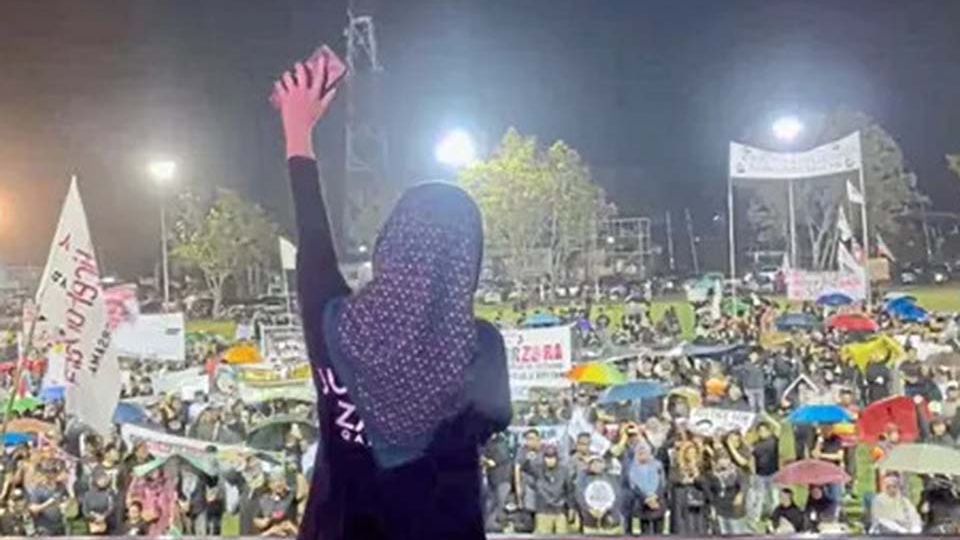
For a while, Zara Qairina’s death became one of the most consuming public issues in Malaysia. It was more than a news story; it became a national flashpoint.
The initial doubt, the lack of an autopsy, the allegations of bullying, and the spread of fake news all came together to ignite a demand for justice that became a movement. The teen’s grave stood at the centre of people’s collective anger and grief.
I asked Dayang Nor Syafiqah Abdul Hamid, 30, who is from Sipitang and has organised two Solidarity with Zara Qairina gatherings in her hometown, why people from all over the nation visit the girl’s grave.
“The visit is a sign of solidarity, sympathy, and prayers for justice to be served for the late Zara,” said the Perikatan Nasional politician.
The Zara Qairina issue seems to have quietened over the last couple of weeks. In fact, during a chat, a Sabah politician who is a strategist for his coalition said the issue has been laid to rest.
I politely disagreed with him.
Wait for nomination day, Party X and Party Y will bakar (ignite) it, I said. They plan to shift the blame to the Pakatan Harapan Federal Government, Sabah’s ruling Gabungan Rakyat Sabah (GRS) government, and Pakatan Sabah.
“Someone close to a VVIP will be named in supposedly covering it up,” I said.
I asked Dayang Nor Syafiqah whether Zara Qairina will be an election issue in the coming Sabah elections.
“It is highly likely that the Zara issue will be raised during the Sabah elections,” she replied.
“The Zara case has become a symbol of the fight for justice. Politicians will use this issue to show that they care and are concerned for the people.”
However, I believe some of these politicians have no “care and concern” for Zara Qairina. They are known as penunggang (riders). They will ride on a popular issue so that they can get the people’s support.
A voter from the state seat of Sindumin, located in the Sipitang parliamentary constituency, informed me that Party Y might have overworked the Zara Qairina issue.
“It has reached a point that the people are becoming fed up and angry,” he said.
The Sindumin voter, who wished to remain anonymous, noted that a dark horse candidate could garner votes using Zara Qairina’s case, particularly among the youth, since this candidate has avoided “tunggang tahap extrem” (riding the issue to the extreme) while genuinely addressing the issue.
As Zara Qairina is from Sindumin, a state seat, and her grave is in the constituency, I asked how it would impact Sindumin voters. The Sindumin voter said they had to place their trust in leaders who genuinely champion the cause of young victims and take a firm stand against bullying.
The Sindumin visit provided me with insight into how the Zara Qairina issue might impact the 2025 Sabah polls.
In Sindumin, I understand what the voters want. The young voters wish for justice – they want those involved in the teen’s death to be punished. Older voters, though, should be aware that most of the information they receive on the matter from social media is fake.
But it won’t be an easy task getting that message across.
I had ikan salai (smoked fish) at a stall near Sipitang town. I spoke to several voters. Most of their “facts” about the case were derived from social media. They don’t follow news reports on the Zara Qairina issue.
Comparing facts from the mainstream media with “news” on social media, it becomes very obvious that misinformation, or even outright lies, often prevails on the latter.
For example, even though a pathologist testified that it was physically impossible that Zara Qairina was placed in a washing machine, some still believe it. They argued with me that the woman responsible for spreading the rumour had pleaded not guilty when charged in court with causing public alarm.
Some still believe that a VVIP’s grandchild was involved. If Party X and Y’s black ops work, during the polls’ campaign period the sister of a VVIP will be implicated when it is – falsely – claimed that her “anak buah” (nephew/niece) is involved.
It will also depend on the state seat. For example, in the seat where I voted, which is Moyog, near Kota Kinabalu, the voters are more concerned with their perennial problems, like flooding. There is little talk of Zara Qairina.
Whether Zara Qairina will be a significant issue in the 2025 Sabah polls will depend on the effectiveness of AI-generated videos in the Indonesian language on social media.
Some politicians out there want to keep the issue alight so that they can come back into power. The algorithms might yet rule.