

June 1, 2026
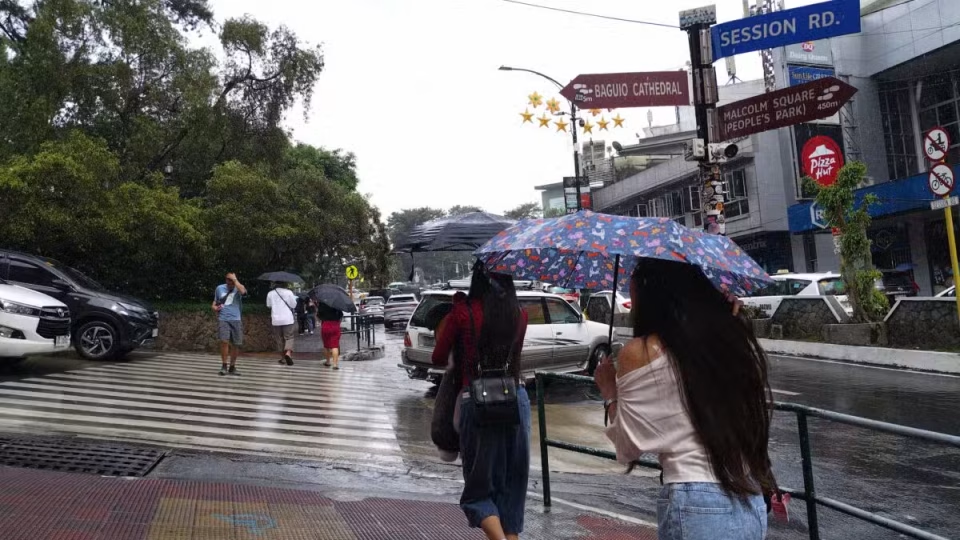
BAGUIO – Residents are being urged to store as much water as possible ahead of an expected Super El Niño, as experts warn that the last months of 2026 could bring severe dry spells despite rains still expected from June to September.
The advisory was issued during a May 29 summit on the city’s water vulnerability, where officials stressed the need for early preparation amid Baguio’s long-standing water supply challenges.
Water rationing in the city has been in place since the early 1990s due to an overstressed aquifer serving the high-density mountain city, which had a population of 368,426 as of the 2024 census.
Demand further surges during daytime hours, with the population swelling to more than 700,000 due to students, workers and tourists, according to City Planning Officer Architect Donna Tabangin.
Tabangin, part of a 2019 urban carrying capacity study group, said the city’s water supply threshold of 267,546 consumers was already exceeded in 2002, leading to a continuing annual water deficit as the population grows.
Many households have since relied on large water storage tanks, while older homes have practiced rainwater collection since the 1960s, based on a 2015 University of the Philippines Baguio study.
‘Threat’
Mayor Benjamin Magalong described the projected Super El Niño as “not just a problem but a threat,” saying it requires multisectoral action. He added that securing water and power is the top priority of the city’s economic continuity plan, adopted by the City Council on April 20.
Barangay leaders from 128 villages, along with other sectors, are now aligning monthly action plans using rainfall calendars from the Philippine Atmospheric, Geophysical and Astronomical Services Administration and the Baguio Water District (BWD).
Forecasts suggest the rainy season may extend until September or even November, followed by a strong El Niño that could bring drought conditions from December to summer 2027.
Officials warned the prolonged dry spell could coincide with Baguio’s peak tourism season in December, placing additional pressure on the water supply as visitor numbers surge.
BWD general manager Salvador Royeca said the utility has been developing rainwater impounding and groundwater recharge projects since the 2023 El Niño. He also pushed for wider water reuse among large establishments to reduce demand on freshwater sources.
The city’s average daily water demand stands at 62,610 cubic meters as of 2025. Under the BWD plan, water reuse is seen as a way to improve supply reliability, reduce wastewater discharge into rivers and free potable water for domestic use.
Tabangin said barangay-level action plans will focus on both water conservation and disaster preparedness, noting that June is ideal for rainwater capture and storage. However, she also warned that communities must prepare for flooding and landslides during the peak monsoon months of July to September, before the expected onset of the dry spell.