

November 7, 2025
THIMPHU – Although most Bhutanese women now actively participate as voters, socio-cultural barriers, family preferences, weak support systems, and limited exposure to capacity-building programmes continue to hold them back from contesting elections, according to a new report.
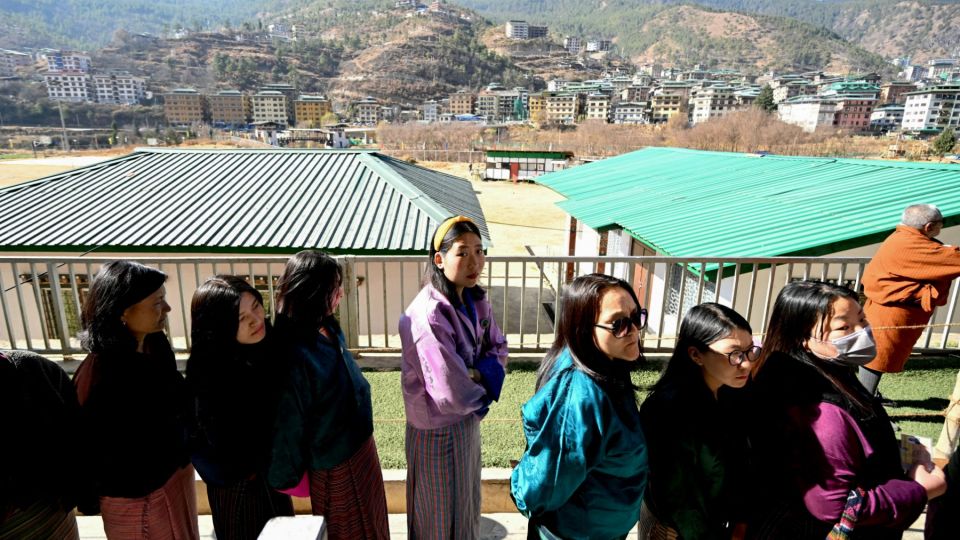
A nationwide survey conducted by Helvetas Bhutan found that 72.8 percent of women are engaged in political activities, mainly through voting, with 95 percent having voted at least once and 60 percent more than three times. However, this participation has not translated into leadership roles. Only 2 percent of women surveyed reported ever contesting elections at any level, including for gup, mangmi, thromde, National Council, or National Assembly.
Speaking at an event on enhancing women’s participation and representation in local government and Parliament yesterday, National Council Chairperson Sangay Dorji expressed concern over the low number of women leaders. “In Parliament, we just have five women members, not even 7 percent and only about nine female gups in local government,” he said.
The Chairperson said that awareness, education and collective responsibility are essential to increasing women’s political participation.
“We want to see the change in others, but don’t want to change ourselves,” he said, urging individuals to make greater personal effort to complement their concerns.
Such forums, he said, should generate meaningful recommendations so that “concern and effort marry together” to achieve Bhutan’s national goal of increasing women’s participation in civil service and leadership roles by 2029. Despite greater awareness of political rights, traditional gender roles continue to limit women’s entry into politics. The study found that 27.5 percent of women prefer a male family member to join politics instead of themselves, especially women aged 25–35, civil servants and those with a bachelor’s degree or lower.
Respondents cited cultural beliefs, family pressure and the perception that politics is more suitable for men as key reasons.
About 70 percent of respondents acknowledged that women face distinct challenges when entering politics, pointing to lack of family support, public scrutiny, gender stereotyping, low confidence and financial insecurity as the major barriers.
Many women also fear criticism and character judgement that often accompany female political aspirants.
The report also found low awareness of programmes aimed at building women’s political leadership. More than 50 percent of women said they were unaware of any capacity-building initiatives for women, and 83 percent said they had never participated in one. Awareness was higher among more educated women, indicating an information gap that disadvantages rural and less-educated women.
The study recommends a multi-strategic approach to address these barriers, including increasing the visibility and accessibility of political leadership programmes, mentorship and training; designing targeted outreach for women outside urban and educated circles.
It also recommended strengthening family and community-level advocacy to shift gendered perceptions of leadership. It also calls on political parties to adopt women-friendly policies and develop support networks that enable women to balance political roles with family responsibilities.
While the debate on reserved seats and gender quotas continues, researchers say building women’s confidence, exposure and support systems remains critical to converting high voter participation into leadership representation.
Nearly half the countries in the world today use some form of electoral gender quota, including Belgium, India, Nepal, Mongolia, Sweden, Rwanda and Timor-Leste.