

January 9, 2026
SEOUL – War zones, burned kitchens and death from malnutrition among troubles that lay on life paths of Korea’s culinary elite
The most surprising thing about Netflix’s smash-hit culinary survival series “Culinary Class Wars” may not be the food or the final rankings, but the stories of each chef.
Season 2’s beloved judges and the white team — the elite figures who helped shape Korea’s contemporary culinary scene — make their on-screen entrances like kings.
Yet behind the status and the Michelin credentials is something far messier and more cinematic than any edited competition show: a motley crew of runaways, war veterans, dropouts, and even accidental TV champions whose applications began after getting drunk.
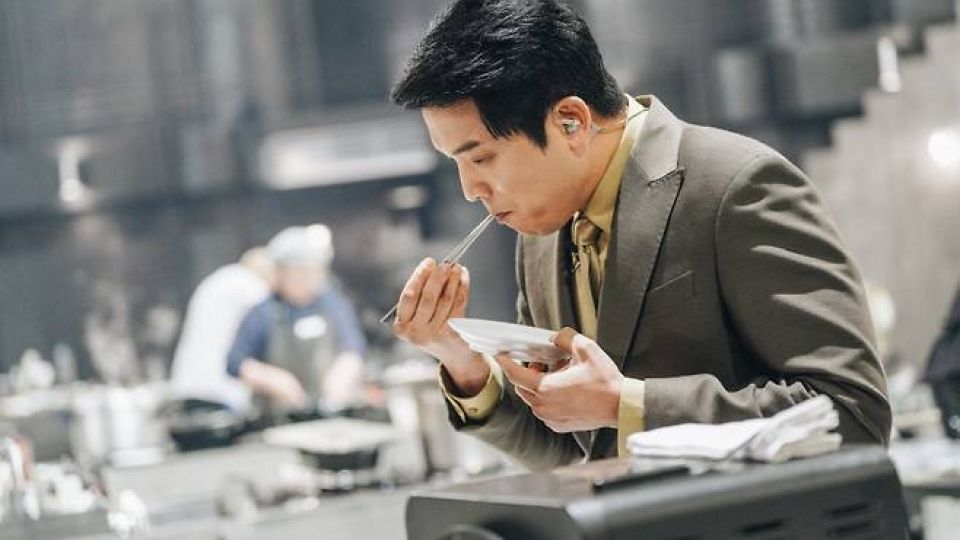
Anh Sung-jae: Former Saddam Hussein bunker bomber
If “Culinary Class Wars” has a face, it’s Anh Sung-jae, the polite yet sharp-tongued judge whose intense gravitas defines the series. The owner of Korea’s sole three-Michelin-star restaurant, Mosu, Anh anchors the series with a well-mannered demeanor and piercing critiques.
However, before reaching the summit of Korea’s culinary world, he led a chaotic life.
Born in Korea and raised in California, Anh’s youth was defined by immigrant survival. His family struggled, moving between small businesses such as sock shops, T-shirt stores and an American-Chinese restaurant, with Anh helping before and after school.
As a young adult, he enlisted in the US Army and served four years as a maintenance technician that included a yearlong deployment to Iraq.
“My assignment wasn’t to fire a gun, but to search for weapons in Saddam Hussein’s bunkers and take them into the desert to detonate them,” he revealed via an interview.
He kept the deployment a secret from his family, an omission that earned him a slap from his furious grandmother upon his return, Anh added.
Upon discharge, the transition to civilian life was equally impulsive; after spotting students in chef whites at Le Cordon Bleu, he abandoned plans to become a Porsche mechanic and enrolled on a whim.
He began washing dishes, gradually moving up the restaurant ranks to eventually master the line at one of the US’ most-respected restaurants, “The French Laundry” — and ultimately launching the historic Mosu in 2015.
From war machines to haute cuisine, Anh’s career has been an odyssey.
Choi Kang-rok, learning cooking through manga

Choi Kang-rok appears in “Culinary Class Wars.” PHOTO: NETFLIX/THE KOREA HERALD
Fan favorite Choi Kang-rok, beloved for his shy, anime-loving, otaku-like demeanor, also has an unusually unplanned career arc, one rarely seen even in Japanese comics.
He began as a drummer, but after failing his music entrance exams, he enrolled in college to take Spanish studies.
But he dropped out, drifting between part-time kitchen jobs to pay for his expensive music gear. It was during this period that he discovered the manga “Mr. Sushi King,” reportedly the turning point that inspired him to officially start a career as a restaurateur.
His early ventures were failures. Two sushi shops folded, leaving him broke and disillusioned. He lived in a Buddhist temple before moving to Japan to attend the prestigious Tsuji Culinary Institute, driven by a tenacious desire to break through in the culinary world.
Even then, success proved elusive, and he retreated into a salaried job at a tuna trading company to settle his debts. It was only during a night of heavy drinking that he impulsively applied for Season 2 of “MasterChef Korea.”
It was no drunken mistake: He won the series.
Today, Choi stands as one of the show’s most admired figures, his rise testament to the idea that talent will survive misfortune and emerge in time.
Son Jong-won, walking away from brilliance

Son Jong-won (right) in “Culinary Class Wars.” PHOTO: NETFLIX/THE KOREA HERALD
Son Jong-won, the handsome heartthrob of the season, appears to embody elegant, controlled excellence, but his volatile past suggests otherwise.
A valedictorian at an elite private school, Son seemed destined for a life of conventional success. On paper, his future was set, winning a scholarship at the Rose-Hulman Institute of Technology. Yet a visit to the prestigious Culinary Institute of America sparked an obsession that changed everything.
After being captivated by students in crisp chef whites mastering their craft, Son made a decisive shift — abandoning his original major to enroll at the institute a and pursue a culinary career in the United States.
He later returned to Korea to helm L’Amant Secret, earning a Michelin star within two years. He would then go on to take over Eatanic Garden at Josun Palace, which soon followed suit. Son’s bold decision to walk away from a secure future proved decisive, shaping him into one of the country’s most beloved star chefs.
Lim Sung-geun, the runaway

Lim Sung-geun appears in “Culinary Class Wars.” PHOTO: NETFLIX/THE KOREA HERALD
Lim Sung-geun, the gruff, larger-than-life figure whose “ajeossi” bravado became one of the most popular memes of “Culinary Class Wars” Season 2, came to cooking not by choice but by running away from home.
Having run away from home at 15, Lim survived by sleeping in kitchens and washing dishes. Working throughout his teenage years and quickly recognized for his talent, Lee became a head chef at just 19 — a self-taught master who practiced in secret at dawn, hiding the spoiled ingredients he used for training.
His continued career in Korean cuisine is defined by a resilience that seems almost unreal: The night he achieved a tearful victory on the TV show “Korean Food Battle 3” was the same night his three-story restaurant completely burned to the ground — events that unexpectedly cemented his status as a rockstar chef in the country.
Ven. Seonjae: From Christian to Buddhist monk
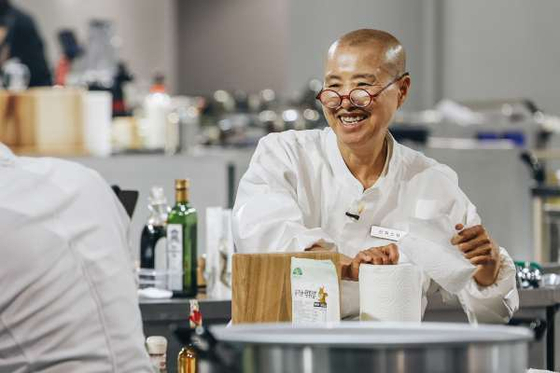
The Ven. Seonjae appears in “Culinary Class Wars.” PHOTO: NETFLIX/THE KOREA HERALD
Perhaps the most striking presence on “Culinary Class Wars” is the Ven. Seonjae — serene, unshakable and dressed in monastic robes.
But her origin story has a twist: She was a devout Protestant at first.
Born into a Protestant family, Ven. Seonjae revealed she had attended mission schools, dawn prayers and Sunday teaching during her youth — a level of devotion rare even among committed Christians today.
Her drastic conversion to Buddhism came during a retreat at Yongjusa Temple, alongside a spiritual awakening that reframed her idea of sacrifices and love.
Ordained at 25, Seonjae was eventually confronted by a systemic failure: The death of a fellow monk from malnutrition, which led her on a quest to study Buddhist culinary practices.
Her pursuit of an answer led her to publish Korea’s first academic thesis on temple cuisine and establish the Seonjae Temple Food Culture Research Institute. Today, she is recognized as the country’s first Master of Jogye Order Temple Food as well as a formidable contestant on “Culinary Class Wars.”