

May 29, 2026
MANILA – The University of the Philippines Marine Science (UP-MSI) Institute recently launched “Pag-asa Island: A Hidden Pearl of Biodiversity”, a research project spotlighting the rich biodiversity in the second-largest island in the Spratly Islands, part of the West Philippine Sea, as part of the UP-MSI’s celebration of the International Day of Biological Diversity and the Philippines’ Month of the Ocean.
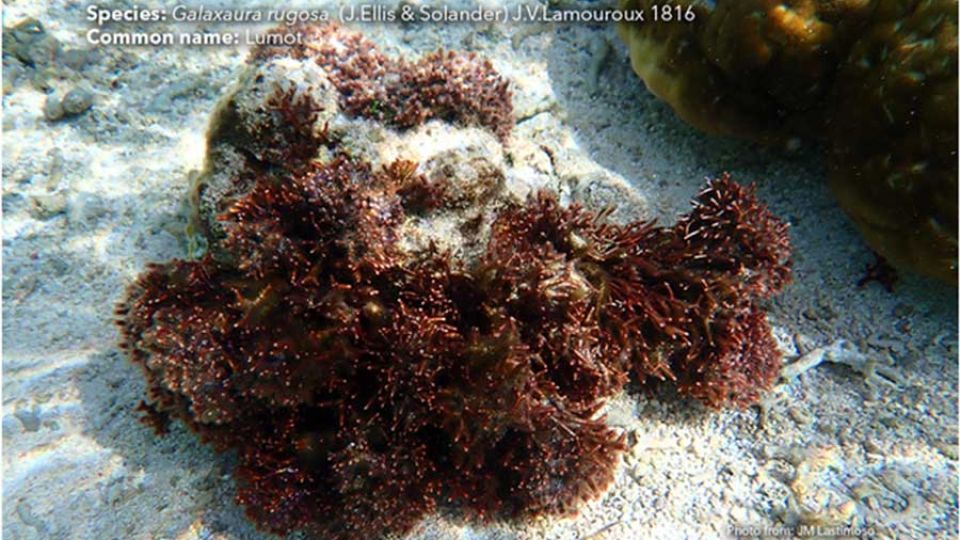
Visitors to the MSI webpage can read about the diverse marine life of Pag-asa Island on the website, such as crabs and seaweeds, and enjoy underwater pictures and images of specimens found in the Kalayaan Island Group and the West Philippine Sea. The website showcases research dating from the 1990s until the present, along with a timeline of expeditions.
“Researchers keep returning to Pag-asa (which means ‘hope’ in Filipino) whenever opportunities arise, inspired by life’s resilience on this remarkable island and its oceanographic and biological connections to the broader region,” says the site.
In addition to the focus on biodiversity, marine biologists, research assistants and faculty staff also wrote personal reflections under “Letters From Pag-Asa” to offer a glimpse of their experiences during fieldwork.
Dr. Wilfred John E. Santiañez, a professor at the Marine Science Institute, in his post “The importance of seaweeds in Pag-asa Island and its environs,” wrote about the ecological and economic importance of seaweeds to the Philippines and noted that the archipelago has the most diverse seaweed resources.
On the other hand, Dr. Gizelle Batomalaque, in “Still in the Philippines”, shared her reflections on researching and staying with the community inhabiting Pag-asa Island.
“This familiarity is comforting because it breaks down preconceived ideas of the exoticism of the place and the people. Our interactions and observations with the locals made us realise that island life has parallels, whether you are in Pag-asa, It-bayat (Batanes), Balut (Sarangani), or any small island in the Philippines.
“Not to invalidate security concerns, but taking aside the geopolitical backdrop, the residents of Pag-asa Island show the [natural] tendency of humans to self-organise and make the most out of their situation,” she said in her column.
In launching “Pag-asa Island: A Hidden Pearl of Biodiversity”, the UP Marine Science Institute hopes to bring the Filipino public closer to what the study of life is truly like in the West Philippine Sea, the UP-MSI said.
The institute will fill in the website more as the work continues.
The webpage and the UP Marine Science Institute’s current research into Pag-asa Island are supported by the Canada Fund for Local Initiatives through the Embassy of Canada in the Philippines and the Marine Environment and Resources Foundation, Inc.