

June 4, 2026
SEOUL – In a democracy, people vote to make a difference. Indeed, voters can decide whether their government deserves to be reelected or replaced. Without an electoral system, incompetent or even tyrannical leaders could remain in power indefinitely. Therefore, voting is a prerequisite for any democratic country.
Naturally, politicians are uneasy about elections. As election day approaches, many politicians become anxious and restless because they may either be reelected or voted out of office, depending on the ballots they receive. For politicians, therefore, “the ballot is stronger than the bullet,” as Abraham Lincoln observed. Politicians are constantly concerned about the next election. James Freeman Clarke once said, “A politician thinks of the next election; a statesman, of the next generation.” Unfortunately, genuine statesmen seem increasingly rare today.
To make wise choices, voters themselves must be educated and politically mature. Otherwise, incompetent leaders, corrupt politicians or even ruthless dictators may be elected or reelected. That is why Franklin D. Roosevelt stated, “Democracy cannot succeed unless those who express their choice are prepared to choose wisely. The real safeguard of democracy, therefore, is education.” Theodore Roosevelt similarly wrote, “A vote is like a rifle; its usefulness depends upon the character of the user.”
When voters lack sufficient knowledge, discretion or discernment, they may elect unqualified politicians, thereby turning democratic elections into a form of mob rule. John F. Kennedy pointed out this danger when he said, “The ignorance of one voter in a democracy impairs the security of all.”
Disappointed by uneducated voters, some people choose not to participate in politics at all. Plato warned against such indifference, saying, “One of the penalties for refusing to participate in politics is that you end up being governed by your inferiors.” However, skeptics argue that people may still be governed by inferiors if unreliable voters continue electing inferior leaders. Another reason some people avoid voting is their distrust of the electoral system itself, which they believe is vulnerable to fraud. That is why Tom Stoppard remarked, “It’s not the voting that’s democracy; it’s the counting.”
Disillusioned with the electoral system, Henry David Thoreau, the famous 19th-century American thinker, refused to vote, cynically observing, “All voting is a sort of gaming, like checkers or backgammon, with a slight moral tinge to it, a playing with right and wrong.” Thoreau was also the author of the essay “Civil Disobedience,” which begins with the celebrated phrase, “That government is best which governs least.”
Leslie A. Fiedler also fundamentally distrusted politics and criticized the voting system. A prominent literary and cultural critic of the 20th century, Fiedler became deeply disillusioned with both the process and the outcomes of elections. Consequently, he never voted for politicians.
An elected leader should never forget that victory is sometimes determined by only a narrow margin. In what is called a “51-49 victory,” nearly half of the voters supported the opposing candidate. Under such circumstances, a political leader cannot ignore those who did not give their support. When governing a country, a leader should embrace not only supporters but also opponents. Only then can they become a truly great leader. Unfortunately, many political leaders instead attempt to settle scores and take revenge on those who supported their rivals.
The same principle applies to members of the ruling party. Rather than dominating the National Assembly tyrannically by exploiting their majority, the ruling party should act with humility and cooperate with the opposition. Otherwise, the next election may become a day of judgment for them. Nevertheless, ruling parties often become intoxicated with power and attempt to crush minority opposition parties, believing that uninformed voters will continue supporting them.
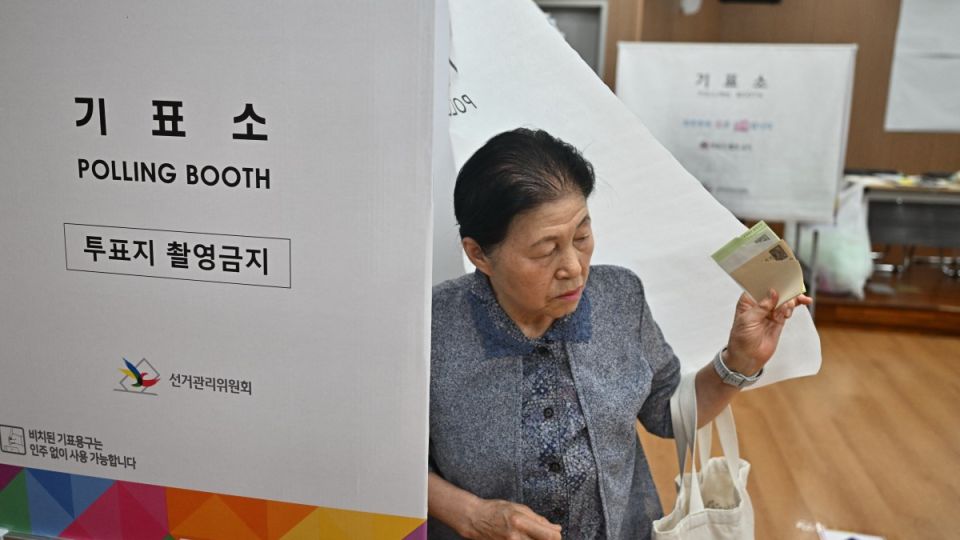
On Election Day, we cast our votes in the hope that the politicians we choose possess global perspectives, diplomatic skill and the ability to embrace their opponents. Unfortunately, we are often disappointed by them. As a result, we anxiously await the next election in the hope of creating change. Embarrassingly, however, poorly informed voters may choose the same politicians again. Consequently, some intellectuals become frustrated by what Alexis de Tocqueville called the “tyranny of the majority,” an inherent weakness of democracy.
What, then, do we vote for? We vote for our future and for the next generation. We vote to make our voices heard and to bring about change. We vote in the hope of choosing leaders who can guide our country in the right direction. We also vote because we believe our participation can influence the outcome of an election.
We may once again be disappointed and disillusioned by the results. Nevertheless, we cannot lose hope, at least for the sake of our children, because we bear the responsibility of building a better and brighter future for future generations. That is why, on Election Day, we walk to the polling station instead of going fishing or hiking.
Kim Seong-kon is a professor emeritus of English at Seoul National University and a visiting scholar at Dartmouth College. The views expressed here are the writer’s own.