

May 7, 2026
PANBANG – In a foothill village in south-central Bhutan where rivers shape daily life, a small eco-tourism venture is changing how people earn a living.
Khenda Adventure, the first private company of its kind in Panbang, is drawing visitors to this remote corner while creating jobs for local youth. For its founder, Ugyen Tshering, the business carries a personal promise, as it is tied to his father’s final wish.
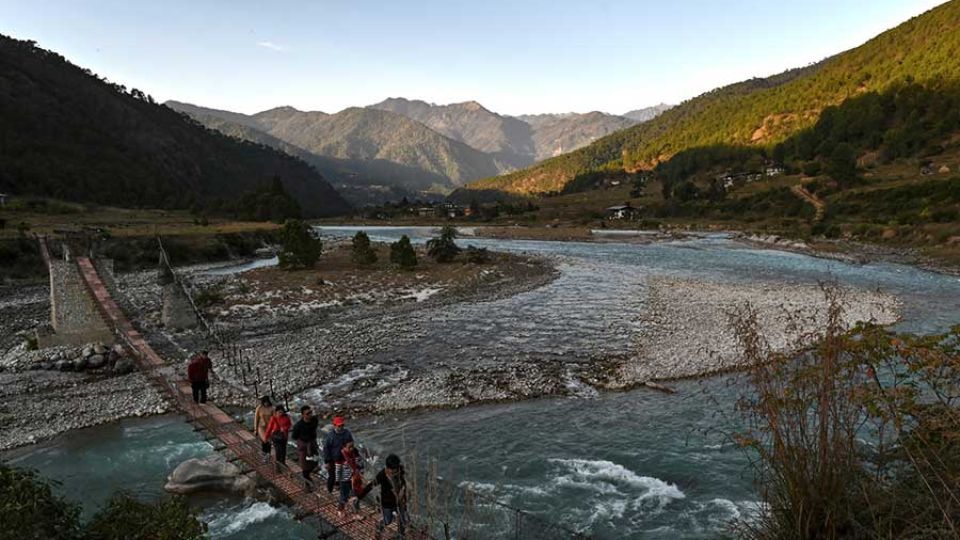
Panbang, home to about 10,000 people, sits on the edge of Royal Manas National Park, Bhutan’s oldest protected area, established in 1966. The region is part of a larger ecological corridor that connects several national parks. Forests stretch across the landscape. The Mangde Chhu and Drangme Chhu flow through it. The area is home to birdlife, butterflies, freshwater fish, and species such as the white-bellied heron and the red panda.
Ugyen Tshering, who once worked with the community-run River Guides of Panbang, started Khenda Adventure in October 2024. He became the first from the group to launch a private venture.
The company offers rafting and kayaking along its rivers. It runs camping trips and bamboo cottage stays on a three-acre site. There are plans to expand with another lodge in Panbang town. Visitors can also join fishing trips, village tours, festival visits, and cultural activities.
The team is young. Members range from 18 to 30 years old. Nine of them are certified river guides. They grew up around the river. They know its currents, its bends, and its risks. On the water, their movements are steady and practiced.
Ugyen Tshering wants the business to grow, but not in isolation. He speaks about working with other local groups. The idea is to bring more visitors to Panbang and share the benefits across the community. “Panbang is a small community,” he said. “We have to work together to benefit everyone.”
The turn to eco-tourism reflects a shift in the local economy. In the past, oranges were the main source of income. There was a time when production exceeded demand. That is no longer the case. Mandarin trees have declined, and income options are limited. Tourism has emerged as one of the few alternatives.
His earlier role as chief executive officer of River Guides of Panbang gave him experience. It also shaped his thinking. From the beginning, members were encouraged to build skills and eventually start their own ventures as demand increased.
At Khenda Adventure, that transition is visible. The company employs youth from all four gewogs of Lower Kheng: Bjoka, Goshing, Phangkhar, and Ngangla. Many come from families facing hardship. Some left school early. Here, they have found work. They have also found direction.
Dorji Wangchuk is training to become a chef in Thimphu. Sangay Dorji, who developed an interest in flora and fauna from his uncle, now works as a nature guide alongside his role as a river guide. For Nima Dorji, staying in the village is a choice he values. “Life is short,” he said. “I don’t want to run after money when I can live peacefully here.”
For Ugyen Tshering, the business is closely tied to family. Khenda Adventure is named after his father, a former gup. He is the second youngest of nine siblings. Before his father passed away, he was asked to take on family responsibilities and continue his role.
“My father’s word is very special to me,” he said. “I live to fulfill his last wish because his word will never come again.”
What is taking shape in Panbang is more than a business. It shows a village choosing to stay. It shows how forests and rivers can support livelihoods. And it shows how one promise, carried forward, can shape a community’s future.