

May 5, 2026
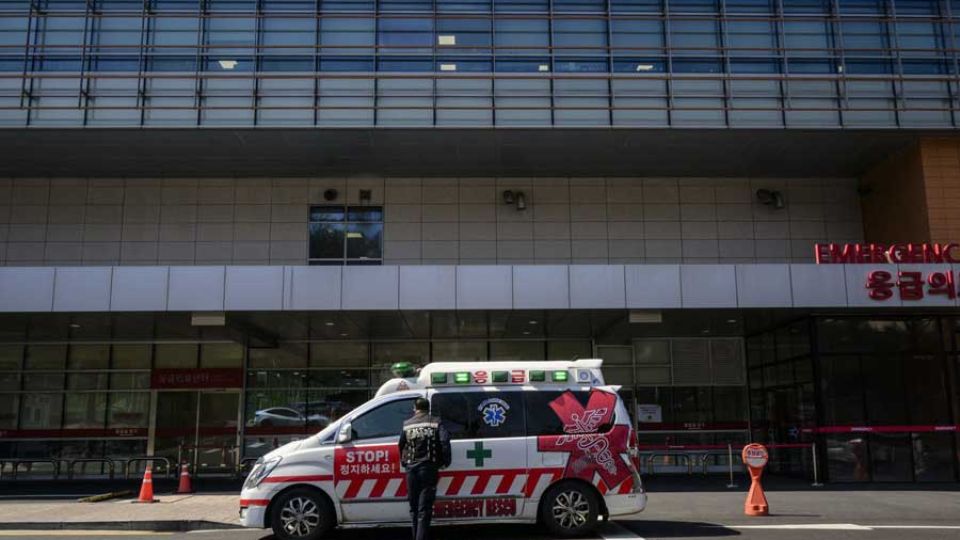
SEOUL – Women with high-risk pregnancies in South Korea are being sent hundreds of kilometers, sometimes by helicopter, in search of hospitals able to deliver their babies, exposing deep shortages in the country’s obstetric emergency system.
Recent incidents across the country have highlighted what experts describe as a systemic breakdown in emergency maternal care, particularly outside the Seoul metropolitan area.
In one of the most severe cases last week, a woman who was 29 weeks pregnant in Cheongju, North Chungcheong Province, was transferred to a hospital in Busan. Dozens of hospitals in her local region had refused to accept her due to a lack of specialists and neonatal intensive care unit beds. After a more than three-hour transfer by helicopter, the baby was declared dead.
In another case that day, a woman in her 40s who was 26 weeks pregnant and suffering from high blood pressure was transported nearly 300 kilometers from Sejong to Busan after 52 hospitals declined to admit her. She arrived after a six-hour ambulance journey.
Similar cases have been reported elsewhere. In Daegu earlier this year, a woman pregnant with twins was turned away by seven hospitals before being transferred to a facility near Seoul. One of the babies died shortly after birth, while the other suffered brain damage.
These incidents are part of what is known in Korea as “medical wandering,” in which patients are repeatedly denied care and transported to different regions to find a hospital capable of treatment.
Structural shortages and regional disparities
Experts say the recurring crises are rooted in deep structural problems rather than isolated failures.
High-risk deliveries require both specialized obstetricians and neonatal intensive care capacity, but such resources are heavily concentrated in large urban hospitals.
According to data from the National Medical Center, eight out of 17 regions recorded utilization rates for high-risk maternal care facilities below the national average, reflecting uneven access to specialized maternal care across the country.
The national average stood at 80.13 percent in 2023, while Sejong recorded the lowest rate at 44 percent, followed by North Gyeongsang Province at 62.04 percent and South Jeolla Province at 66.28 percent. Other regions, including the North and South Chungcheong provinces, Incheon and Gangwon Province, also fell below the average.
The figures point to regional gaps in access to specialized maternal care, experts say, and recent emergency transfers suggest that some women with high-risk pregnancies are struggling to find hospitals able to treat them locally.
The shortage of obstetricians is also severe. As of 2024, the number of obstetricians per 100,000 people in several regions, including North Gyeongsang Province, Sejong and South Chungcheong Province, fell well below the national average.
Nationwide, there are roughly 0.24 obstetricians per 1,000 women, meaning one specialist is responsible for more than 4,000 women on average.
Experts warn that such disparities not only limit access to routine prenatal care but also significantly reduce the system’s ability to respond to emergencies, particularly for high-risk pregnancies requiring immediate specialized intervention.
Legal risks and declining incentives
Medical professionals point to additional systemic pressures that discourage hospitals from accepting high-risk cases.
Obstetrics is a high-liability field due to the unpredictable nature of childbirth and the risk of legal disputes. Doctors may face criminal charges in cases of adverse outcomes, leading to what experts describe as “defensive medicine,” in which providers avoid high-risk patients to minimize legal exposure.
At the same time, low reimbursement rates for delivery services and declining birth rates have made obstetrics financially unattractive, particularly in regional areas.
“Doctors are expected to take on high-risk procedures with significant legal liability, but the compensation is relatively low,” said Yang Seung-duk, president of the association of doctors in North Chungcheong Province. “This makes it difficult to attract and retain specialists, especially outside major cities.”
He added that the issue extends beyond obstetrics to the broader field of essential medical services, stressing the need for structural reforms across the health care system.
“Easing the burden of risk faced by medical professionals and strengthening incentives for those working in critical care sectors are necessary,” he said.
Gaps in emergency response
The current emergency transfer system has also come under scrutiny.
Because hospitals determine individually whether they can accept a patient, emergency responders must contact facilities one by one. When multiple hospitals refuse, critical time is lost.
Lawmakers and experts have called for a centralized coordination system and regionally designated maternal care networks to ensure timely treatment.
“The emergency transfer system exists in name only,” Rep. Lee Joo-young said, criticizing the current system as effectively nonfunctional. “Regional coordination mechanisms are not working, and patients are repeatedly left wandering because hospitals cannot be found in time.”
He added that unless fragmented responsibilities between the National Fire Agency and the Ministry of Health and Welfare are comprehensively realigned, similar incidents would continue to occur.
Amid mounting criticism, Minister of Health and Welfare Jung Eun-kyeong expressed condolences over the recent case in Cheongju.
“We will build a maternal and neonatal care system where pregnant women can safely give birth anywhere in the country,” she said in a statement posted on social media.
Jung convened an emergency meeting at Chungbuk National University Hospital and said she acknowledged that high-risk pregnancies are increasing while the supply of specialists remains insufficient.
She pledged to overhaul the current system by reassessing the tiered structure of maternal care centers and improving real-time resource tracking to facilitate faster transfers. Strengthening coordination with emergency responders, including 119 rescue services, was also listed as a priority.
The ministry said it would continue discussions with 22 regional and tertiary maternal care centers, as well as academic societies such as the Korean Society of Obstetrics and Gynecology and the Korean Pediatric Society, to develop comprehensive reform measures.