

May 28, 2026
SAMTSE – A fatal elephant attack in Tashicholing Gewog, Samtse, yesterday has renewed concerns over the growing challenge of managing human-elephant conflict in Samtse and other parts of southern Bhutan.
The incident, in which a 59-year-old man was killed by a wild elephant in the early morning has intensified debate over the long-term effectiveness of interventions such as solar electric fencing, elephant collaring, and rapid response systems in one of the country’s most conflict-prone areas.
Officials from the Samtse Forest Division said that while recent mitigation efforts have reduced the frequency of direct elephant intrusions into villages, the animals are gradually learning to exploit weaknesses in existing systems.
Forest officials said that 2.05 kilometres of solar electric fence installed earlier this year have reduced elephant intrusions compared to previous years. Only one or two major intrusions were recorded within five months of the fence installation.
According to Chief Forestry Officer Kuenley Gyeltshen, the latest intrusion involved a tusker belonging to a herd led by a collared female elephant named Peldon.
“The tusker has become increasingly aggressive and has started entering through weak points in the fencing and alternative routes,” he said, adding that the behaviour reflects growing elephant adaptability to existing man-made barriers.
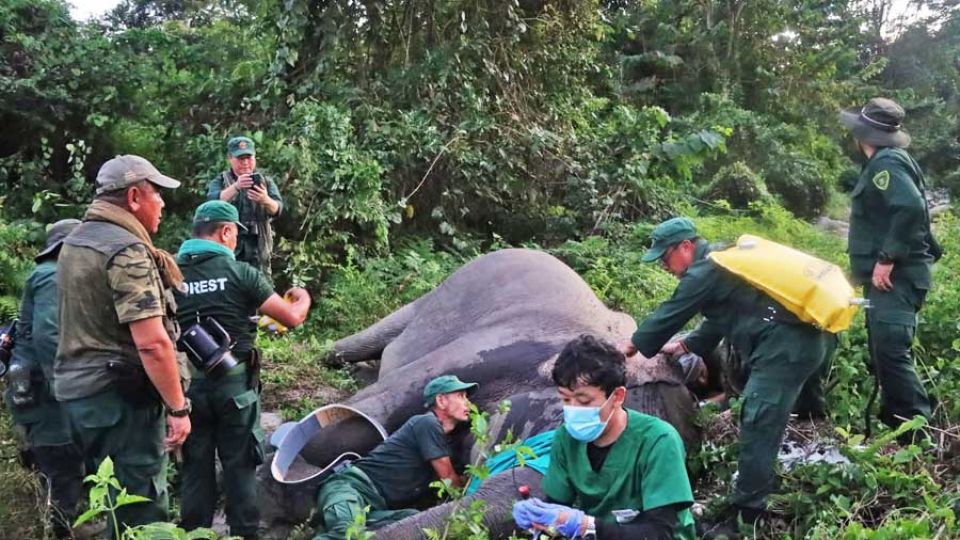
Kuenley Gyeltshen said the division plans to collar the tusker to strengthen monitoring and provide communities with timely information on its movements.
The forest division stated that while eliminating human-elephant conflict is not feasible, ongoing interventions are focused on reducing damage, improving early warning systems, and promoting coexistence between humans and wildlife.
Measures introduced in recent years include solar electric fencing, elephant collaring, quick response teams, bio-fencing, habitat enrichment, construction of boulder barriers, and the installation of sound and alarm systems.
The solar electric fence in Tashicholing, one of the major recent interventions in the gewog, was constructed in January this year at two locations. Singaygang to Lower Peljorling covers 1,550 metres, while Jogimara covers 500 metres.
The project was implemented under a cost-sharing arrangement, with the WWF-IKI project supplying materials, local communities contributing labour, and the Divisional Forest Office providing technical support
Officials said the fence was handed over to communities after by-laws were developed for its operation and maintenance.
Tashicholing continues to experience recurring human-elephant conflict due to its proximity to the Indian border and the movement of elephants from nearby protected areas, including Gorumara National Park and Chapramari Wildlife Sanctuary.
In 2024 alone, elephants were associated with one case of human death, 32 cases of crop damage, and eight cases of property damage in Samtse.
Damaged crops usually include banana, betel nut and paddy while damaged property usually include personal dwellings and storage sheds.
“Despite repeated interventions and promises of coexistence, people in Sipsu continue to live in fear rather than peace. Farmers are losing not only their crops and livelihoods, but also their sense of safety,” said Nir Kumar, a local resident.
He added that for many families, the situation has become so unbearable that leaving their villages and joining their children abroad is beginning to feel like the only way to escape the constant threat of elephant attacks.
Solar fencing: A deterrent, not a permanent barrier
Forestry officials said the solar electric fencing was designed as a deterrent rather than a complete barrier, intended to delay elephants’ entry and give communities time to respond.
The Chief Forestry Officer said fully electrified fencing would involve high costs and pose risks to both humans and elephants. “Such systems require energisers that are vulnerable to lightning strikes and prolonged monsoon conditions in the region.”
The current fencing model in Tashicholing was implemented after nearly a year of study and assessment. In the current fencing system, only the main pillars are concreted, while the intermediate poles remain movable, allowing the structure to absorb pressure during elephant movement and minimise damage to the fence.
A similar system introduced earlier at the Gyalsung site in Jamtsholing showed positive results, which informed the design later adopted in Tashicholing and other areas in Samtse.
However, officials acknowledged that mitigation measures alone may not be sufficient as elephants continue to adapt to environmental changes and human interventions.
Elephant adaptability poses challenges
Despite the interventions, the fencing system continues to face operational constraints, particularly during the monsoon season. One major issue is voltage fluctuation during prolonged cloudy periods, when reduced sunlight affects battery charging.
Residents said continuous rainfall in Tashicholing often weakens the power supply, creating opportunities for elephants to breach the fence.
The forest division plans to procure additional power banks to serve as backup during extended periods of adverse weather.
Forestry officials also acknowledged that elephants are becoming increasingly adept at identifying vulnerable sections of fencing and exploiting power disruptions to enter settlements. Additional inner layers of fencing are now being considered in vulnerable locations.
“The recent intrusion into the community did not occur through the fenced area, but through an alternative route that had rarely been used in the past,” said Biswana Uraon, Tshogpa of Singyegang.
He added that the fencing has helped reduce elephant intrusions compared to previous years.
Maintenance challenges, including overgrown vegetation disrupting electric flow and limited manpower, have also affected the effectiveness of the fencing system. The division has been conducting community training and awareness programmes on fence maintenance and monitoring.
Collaring and quick response
The forest office has expanded elephant collaring and rapid response measures to improve early warning systems and community safety.
Last year, two elephants were fitted with tracking collars in separate locations. Peldon, the matriarch of a herd that has reportedly grown from around 12 elephants to more than 40, is now regularly monitored as the herd moves between Tashicholing and the Gyalsung area.
Another tusker, Gembo, known for damaging property and approaching human settlements, was also collared. Forestry officials said the elephant frequently visits the Budhuni landfill site, reportedly attracted by waste containing salt residue.
Real-time tracking has strengthened early warning systems, enabling timely alerts and coordinated deployment of response teams. Quick Response Teams are deployed whenever elephants approach settlements or critical infrastructure.
The data collected is also expected to support long-term conservation planning, identification of elephant corridors, seasonal movement patterns, and cross-border wildlife management.
Shrinking habitats intensify conflict
Human-elephant conflict remains one of the major wildlife management challenges in Samtse, as expanding settlements, industrial activity, and infrastructure development are increasingly encroaching on elephant habitats and migratory corridors, intensifying encounters between wildlife and communities.
Asian elephants require vast ranges for feeding, breeding, and seasonal migration. However, habitat fragmentation and expanding human activity have increased encounters between elephants and communities, resulting in crop damage, property loss, and risks to human life.
Forestry officials said retaliatory actions, shrinking habitats, and growing pressure on elephant corridors continue to pose long-term risks to elephant conservation, making coexistence-based management increasingly necessary in areas such as Tashicholing and wider Samtse.