

April 30, 2026
SEOUL – A recent proposal to abandon South Korea’s preemptive strike system known as the “kill chain” has reignited debate over whether it could help ease tensions with North Korea — or risk undermining security.
Speaking to Korean correspondents at a briefing in Washington on Tuesday, Victor Cha, Korea chair at the Center for Strategic and International Studies, argued that moving away from this system could reduce escalation risk.
Cha recommended that South Korea discontinue the kill chain, arguing that the preemptive strike strategy could provoke North Korea into using nuclear weapons.
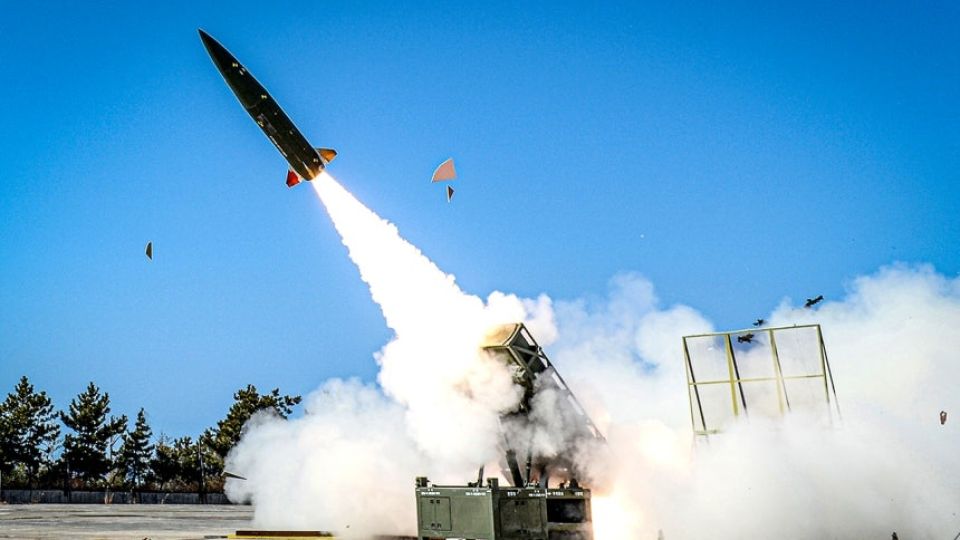
The kill chain is a core component of South Korea’s three-axis defense system, alongside missile defense and retaliatory strike capabilities. It is designed to preemptively strike North Korean nuclear and missile facilities in the event of imminent attack.
Cha’s remarks reflect a broader shift in thinking among some US policy experts, who argue that with North Korea already possessing nuclear weapons, the focus should move from denuclearization — still a long-term goal — to deterrence and managing North Korea’s nuclear capabilities rather than eliminating them outright.
Cha emphasized a shift toward a strategy focused on preventing an adversary from successfully carrying out an attack.
This could be achieved by strengthening layered missile defense systems and regularly deploying US strategic assets, including nuclear-capable aircraft and submarines, to the Korean Peninsula, he added.
Cha also called for a broader shift in US policy toward North Korea, arguing that the long-standing focus on complete, verifiable and irreversible denuclearization has effectively reached its limits.
He suggested that while denuclearization should remain a long-term goal, the immediate priority should be reducing risks through dialogue and making the United States safer from North Korea’s nuclear capabilities.
He noted that sanctions had lost much of their leverage due to support from Russia and China, leaving arms control as a more realistic path forward.
The idea of scrapping the kill chain has drawn skepticism from experts in South Korea, where the kill chain is viewed not as a purely offensive concept but as a key tool of deterrence: By signaling the capability to strike first in the event of an imminent threat the thinking goes that it discourages provocations.
Hong Min, a senior researcher at the Korea Institute for National Unification, said the issue lies deeper than any single military system.
“It is worth questioning whether the kill chain is really the essence of the problem,” he said.
“The fundamental issue lies in the deep-rooted hostility and mutual distrust between the two sides. The existence of deterrence systems in itself is not the cause of the problem,” he added.
Hong emphasized that maintaining deterrence capabilities is a basic function of national security, and “is not something that can be considered the root of the problem.”
Rather than dismantling deterrence structures, he argued for efforts to reduce miscalculation and build trust through arms control.
“The core concept of arms control is not to eliminate or reduce deterrence systems, but to minimize miscalculations and reduce the potential for threats and aggression,” he said.
Hong also highlighted the broader regional context: Northeast Asia is already characterized by intensifying military competition, with multiple countries deploying long-range precision strike systems.
“In such an environment, rather than removing deterrence systems, it would be more realistic to pursue multilevel efforts to reduce risks of miscalculation — both on the Korean Peninsula and at the broader regional level,” he said.
He added that even in the context of addressing North Korea’s nuclear program, removing the kill chain would not deliver the intended outcome.
“Eliminating South Korea’s kill chain would not lead to North Korea giving up its nuclear weapons or achieving denuclearization,” he said.
The contrasting views highlight a growing divide between experts and officials on risk-reduction approaches and traditional deterrence strategies, as policymakers grapple with how best to manage North Korea’s advancing nuclear capabilities without increasing the likelihood of conflict.
Other observers say the proposal is difficult to reconcile with the current security environment on the Korean Peninsula.
Another Seoul-based analyst, who requested anonymity, noted that North Korea already possesses nuclear weapons and a range of delivery systems, and that trust in negotiations remains extremely limited.
This, the official added, makes the threat an ongoing reality rather than a hypothetical risk.
In that context removing the kill chain could weaken deterrence and shift the strategic balance in Pyongyang’s favor.