

November 3, 2025
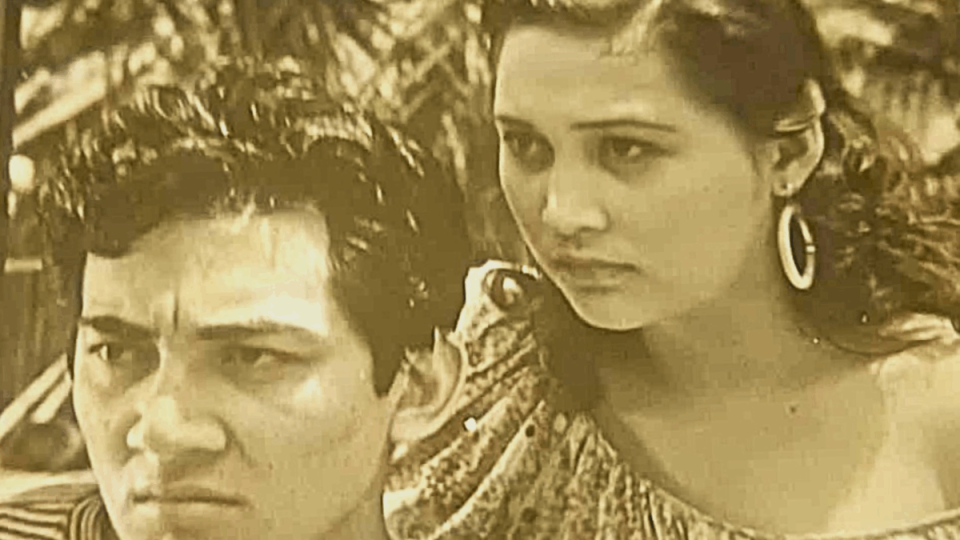
MANILA – A copy of the 1936 pre-war film “Diwata ng Karagatan,” directed by Carlos Vander Telosa and produced by Jose Nepomuceno, was located at the Royal Belgian Film Archive or Cinematek in Belgium, according to film historian Nick Deocampo.
In a lengthy post on Facebook on Friday, Oct. 31, Deocampo shared how the film was located decades after it was lost during the height of the war. He added that it is one of the oldest Filipino pre-World War 2 films.
“Important news! Oldest Filipino film produced by pioneer Jose Nepomuceno found in Belgium. A national film treasure has just been found! A copy of ‘Diwata ng Karagatan,’ long-rumored to be existing but not found, has finally been located at the Belgian film archive,” he said.
“Using my personal money to buy a plane ticket to go to Brussels, Belgium from Berlin, I linked-up with the daughter of a pioneering Ilonggo-language film director, Louise Baterna, to liaise with the Cinémathèque royale de Belgique in finding the film. Happy to announce, the film’s been found!” he continued.
Deocampo, who had the chance to watch the “only-known existing copy” of the film said it only exists in 35 mm print. This is because no copy “has yet been digitized” since its nitrate original was placed at the now-closed Belgian film laboratory CineLabor in 2016.
“The film’s 1936 provenance dislodges the claim earlier held by the 1937 Fernando Poe Sr-starrer, Zamboanga, as the oldest Filipino pre-World War II movie, a film that I also discovered abroad while on a Fulbright-funded research scholarship at the Library of Congress in 2004,” he said.
According to the historian, “Diwata ng Karagatan” will mark its 90th year anniversary since its creation in 1936. After its Philippine premiere, it was re-screened three years later to celebrate its success abroad.
“After its first screening that year, it was re-premiered in 1939 to celebrate its successful exhibitions abroad,” he said. “During the intervening years, the film was exported to France and it also had screenings in Belgium and South America. It appeared to be in popular demand in France as the film was released several times in different titles.”
However, nothing had been heard about the film since “its last exhibition at Fox Theater in Manila.” When the war broke in 1941, it was one of the films that “disappeared” at the time.
“All movies in Manila disappeared with the war. Thankfully, a copy of the film has now been found abroad,” he said. “What makes the discovery of this film doubly historical is that this is the first and perhaps the only film that is extant that was produced by the Father of Philippine Cinema, Jose Nepomuceno. Despite rumors of some films attributed to Nepomuceno to be existing, none of his films has ever been found.”
Why it’s hard to locate old Filipino films
In his post, Deocampo said piracy is what makes the search for Filipino films in foreign film archives, saying that a copy of “Diwata ng Karagatan” was re-edited by a French distributor.
“The reason why it was difficult to find Filipino films in foreign film archives may surprise many of us. It was because of film piracy. This malpractice was rampant even during the early film days,” he said.
“‘Diwata ng Karagatan’ fell victim to this unscrupulous practice when a copy presumably owned by a French distributor was re-edited and later released in the French-speaking market. It was claimed to be a French production, which it was not,” he further added.
Deocampo also revealed that the film was cut down to 52 minutes by a certain French film promoter identified as Gabriel Pallu. Some scenes were also “jumbled” and names of the Filipino creatives in the credits were “erased,” including the names of Telosa and Nepomuceno.
He added that the film was claimed to be a “documentary of exotic South-sea natives,” saying a “long black leader” appeared at the end of the film where the names of the creatives were originally located, describing it as a case of “filmic and cultural erasure.”
“Their names were substituted by French names, further claiming the film to be a musical romance film. A French voice-over narration could be heard (no narration in the original), while luckily the Tagalog dialogues have been preserved… The ending was all blacked-out while the theme music continued to play. This was evidently a clear case of filmic and cultural erasure,” he said.
The historian also revealed that only the lead stars Rogelio dela Rosa and Mari Velez have been identified so far.
“No credit could also be found of the actors, as the film was claimed to be a ‘documentary’ of some exotic South-sea natives, a popular topic in the Thirties. It is of the same genre as Zamboanga, also carrying the same South-sea romance theme. The country where the film was shot (the Philippines) was also left unknown,” he said.
“Identifying the two leading actors now, the male lead was played by the young Rogelio de la Rosa, and the female lead was played by Mari Velez. The antagonist, the sinister Wong, remains unknown, as with the other actors whose names still need to be identified,” he continued.
Since there is “no archive to store films then,” Deocampo said this can also be seen in the case of the 1977 film “Ginauhaw Ako, Ginagutom Ako” starring Susan Henson and Rosemarie Gil.
“The discovery of the film may be seen as an archaeological film find or a detective film work but just the same it was a major coup in finding the old Filipino movie. With Manila totally devastated during World War II, and with no archive to store films then, it is lucky that a few films still remain to be found in foreign archives,” he said.
To end his post, the film historian hopes that more efforts will be made to find classic Filipino films. “Still, until now, no real effort has been made to find Filipino films abroad. My effort is a personal one driven by my love for Philippine cinema and fueled by my scholarly interest in Filipino film history.”
“Who would be crazy enough to jump on a plane using personal funds to go to Belgium without fully knowing if a copy of the film was there? But the gamble paid off,” he continued. “A national film treasure has been found!”