


January 19, 2026
BEIJING – In a digital lab at Beijing University of Posts and Telecommunications, Zhao Haiying, professor at the university’s artificial intelligence college, studies an intricate emblem glowing on her computer screen.
It is not just a static image, but a living portal. Through artificial intelligence, she traces an embroidery stitch to Confucius’ travels during the Spring and Autumn Period (770-476 BC), then propels it forward into modern reinterpretations, weaving a thread across millennia.
To make relics like the emblem tangible again, Zhao has tried to transform intangible cultural heritage into calculable, composable and living “cultural genes”, a concept she first raised in her PhD essay.

The motifs created by Zhao Haiying’s team are derived from the murals in the Xinjiang Uyghur Autonomous Region. PHOTO: CHINA DAILY
As director of the university’s key laboratory of cultural intelligence computing, she leads a team merging AI, big data and archaeology to build what she calls a “digital gene bank of Chinese civilization”.
Through multimodal AI and computing technologies, cultural symbols can be structurally analyzed and semantically linked to establish a digital foundation for theoretical interpretation, according to her.
For Zhao, the breakthrough began with a fundamental question: Can culture be computed?
“A cultural gene must be stable enough to inherit, yet dynamic enough to evolve and recombine, like biological DNA,” she explains, adding that this unit could be a pattern, a color or a craft technique.
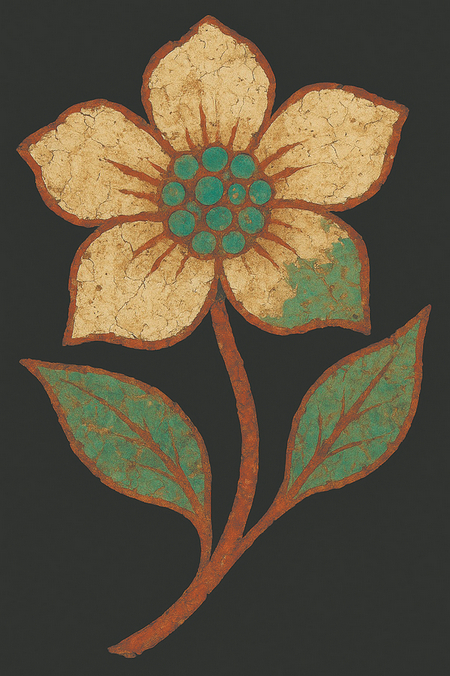
The motifs created by Zhao Haiying’s team are derived from the murals in the Xinjiang Uyghur Autonomous Region. PHOTO: CHINA DAILY
Her inspiration came through carpets, studying motifs from her hometown, the Xinjiang Uygur autonomous region, to Azerbaijan, seeing how one art form connects countries and regions involved in the Belt and Road Initiative.
“It confirmed that the gene is the essential unit for quantifying, calculating, and, crucially, for revealing patterns of evolution through time and space,” she says.
Zhao’s team has since defined six core categories of cultural genes: patterns, colors, music, dance, crafts and forms. In their database, a dragon motif from a Ming Dynasty (1368-1644) robe isn’t just an image in a museum; it’s a data node linked to its mathematical structure, related architectural forms and modern design applications.
The practical work is vast and formidable. Partnering with 54 museums, including the Palace Museum in Beijing and the Shanghai Museum, Zhao’s lab has interconnected more than 1.3 million digital artifacts and patterns, using AI to analyze and tag items with deep, contextual labels.
They’ve cataloged more than 90,000 dragon patterns and about 7,740 phoenix patterns from the Palace Museum’s collections — conducting large-scale analyses that had never been undertaken.
“Our advantage is connection, not just collection,” Zhao says.
“When seeing a biomorphic design in Xinjiang carpets, we uncover its mathematical essence, and the universal beauty of geometry behind it.”
The research leaps off the server into the physical world through exhibitions. Domestic shows present digitally decoded artifacts while international tours use immersive spaces to translate complex cultural concepts.
The exhibition’s stop in Bangkok, Thailand, in April 2024, underscored its role in fostering international cultural dialogue.
Phinij Jarusombat, former deputy prime minister of Thailand, said in his address that the innovative use of technology to display Chinese cultural relics at the exhibition was eye-opening. He hoped Thailand and China could strengthen cooperation and exchanges in culture, technology, education, and other fields.
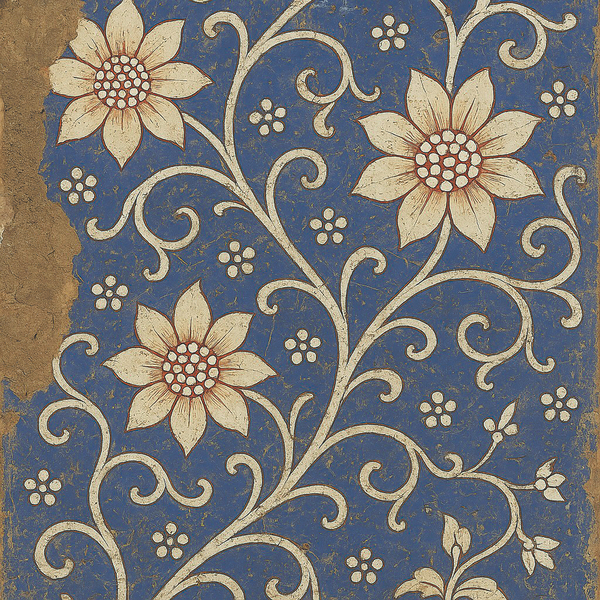
The motifs created by Zhao Haiying’s team are derived from the murals in the Xinjiang Uyghur Autonomous Region. PHOTO: CHINA DAILY
Zhao says: “We make the intangible tangible. You don’t just read about a pattern; you step into its spatial story, understanding its taboos, its journey, and its beauty.”
The ultimate test of “cultural computing” lies in its ability to bridge the ancient and the contemporary, creating not only exhibitions but also new economic and cultural value.
One example is the 2016 collaboration between Zhao’s team and cashmere sweater producer Snow Lotus Group, a partnership that has become a paradigm for industry-academia integration.
Rather than simply supplying patterns, the collaboration was built upon the theoretical and technological system of “cultural genes”, which collected and analyzed the unique compositional elements and structural forms of traditional Chinese attire.
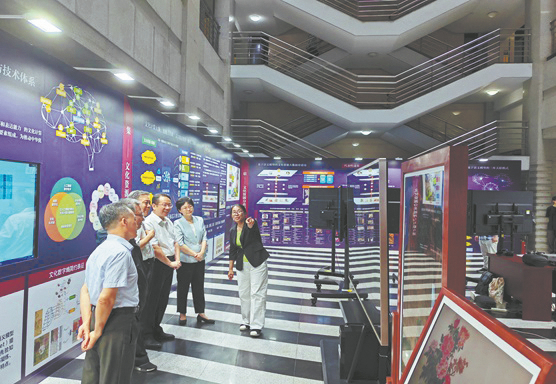
Zhao Haiying’s team has organized exhibitions both domestically and internationally to help more people appreciate and understand the charm of Chinese relics. These exhibitions showcase digitally decoded artifacts and highlight the universal beauty of the geometry behind them. PHOTO: CHINA DAILY
The brand then translated this digital reservoir into the language of contemporary fashion.
The project delivered about 5,000 decoded patterns leading to 384 sample designs and generating 8 million yuan ($1.14 million) in output value in its first year.
For Zhao, it demonstrated that cultural activation could be both commercially viable and creatively transformative.
Building on the successful model, Zhao’s team is extending the application to the carpet manufacturing sector.
In November, they conducted field research in Cuihuangkou town in Tianjin, a renowned carpet production hub, exploring how digitally decoded “cultural genes” could empower traditional industries.
Despite progress, challenges remain.
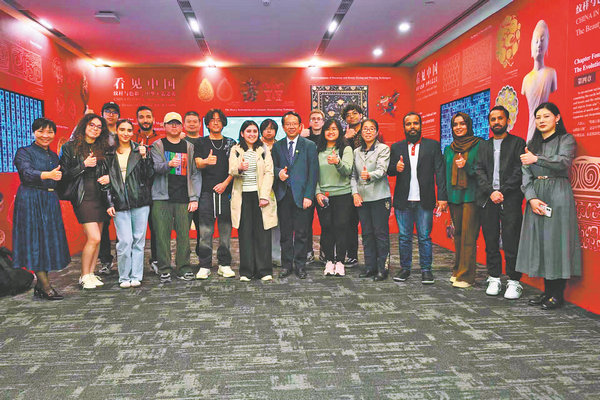
Zhao Haiying’s team has organized exhibitions both domestically and internationally to help more people appreciate and understand the charm of Chinese relics. These exhibitions showcase digitally decoded artifacts and highlight the universal beauty of the geometry behind them. PHOTO: CHINA DAILY
“Top tech universities like Beijing University of Posts and Telecommunications often lack archaeology departments. We need a joint cooperation mechanism between technologists and cultural scholars,” Zhao says.
To foster such an interdisciplinary ecosystem, she has been actively building platforms for convergence.
The inaugural Chinese Conference on Cultural Intelligence, jointly organized by the China Graphics Society, Beijing University of Posts and Telecommunications, and the China Society of Image and Graphics, concluded in Hangzhou, Zhejiang province, in October 2025, with Zhao hosting its closing ceremony.
She received the baton from the previous organizer, which indicates that the second conference will be held in Beijing.
Gathering more than 500 experts, industry representatives and scholars nationwide, the event served as a high-level forum to advance the academic ecology for the preservation, inheritance, and innovative dissemination of Chinese culture in the intelligent era.
This year, Zhao plans to focus on the country’s intangible cultural heritage, digitally safeguarding and connecting the sartorial traditions of all 56 ethnic groups.
“Ultimately, I pursue two things: connection and authenticity,” she says.
“Culture isn’t a lone artifact in a display case. It’s a point on a vast, living timeline. Our job is to make that timeline explorable, to let anyone, anywhere, touch the thread of thousands of years and weave it into the future.”
Contact the writer at wangqian@chinadaily.com.cn