

April 10, 2026
SEOUL – Galaxy Corp., best known as G-Dragon’s agency, hopes to introduce what it calls the first K-pop-dedicated AI glasses by the end of this year, alongside a robot-based concert venue in Seoul, according to founder Choi Yong-ho.
Choi on Wednesday outlined the company’s broader ambition to position itself as an “entertainment technology” firm through a slate of new initiatives.
“To demonstrate that we are an enter-tech company, we will introduce AI glasses in collaboration with artists,” Choi said during a press briefing in Seoul. “Artists will be able to communicate directly with fans through the glasses during concerts and fan meetings.”
The “White Whole” device — a name inspired by the concept of a “white hole,” the theoretical opposite of a black hole — is designed to offer real-time translation and immersive fan experiences from the artist’s perspective.
According to the company, international fans would be able to hear artists’ speeches translated in real time, while the device could also transmit live audio, including breathing and ambient sounds, from the artist’s point of view.
The glasses are also equipped with a camera that allows audiences to see exactly where an artist is looking during performances, projected onto large screens. This, Choi said, is intended to create an interactive experience combining the artist’s sight, sound and voice.
“In simple terms, fandom is a kind of one-sided love — and fans want to feel closer,” Choi said. “They want to hear even the artist’s breathing, and that’s the kind of experience we aim to deliver.”
The long-term vision for the AI glasses is integration with robotics.
“In three to five years, everyone may have their own robot, and the glasses could function as a controller to interact with them,” he said.
The company declined to disclose the device manufacturer, citing confidentiality, but said the product is being developed for mass production with a target launch later this year.
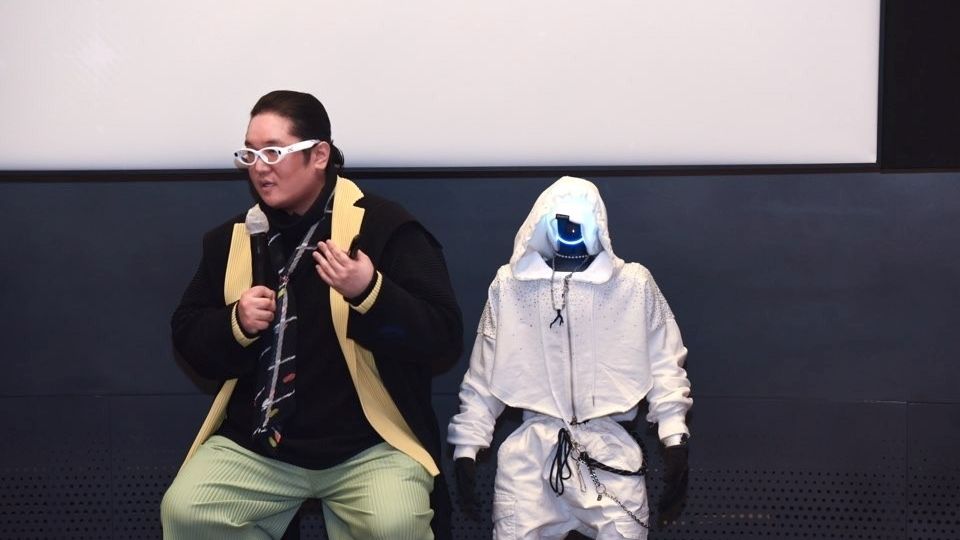
In addition, Galaxy Corp. said it plans to open a large-scale robot park in Seoul’s Songpa-gu on May 5, Children’s Day. The facility, spanning about 16,500 square meters, will be rolled out in phases.
The first phase will feature a K-pop robot arena where visitors can experience concerts performed by robots.
“Anyone will be able to experience K-pop concerts through robots,” Choi said. “Families can come and even learn K-pop dance together.”
The company said the venue could host more than 1,000 performances annually by operating multiple shows per day.
Galaxy Corp. is also preparing to debut a virtual idol group through an ongoing audition program, while developing an AI-powered music studio and a dance training space combining AI and robotics, expected to launch within four months.
While such technologies remain largely untested in the K-pop industry, raising questions about feasibility and sustainability, Choi emphasized the importance of timing and industry dialogue.
“What matters is whether this kind of entertainment technology is needed and when it should be introduced,” he said. “It’s about presenting the right technology at the right time.”