

April 24, 2026
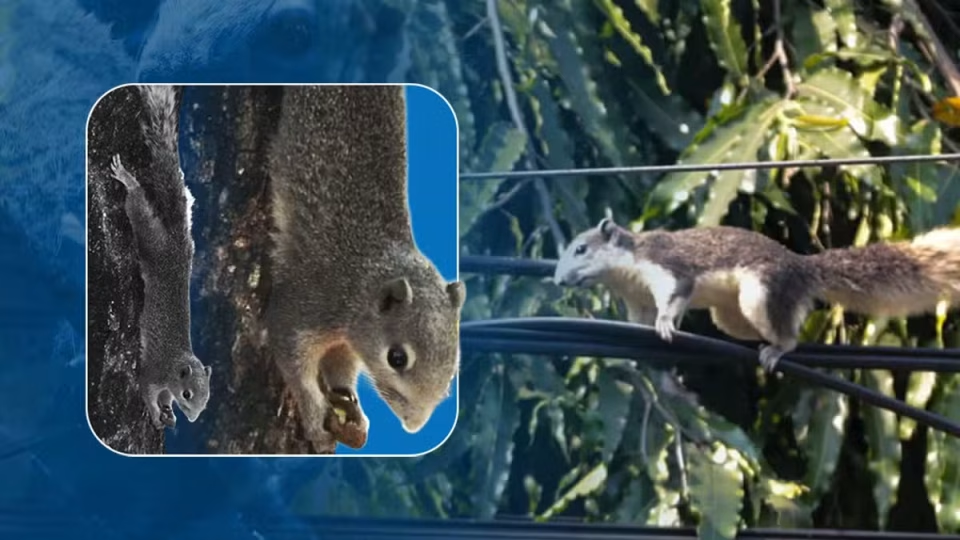
MANILA – They may be charming, but the Department of Environment and Natural Resources (DENR) said the presence of a non-native squirrel species sighted in Metro Manila last week is “not promoted.”
The DENR said that “while every wildlife species has inherent value,” the Finlayson’s squirrel (Callosciurus finlaysonii) is an “invasive species that may threaten local ecosystems.”
Also known as the variable squirrel, the species is native to Cambodia, Laos, Myanmar, Thailand and Vietnam.
iNaturalist said the Finlayson’s squirrel has several subspecies and occurs in a wide range of wooded habitats. It lives in trees and is active throughout the day.
But why is its presence not promoted?
Jomar Guzman, a graduate student in the Master of Science in Wildlife Science program at the University of the Philippines Los Baños, said invasive alien species are among the main drivers of biodiversity loss worldwide.
‘Invasive threats’
Guzman said invasive species are dangerous because they are introduced outside their natural range, often without natural predators or susceptibility to diseases that would normally regulate their populations.
Based on existing research, he said native and even endangered species may decline when invasive species outcompete them for food, space or nesting sites, or directly prey on them.
RELATED STORY: All that glittery fish isn’t gold for San Pablo’s Sampaloc Lake
They can alter an ecosystem by “disrupting food webs, changing nutrient cycling, and modifying habitat structure,” he said.
For Guzman, these changes can ripple across the ecosystem and affect several species.
Another concern is hybridization, when invasive species interbreed with native species. This can “dilute native genetic integrity and reduce the resilience of local populations,” he said.
RELATED STORY: ‘Aliens’ invade Philippine forests, lakes
The Philippines has native squirrels that are endemic to Palawan, Bohol, Leyte, Samar and Siargao.
“From a biosafety perspective, invasive species may also act as vectors of pathogens that can affect wildlife, livestock, and even humans,” he said. “This makes them not only an environmental issue but also a public health concern.”
‘Ecological, socio-economic concerns’
In the case of the Finlayson’s squirrel, Guzman said its presence across Metro Manila has ecological and socioeconomic consequences.
He said in urban and fragmented landscapes, invasive species have a “strong advantage over native wildlife,” especially because of the absence of natural predators.
It also competes with native species for resources, Guzman said, noting that the variable squirrel feeds on fruits, seeds and nuts—food sources that overlap with those of many native birds and small mammals.
“This creates direct competition, especially in resource-limited urban environments,” he said.
Guzman said the species’ presence could also affect native bird populations, especially those nesting in tree cavities.
RELATED STORY: Another invasive Chinese softshell turtle found in PH
He also flagged economic and urban impacts, noting that the squirrels feed on commercially important fruits such as mangoes and lanzones, which can affect local livelihoods.
He said they can damage infrastructure and pose safety risks by gnawing on electrical wiring.
But most important, Guzman said, is that the species “does not appear to provide any clear ecological benefit in the context of the Philippines.”
“Finlayson’s squirrel behaves as a highly adaptable generalist, thriving in disturbed environments but contributing little to ecosystem stability,” he said.
‘Coordinated response’ needed
Responding to invasive species such as the variable squirrel would require “informed and coordinated action,” Guzman said, underscoring the importance of public awareness and community involvement through citizen science.
He said people can report sightings, including the location as well as the number and behavior of the squirrels.
Guzman said such data are critical to management strategies.
He said the species should not be “captured and released elsewhere” because “relocation only spreads the species and worsens the problem.”
RELATED STORY: Baguio to get tough on ‘invasive plants’
People should not feed or encourage them, he said, because this can accelerate population growth.
He said limiting their access to food sources or nesting sites in certain areas may help reduce their establishment.
“For long-term control,” Guzman pointed to humane population control measures, including culling, “if supported by scientific evidence and implemented under proper ethical and legal guidelines.”
“In essence, any action should be coordinated with relevant authorities and local government units to ensure that management is effective, humane, and compliant with regulations,” Guzman said. /dm