

May 25, 2026
SAMTSE – About 22 piggery farmers in Damzhagsa under Norbugang Gewog in Samtse are reeling from heavy financial losses following a recent African Swine Fever (ASF) outbreak.
The outbreak has also renewed concerns over the absence of livestock insurance and the vulnerability of rural livestock economies to disease outbreaks.
According to records, the chiwog lost about 211 pigs to the disease, wiping out entire pigsties across the community and pushing farmers into severe financial distress.
The outbreak disrupted a major source of household income and exposed the fragile nature of piggery-based livelihoods, where livestock farming is an important economic activity and source of rural employment.
Farmers said the crisis comes amid earlier market pressures driven by weakening demand, which had already reduced returns from pig farming in recent years. The ASF outbreak consequently became a second economic shock, exacerbating existing financial strain and hastening losses among farming households.
Norbugang is among Samtse’s leading livestock-producing gewogs, where many households depend on dairy, poultry, and piggery farming for income generation. However, the recent outbreak has severely affected the local rural economy, exposing the limited capacity of existing support systems to respond to large-scale livestock disease outbreaks.
As part of containment measures, law enforcement agencies were compelled to cull remaining pigs to prevent further virus transmission. While officials maintained that the measure was necessary for disease containment and biosecurity management, affected farmers said it left them without livestock assets and without immediate means to restore income-generating activities, further worsening their financial hardship.
Call for compensation reform and livestock insurance
Farmers are now seeking changes to the existing compensation eligibility criteria, which they say exclude the majority of affected households.
Under the current framework, only pigs culled as a preventive measure before infection spreads within a sty are eligible for compensation. Pigs that die after infection has already spread, or are culled during later stages of the outbreak, are not covered under the current support mechanism.
Farmers said this creates a major compensation disparity, where only a limited number of cases qualify for assistance while most losses from the same outbreak receive no compensation.
As a result, despite suffering near-total livestock losses, the majority of affected farmers do not receive financial support.
The outbreak has therefore renewed attention on the absence of livestock insurance or broader agricultural risk financing mechanisms in the sector.
Farmers said that while government programmes promote livestock expansion through credit schemes and farm infrastructure support, institutional protection is limited when epidemic outbreaks occur, leaving farmers fully exposed to production and market risks.
They said the outbreak demonstrates how credit-driven agricultural expansion without parallel insurance coverage increases financial vulnerability, particularly for small-scale farmers operating with loans and private investments.
Many farmers who financed their farms through bank loans, land sales, and leased land arrangements are now left with mounting debt obligations and no immediate income source, making recovery financially difficult.
Karney Rai, a 52-year-old farmer engaged in piggery farming for the past six years, lost about 53 pigs after investing large amounts into his farm. He said the losses have become financially unmanageable.
“We do not want to blame anyone, but we would appreciate some form of support or compensation, as we cannot restart this farming without assistance,” he said.
He added that lenders have already started demanding repayments while he no longer has livestock to sustain household income.
Another farmer, Dhan Kumar Rai, who borrowed Nu 400,000 for his piggery farm, lost about 18 pigs, with estimated losses ranging between Nu 800,000 and Nu 900,000.
He said the outbreak has created severe financial stress and raised uncertainty about continuing piggery farming in the future.
“Such losses affect our livelihoods, and farmers must seriously reconsider investing in piggery farming if no compensation mechanism is in place,” he said.
Growing uncertainty in livestock-based livelihoods
Farmers said piggery farming had expanded in recent years due to relatively stable demand and government support aimed at increasing domestic meat production and reducing dependence on imports.
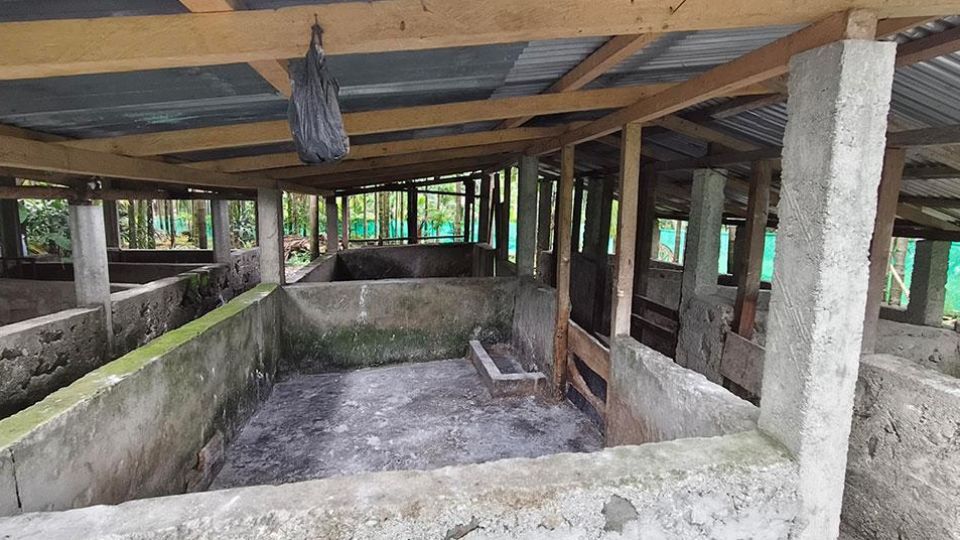
However, the ASF outbreak has reversed much of that progress, leaving behind empty sheds, unpaid loans, and limited recovery options.
While the government continues to promote livestock production through credit facilities and farm inputs such as fencing materials, CGI sheets, and cement, farmers said these interventions do not address losses arising from epidemic livestock diseases.
The absence of livestock insurance or a comprehensive compensation mechanism has therefore increased financial exposure among farmers, who are forced to absorb the full economic impact of disease outbreaks.
Farmers said this is gradually reducing confidence in piggery farming and discouraging reinvestment in the sector.
Udhip Kumar, who lost 17 pigs, said restarting the farm is no longer financially viable.
Similarly, Karney Rai said he may not resume piggery farming, as recovery costs remain beyond his capacity and existing infrastructure cannot easily be repurposed for alternative agricultural activities.
Farmers said the situation is not only affecting individual households but also weakening long-term confidence in livestock-based rural livelihoods.
They said a structured livestock insurance scheme or an expanded compensation framework that comprehensively covers epidemic-related livestock losses is now necessary to strengthen resilience in the sector.