

September 25, 2025
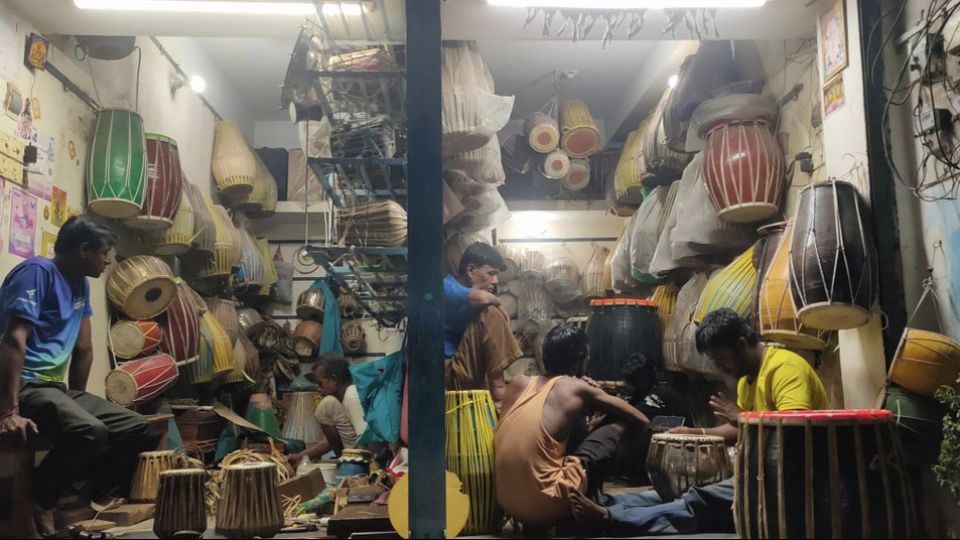
DHAKA – In the bustling lanes of Notunbazar in Sreemangal, while shoppers crowd clothing stores, a different scene unfolds at a small shop. Upside-down dhols of various sizes are neatly arranged as craftsmen quietly tie yarn around the drums in silence.
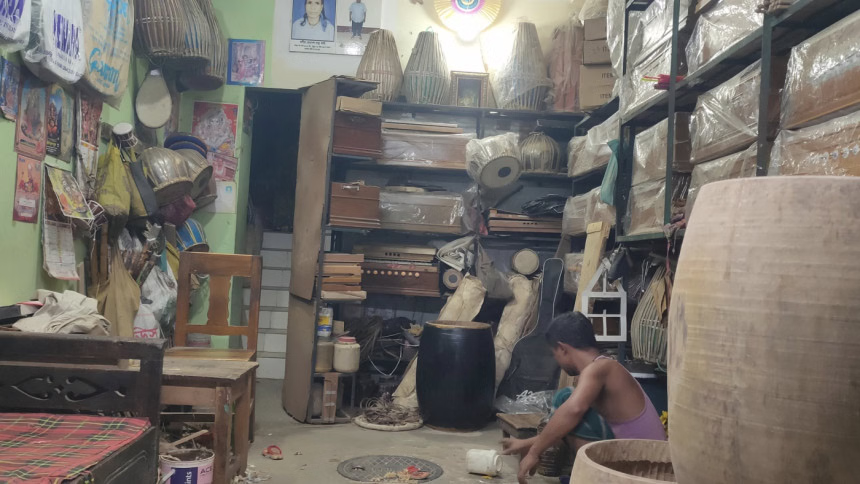
PHOTO: THE DAILY STAR
Seated in a corner is 79-year-old Soilendra Chandra Das, a master craftsman who has spent his life making dhaks, dhols, khol, tabla and harmoniums. His shop, filled with instruments crafted from cow and goat skin, stands as a fading reminder of a once-thriving profession.
“Earlier, I worked alongside my father and grandfather. There was so much demand that even five or six of us could not cope. Now, we only need to work for two to three months a year. It’s no longer sustainable,” he said.
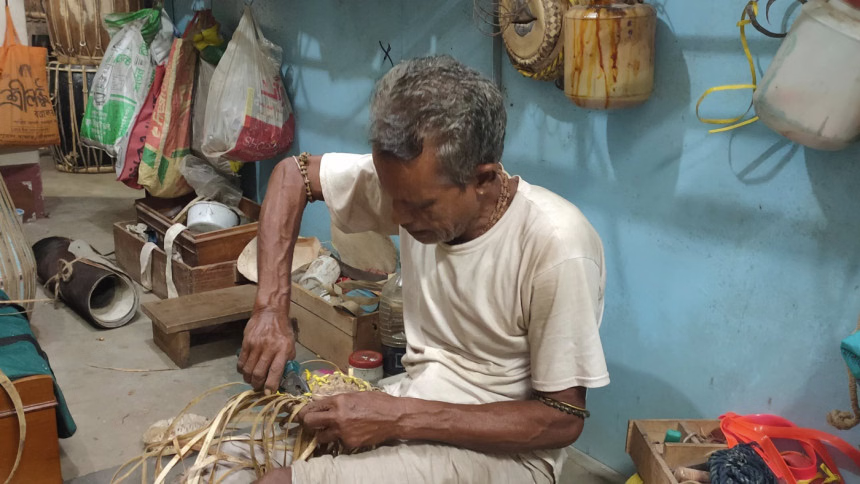
PHOTO: THE DAILY STAR
Once, musicians and artisans were in demand across Sreemangal, and Soilendra recalls earning up to Tk 1,500 a day. Today, finding a buyer for a single dhol is difficult. Prices range from Tk 2,000 to Tk 20,000.
“Interest in traditional instruments has faded. It’s hard to even get Tk 100 for a drum now. I have been in this craft my whole life. It’s in my blood,” he said.
Another artisan, Ashutosh Rishi, 49, who runs a shop beside Soilendra’s, echoed the same.

PHOTO: THE DAILY STAR
While demand rises during Hindu festivals such as Durga Puja, artisans often find little compensation. Once a regional attraction, the industry now struggles against modern instruments and shifting cultural tastes.
The instruments are made from neem and mango wood, with dhaks and dhols priced between Tk 5,000 and Tk 20,000 and tablas between Tk 3,000 and Tk 15,000. Despite their cultural and historical value, these instruments are being sidelined by cheaper modern alternatives.