

May 22, 2026
THIMPHU – The National Council has urged the government to enact a dedicated Pension and Provident Fund Act to strengthen governance, accountability, operational independence, and establish a clear regulatory and supervisory framework for the National Pension and Provident Fund (NPPF), which manages more than Nu 73 billion in pension assets.
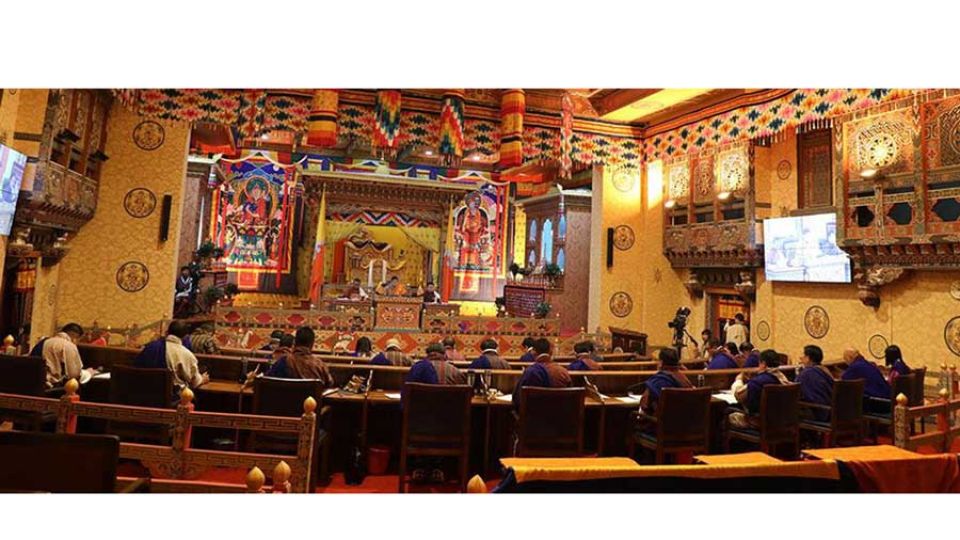
The recommendation was made during the presentation of the review report on the National Pension and Provident Fund Plan by the Good Governance Committee (GGC) to the House yesterday.
According to the committee, the NPPF currently operates under the National Pension and Provident Fund Rules and Regulations 2002 and amendments made in 2013, without a dedicated Act passed by Parliament. The committee stated that the absence of a comprehensive legal framework has created legal ambiguity and governance challenges for the pension institution.
The Executive Order issued in 2002 vested powers of the NPPF in the National Pension Board appointed by the government. However, despite these powers, the NPPF has only limited autonomy, as major decisions related to personnel, finance, and reforms still require approval from the Ministry of Finance.
“The functioning of a Nu 73 billion institution through executive orders, rules and regulations without proper legal backing poses risks to pension fund management, governance autonomy, pension adequacy, retirees’ security, membership coverage, and inclusivity,” the committee stated.
It also pointed out that international best practices require pension and provident fund institutions to function as independent legal entities supported by clear laws and regulatory frameworks.
Chairperson of the Good Governance Committee, Kencho Tshering, said that the absence of a dedicated Act and legislation has resulted in lapses and limited pension coverage in the country.
The committee further observed that such limitations hinder the professionalism and operational independence of the pension institution.
During the deliberation, members raised concerns over the adequacy of pension benefits and the long-term sustainability of the pension scheme.
The committee stated that the current pension structure is insufficient to meet the rising cost of living, particularly because pensions are calculated based on basic pay rather than gross pay. It noted that after the 2023 pay revision, basic pay accounts for only about 47 to 54 percent of gross salary, resulting in lower pension payouts.
The committee stated that some pensioners could fall into old-age poverty if urgent reforms are not initiated.
The committee recommended revisiting key parameters of the pension system, including the replacement rate, pensionable service period, and employee contribution rates under the provident fund scheme.
The committee also highlighted low pension coverage in the country. As of March 2026, only 93,111 people were covered under pension and provident fund schemes, representing just 11.8 percent of the total population.
Members also recommended that pension amounts be revised whenever salaries are increased through pay commission revisions, despite the existence of annual increments.
Some members proposed that children of deceased pension members continue to receive pension support until the completion of their studies. Others suggested revising the eligibility age for spouses to receive pension benefits.
Members also recommended extending provident fund coverage to contract employees and encouraging greater participation from the private sector, noting that only about 20 percent of private sector employees are currently covered under the provident fund scheme.
The members also raised that if the members enter into a pension, they should be provided a soft loan to support their livelihood.
Responding to the discussions, Chairperson of the National Council, Sangay Dorji, clarified that everyone doesn’t need to be covered under the provident fund scheme, as provident fund contributions are deducted from monthly salaries and depend on an individual’s ability to contribute.
The House accepted the recommendations related torevising pension amounts and extending provident fund eligibility to contract employees, and revising the pension with salary revision, and referred themto the Good Governance Committee for further review and necessary consultation.
The chairperson of the GGC said that if a dedicated Act is put in place, there would be adequate provisions to address the existing gaps and allow room for future reforms.
The review report, along with the final recommendations, will be adopted by the House on June 15, 2026