

May 22, 2026
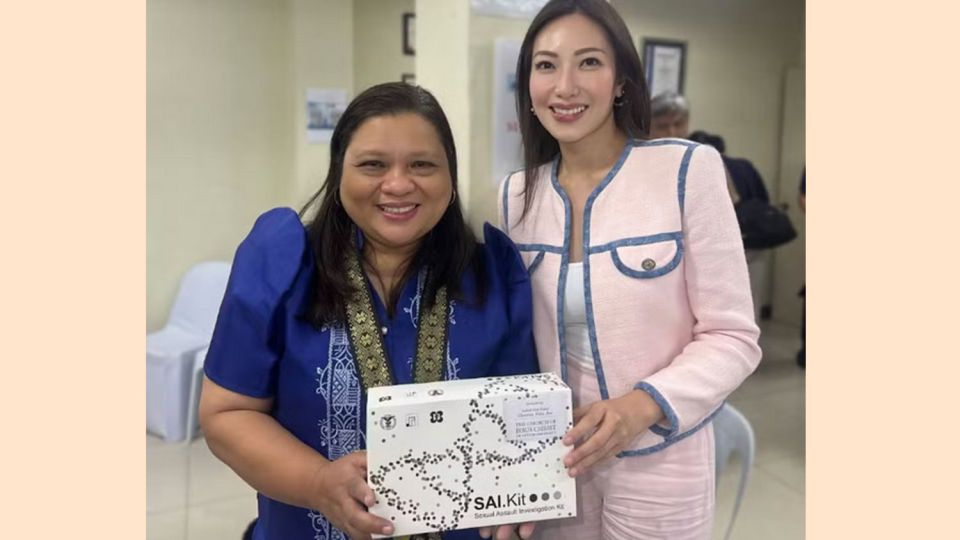
MANILA – Women’s rights advocate and access-to-justice champion, Justice Undersecretary Margarita Gutierrez has expressed personal support for the launch of the country’s first-ever Philippine Sexual Assault Investigation Kit (SAI Kit).
The DOJ Usec described it as a major step toward helping survivors pursue justice through science and evidence.
Gutierrez, who has long advocated for expanding access to justice particularly for women and vulnerable sectors, said innovations that strengthen investigations and improve evidence collection can make a meaningful difference in helping survivors navigate the legal process.
READ: Gutierrez pushes justice beyond courts in London forum
Developed by the DNA Analysis Laboratory of the Natural Sciences Research Institute (NSRI) at the University of the Philippines Diliman, the Sexual Assault Investigation Kit is designed to improve the collection, handling, transport, and preservation of biological evidence in sexual assault cases—helping ensure DNA samples remain usable for forensic analysis.
The initiative was formally launched last May 19, 2026, following 30 years of research and development led by Filipino scientists and researchers, aimed at making scientific tools more accessible in the country’s justice system.
Gutierrez emphasized that access to justice goes beyond legal representation.
“Many victims already face enormous emotional, social, and financial barriers before they even decide to seek help,” Gutierrez said. “From what we encounter on the ground, there is often hesitation among survivors to pursue cases. Some fear stigma. Others fear losing financial support from family members who may also be perpetrators. Strengthening investigations and evidence gathering can help survivors feel that pursuing justice is possible.”
Gutierrez has long championed initiatives focused on bringing justice closer to communities, particularly through legal literacy efforts and frontline legal aid initiatives through the DOJ Action Center that help underserved Filipinos navigate the justice system.
The launch of the SAI Kit aligns closely with that advocacy.
Department of Science and Technology Secretary Renato Solidum Jr., during the launch, underscored the role of science in uncovering truth and ensuring accountability.
“When science is involved, only the truth ultimately emerges,” Solidum said. “This is the power of science in strengthening investigation and ensuring that conclusions are anchored on evidence, not assumption.”
Dr. Maria Corazon De Ungria, head of the NSRI DNA Analysis Laboratory, said DNA science has transformed how investigators establish identity and biological evidence—and can become a powerful tool for survivors whose voices are often silenced.
“Science could help speak for the voiceless, uncover truth from the smallest biological trace, restore identities to the unknown dead, reunite families, and strengthen justice through evidence grounded not in opinion, but in DNA,” De Ungria said.
“Behind every DNA profile is a human story—a victim waiting for justice, a family searching for answers, or a nation striving to build trust in science.”
The technology behind the SAI Kit was further strengthened under the Filipino Genomes Research Program, with researchers improving DNA recovery, storage, and evidence handling protocols to support sexual assault investigations.
For Gutierrez, initiatives like these are ultimately about making justice more accessible for survivors.
“When systems become stronger, evidence becomes more reliable, and pathways toward accountability become clearer, we help create conditions where survivors are better supported in seeking justice,” she said.
The Sexual Assault Investigation Kit marks a milestone not only for Philippine forensic science, but for the broader effort to ensure that survivors are heard, protected, and given a stronger chance to pursue justice.