

July 13, 2026
PHNOM PENH – Cambodia’s Ministry of Information has urged the public not to automatically regard content shared on Facebook and TikTok as professional journalism, warning that the platforms allow anyone to publish information without editorial oversight or fact-checking.
More than 15 million Cambodians actively use social media, with Facebook and TikTok enjoying particularly high usage among young people.
Ministry spokesperson Tep Asnarith said the two platforms should not be considered official news media in Cambodia because they enable users to create accounts or pages and publish content without going through the editorial processes required of professional news organisations.
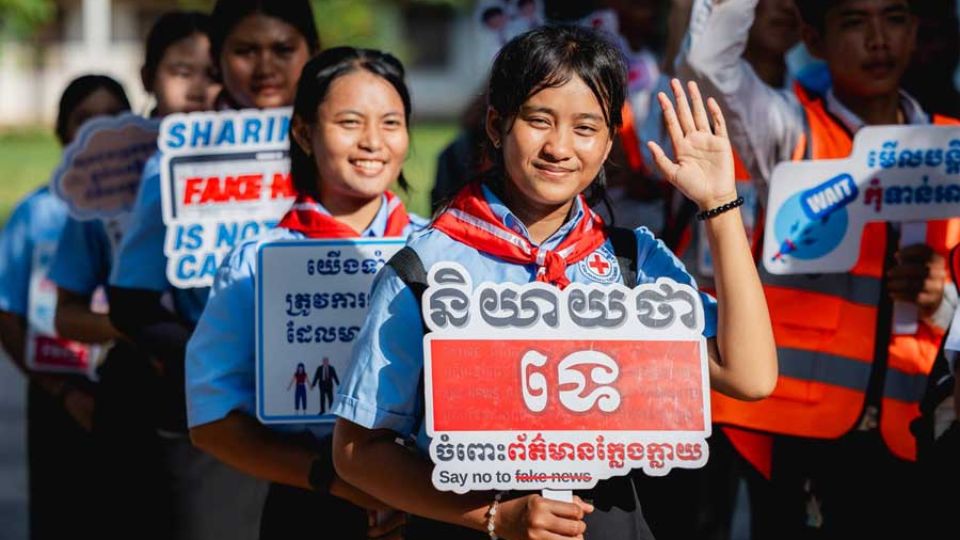
He made the remarks during the launch of the second phase of the “Say No to Fake News” campaign, held at Bun Rany Hun Sen Chariyavong High School in Kep province on July 10.
According to Asnarith, Cambodia more than 15 million of the Kingdom’s population of just over 17 million people are active social media users. Among students and young people of school age, about 59% use Facebook, while around 35% are active on TikTok.
He questioned whether everyone with a social media account had received journalism training.
“The answer is no,” he said.
“The exception is official accounts or pages belonging to ministries, institutions, public figures or organisations that are managed by qualified professionals,” he added.
Asnarith noted that anyone can create a Facebook or TikTok account and publish either accurate and inaccurate information, often without any prior verification of the content, images or claims being shared.
While acknowledging that social media serves many purposes — including entertainment, business, product promotion and information sharing — he warned that using such platforms without critical thinking or verifying information could create confusion and have serious consequences for society.
He contrasted social media posts with the work of professional news organisations, which follow editorial procedures requiring information to be checked by editors and verified through reliable sources before publication to ensure accuracy and compliance with journalistic ethics.
Official media, he said, places greater emphasis on accuracy and credibility than speed. Although journalism has increasingly shifted to digital platforms where rapid reporting is important, verifying information remains an essential step before publication.
Because Facebook and TikTok have become major sources of daily news and information for many Cambodians, particularly younger audiences, media literacy and the ability to distinguish between social media content and professionally produced journalism are increasingly important.
Asnarith called on social media users to act responsibly when posting or sharing information by verifying sources before redistributing content to help prevent the spread of misinformation.
According to the ministry, Cambodia’s official media outlets include the Agence Kampuchea Presse (AKP), National Television of Cambodia (TVK), National Radio of Cambodia (RNK) and the MoInfo mobile application, as well as the official websites and social media accounts of government leaders, ministries, public institutions, provincial and municipal administrations, information departments nationwide and other licensed media organisations.