

June 23, 2026
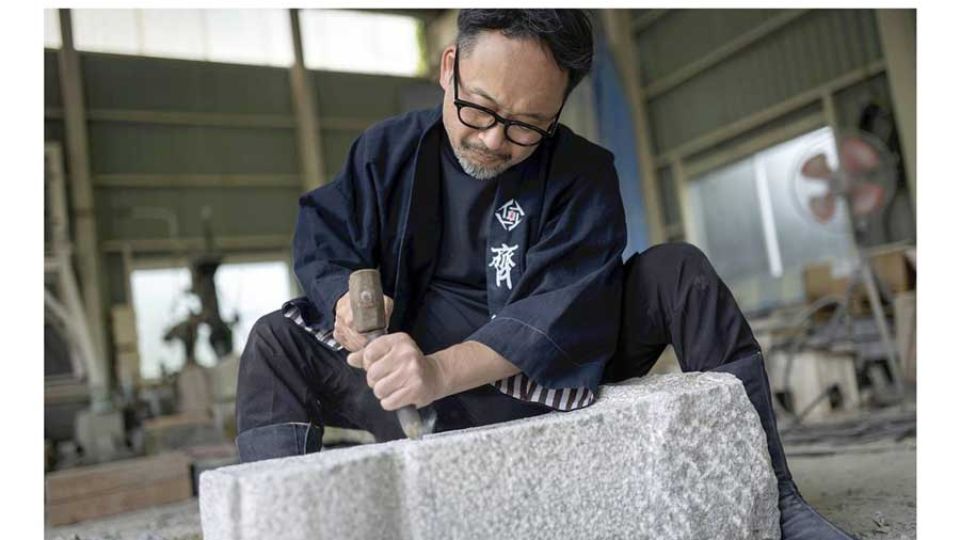
KAMEOKA, KYOTO – Stone craftsman Takaaki Saida holds a chisel against a block of stone and strikes it rhythmically with a club hammer to carve out curves and patterns. He adjusts the angle of the chisel and the force of his strikes according to the stone’s character. The sound of the hammer striking is like music.
Saida, 48, is the fifth-generation owner of the Saida Sekizai stonemasonry workshop, which was founded in 1902. He crafts stone lanterns and water vessels for rinsing hands, among other products.
His workshop is located in Kameoka, Kyoto Prefecture. The city is surrounded by the mountains and produces high-quality stone. For generations, the workshop has been crafting gravestones as well as stone products for temples and shrines, such as lanterns and torii gates.
The workshop has also worked on high-profile projects, such as the pagoda at Jakuan Temple in Ukyo Ward, Kyoto, which was founded by the renowned writer Jakucho Setouchi, and the restoration of floor stones at Byodo-in Temple in Uji, Kyoto Prefecture, a UNESCO World Heritage Site.
Saida grew up in the house next to the workshop, surrounded by the sound of chisels striking stone. He was raised strictly by his father, Minoru, former owner of the workshop. His father never told him to take over the family business, and he had no interest in stonemasonry.
After finishing junior high school, Saida took a different job immediately, went through a period of intense rebellion as a teenager and then started a family. He eventually joined the family business around the age of 20, partly at his wife’s urging.
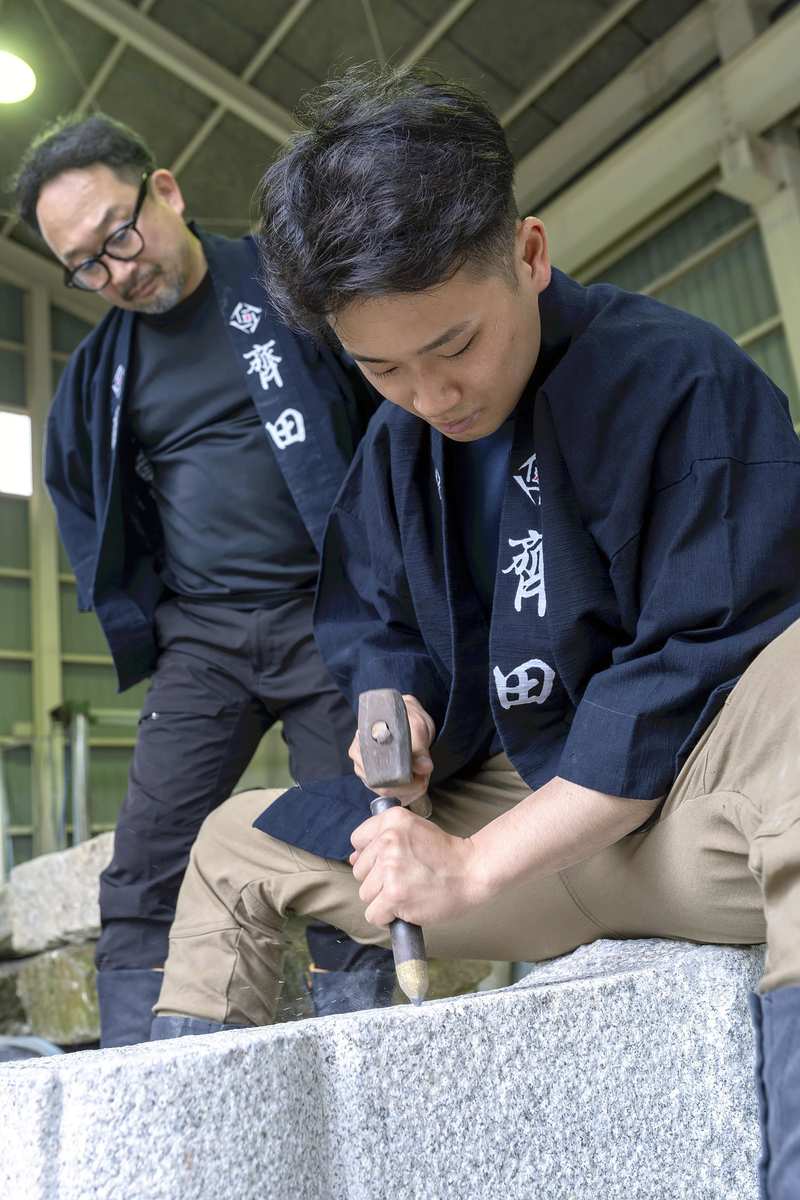
Kaito Saida works with a chisel while his father looks on. PHOTO: THE YOMIURI SHIMBUN
Expressing eternity
Saida started a life of chiseling stone, along with his taciturn father.
“To be honest, I thought it was a dull job. I didn’t think it was cool,” he said.
Nevertheless, as he steeled himself and continued working on the stone, he gradually became aware of his father’s very high levels of skill, far beyond his own. He began to feel the profound allure of stones through his father’s work attitude.
A few years before Minoru died in 2011, Saida and his father worked together on a major project. After completing it, his father told him, “You’re better than I, so I’ll leave it to you.”
It had been 10 years since he began his training. He felt that he had finally been recognized.
Saida is highly skilled in a technique for finishing products to make them look as if they have been there since ancient times.
“When a stone is exposed to rain and wind for hundreds of years in a natural environment, its surface erodes and is covered with moss and mold,” he said.
The technique is born from respect for how the passage of time is reflected in stone.
“But no matter how skilled I become, I can’t beat the real passage of time in nature,” he said with a laugh.
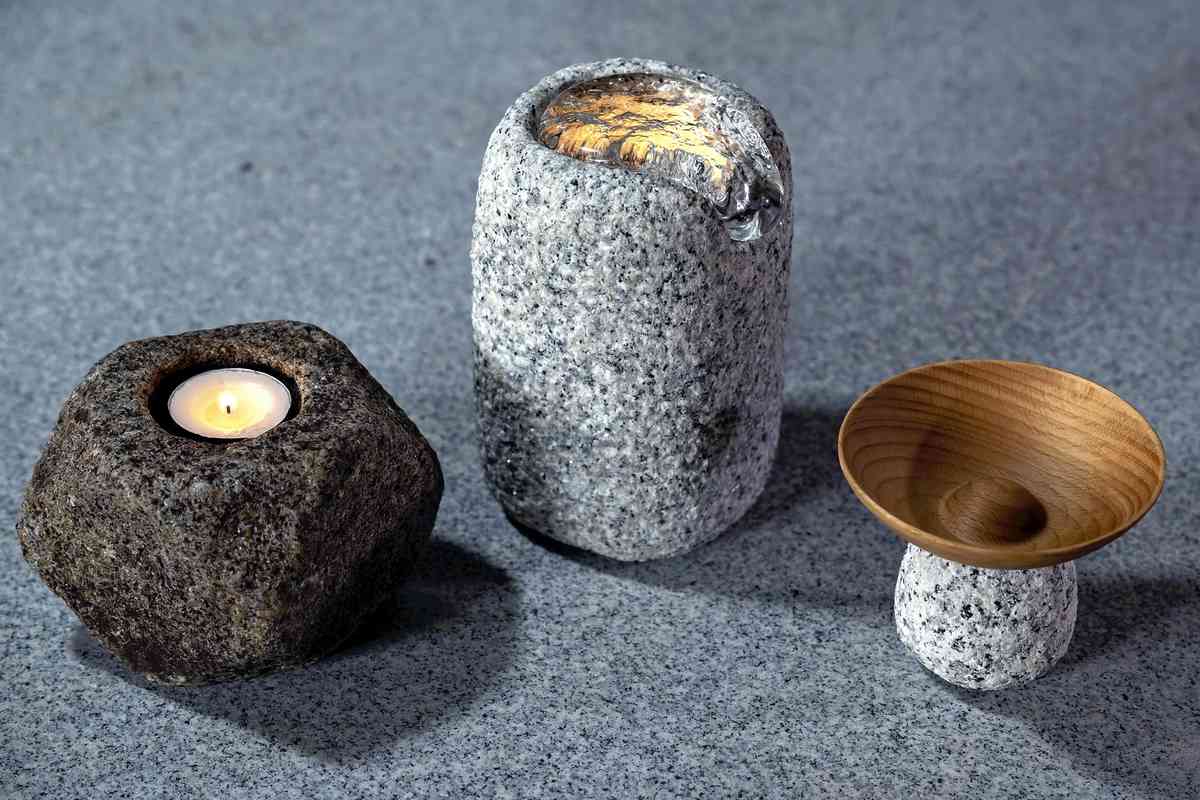
Works conceived as new ways to use stone. PHOTO: THE YOMIURI SHIMBUN
Demand needs to increase
In recent years, demand for stone as a material has plummeted in Japan.
To counter this trend, Saida has been making efforts to grow overseas markets. In Italy, he has spoken at Japanese restaurants about the appeal of stone, and in the United States at Japanese gardens, he has given dozens of production process demonstrations. He also teaches at a university in Rome about stone lanterns and collaborates with the university on product development.
He places particular emphasis on stone craft classes for foreigners held at his workshop. Last year alone, about 100 people participated through word of mouth.
During the classes, Saida explains how his stonemasonry techniques have been preserved and handed down for hundreds of years within the local community’s unique history.
A year and a half ago, his second son, Kaito, 24, began his training to be Saida’s successor. Like Saida, his son initially had no interest in the family business. However, when studying abroad, he began to see Japanese culture from an outside perspective and developed a newfound interest in its traditional aspects.
“I want to share the wonders of Japanese culture and history with young Japanese people,” the son said. “But I still have a long way to go. First, I want to focus on mastering the techniques. Fortunately, I have good examples from my predecessor right here to inspire me.”
While it is a joy to have a successor, it has also caused him anxiety. Surviving in an era of declining demand requires not only having advanced skills but also securing sales channels.
To adapt the traditional material of stone to modern life, Saida and his son are venturing into creating new craft products, such as glass lampshades that feature a stonelike surface texture in their design.
“From the perspective of stone’s long timescale, which spans over a thousand years, the present time is merely a fleeting instant,” Saida said. “My mission is to pass on the techniques developed during that long period to the next generation.”