

June 1, 2026
DHAKA – Hundreds of sacrificial hides were lost across rural areas of Moulvibazar during Eid-ul-Azha due to a lack of buyers and a chronic salt shortage, which left traders unable to preserve much of what they had collected.
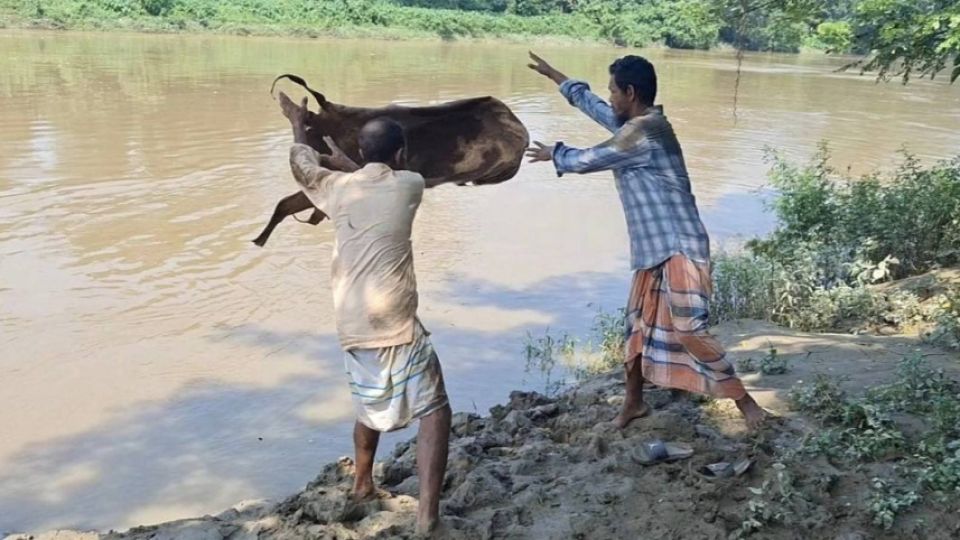
Unlike previous years, madrasa and orphanage students, traditionally the most active collectors of sacrificial hides, largely stayed away this time. Many residents waited throughout the day for buyers, only to eventually bury the hides or dump them into nearby rivers and water bodies.
“Last year, no wholesaler came either, but at least the local madrasa students took them,” said Jalal Mia of Ramchandrapur village in Kamalganj upazila.
“This time, nobody came. We waited a day and then buried them. The whole village did the same.”
The reluctance among religious institutions to collect hides this year stems from mounting financial losses.
Maulana Mizan Ahmed, a teacher at a Qawmi madrasa in Kamarchak union of Rajnagar upazila, said the cost of collecting hides now exceeds the proceeds from selling them.
“We incurred losses last year, so we simply did not participate this time,” he said.
Traders said the district has long lacked adequate hide-preservation infrastructure. With buyers offering as little as Tk 50 to Tk 100 per hide, many seasonal traders opted out entirely this year rather than risk their capital.
According to traders, apart from a handful of depots in Balikandi village of Sadar upazila, there is virtually no preservation facility elsewhere in the district.
Md Shawkat, president of the Balikandi Bazar Rawhide Traders Association, described this year’s situation as particularly grim.
Around 2,000 hides have been purchased, but available salt stocks stand at only 150 maunds against a requirement of 300 to 400 maunds, he said.
“Hides that have already started to smell will have to be buried or floated down the Manu River. There is no other way.”
He added that Tk 95 lakh in dues from last year remain unpaid by tannery owners and depot traders, further paralysing the local market.
For those who entered the trade, losses have been substantial.
Nawab Ali of Amtoil village bought two hides for Tk 300 and received 10 more as donations, only to find no buyers at the municipal bus terminal in town.
Abdus Shahid from Balaganj in Sylhet faced a similar predicament after purchasing 30 hides for Tk 6,000.
“Buyers are offering Tk 30 to Tk 40 per piece. I spent money renting a vehicle to get here. Now I don’t even know where to discard them.”
The Balikandi rawhide market has a history stretching back roughly two centuries, but traders said the last decade has seen a steady decline.
Syed Mujahid Ali, a former trader from the village, said tannery owners have withheld payments amounting to crores of taka, forcing many families to abandon a livelihood passed down through generations.
Suleiman Mia, a trader in his seventies, said he had purchased more than 500 hides so far, paying between Tk 100 and Tk 700 each, but remained uncertain how many could be preserved because of the salt shortage.
At Balikandi Bazaar, workers peeling and salting hides are earning between Tk 1,000 and Tk 3,500 for a day-and-night shift. Some are working in exchange for meat scraped from the hides, which they sell for Tk 200 to Tk 250 per kilogramme.
While Balikandi once had 25 to 30 traders operating year-round, only five or six remain active now, with around two dozen seasonal traders joining the market during Eid.