

May 14, 2026
JAKARTA – At ASEAN’s Cebu summit in the Philippines earlier this month, among the hot-button foreign policy issues was the ongoing conflict in Myanmar which, beyond the suffering of its own people, has had transnational reverberations for issues including refugee flows and the scam industry’s spread.
Comments by attendees ranged from the Myanmar regime’s foreign ministry complaining about “discriminatory measures” that had shunned military junta leader Min Aung Hlaing since the 2021 coup to Philippine President Ferdinand Marcos Jr noting, aptly so, that there had been “no progress” in resolving the crisis.
Indonesian Foreign Minister Sugiono issued a press release after the summit. In it, some of his statements toed the ASEAN line, centered around the bloc’s Five-Point Consensus, reached in April 2021, which lists conditions aiming to, among other things, bring about an end to the violence.
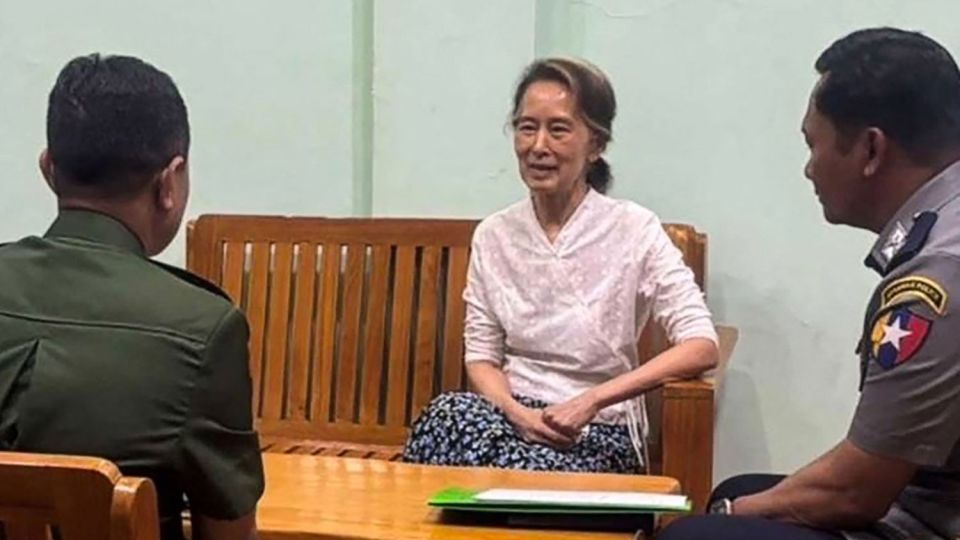
At other times, he may have unfortunately shed light on how ASEAN is misreading what’s happening on the ground. For example, Sugiono called the transfer of state counselor Aung San Suu Kyi from a prison to house arrest a “positive gesture” and described recent developments, presumedly the junta’s 2025-2026 election, as “progress worthy of appreciation”.
The junta’s elections, widely derided as a sham, and the high-profile move of Suu Kyi and president U Win Myint to house arrest had little to do with offering serious concessions to the resistance movement. These moves only masked how little the regime has actually changed (“Myanmar leaders’ ‘house arrest’ masks so little”, The Jakarta Post, May 6, 2026).
Successive crackdowns on peaceful uprisings in 2021 led the Bamar ethnic heartlands in central Myanmar to abandon internal peaceful resistance and take up arms for the first time since independence.
External condemnation and action from abroad have been effective before: International pressure on the military regime was considered critical during the 2010 transition to civilian rule. Since the coup, civil society warnings carried through private and public diplomatic channels on death sentences for political prisoners and humanitarian aid access have also reportedly had real impact.
Yet Indonesia’s influential foreign service could do even more within the regional grouping on this issue. According to a longtime foreign policy analyst, President Prabowo Subianto is offering only lip service on Myanmar, echoing regional talking points to keep up appearances.
But whether there is an affinity among regional leaders for strongmen of the past, the current trajectory in Myanmar does not clearly favor the junta chief reclaiming full control. Some sort of acceptance of this reality should lead ASEAN policymaking, particularly around dialogue and promoting humanitarian aid.
The Myanmar military has never really negotiated from weakness, and it has failed to honor several long-term ceasefire agreements with ethnic armed groups in the past; a lesson the resistance has since learned.
In 2011, a yearslong ceasefire with the Kachin Independence Army (KIA) in the country’s north collapsed when the military encroached on KIA territory while demanding that the armed group surrender its autonomy and become a border guard force.
On the Thai-Myanmar border, a ceasefire with the Karen National Union (KNU), which underpinned the broader National Ceasefire Agreement, was violated by the military under the pretext of building highways connecting its bases in KNU-held areas. These breaches led the KNU to effectively abandon the ceasefire framework even before the coup took place in February 2021.
The coup itself is the foremost example of this bad faith. It toppled a civilian government that had tacitly acquiesced to the Myanmar military’s constitutional veto and whose leader had even defended the military at the International Court of Justice against allegations of genocide.
Thus, the current military leadership is understood to have no desire to give up its grip on power and to be unwilling to negotiate in good faith to settle political disputes. This is why resistance groups refuse to “return to the legal fold”: a junta phrase that essentially demands unconditional surrender.
This doesn’t mean discarding the idea of dialogue, however.
Several observers have noted that Myanmar’s resistance groups, if brought under a unified chain of command, possess a combined strength to dislodge the military from most of the country. Meanwhile, resistance groups continue to engage in dialogue among themselves and in collective advocacy; efforts that have been quietly supported by some ASEAN members.
Given its economic weight and regional influence, Indonesia could elevate the bloc’s implicit support even further as well as ensure that critical humanitarian aid reaches affected populations through all possible channels, not just those facilitated by the junta.
The writer is an editorial staff member at The Jakarta Post.