

May 14, 2026
KUALA LUMPUR – For most middle-class Malaysians, batik now screams “special occasion” and “deep pockets,” not for everyday wear. The cheap, beautiful cotton batik under RM100 is still hiding in traditional markets and online, while the batik we see in malls easily shoots past RM200, with silk running into the thousands. At those prices, no tourist or local is going to grab it on a whim.
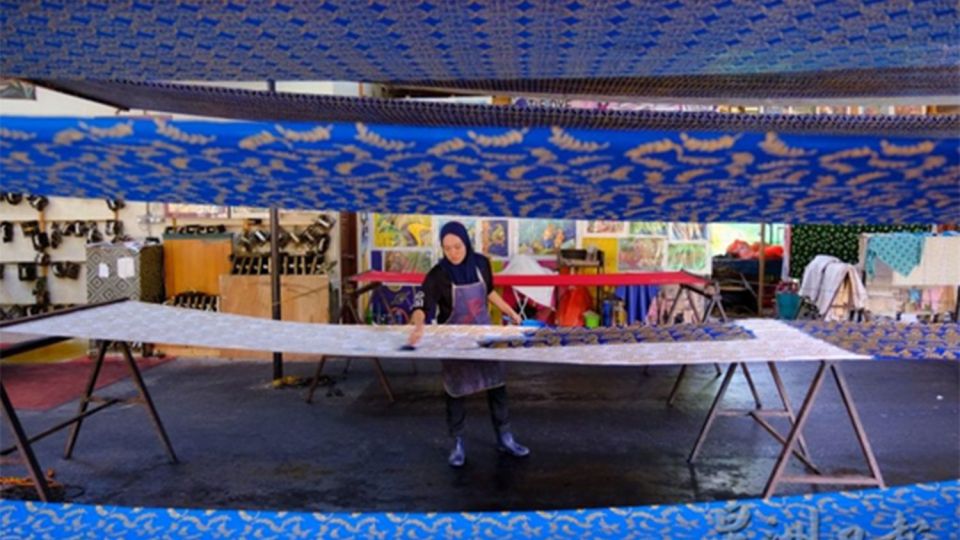
Yes, there are reasons. Natural dyes can cost several times more than synthetics, and real batik, canting, hand-blocks, hours of work, needs proper pay for skilled artisans. Add high rentals, small-batch production and fat mark-ups in fancy boutiques, and the price explodes. The issue is not artisans “earning too much”; it is a system that turns their work into a luxury item while many of them still struggle to survive.
Kraftangan Malaysia says the prices are “reasonable” given the complexity of making genuine batik, and for collector pieces, that may be fair. But when the only batik most people ever see is a RM250 blouse behind glass in an air-conditioned shop, batik stops being part of daily life. It becomes a costume we take out for functions – not a fabric we live in.
Why Indonesian batik feels cheaper – and everywhere
Fly to Jakarta, Yogyakarta or Bali and batik hits you at the airport, on the street, in warungs, wet markets and family shops. Indonesia has allowed a massive ecosystem of “batik-like” printed fabrics to coexist alongside true handmade batik. These printed and semi-mechanised versions are mass-produced, which means they can be sold very cheaply in every nook and corner.
Indonesian artisans are suffering from this flood of cheap imitations, but from a tourist and consumer perspective it creates exactly what Malaysia lacks: a broad base of accessible price points, from a few ringgit-equivalent for a casual shirt to premium prices for museum-grade pieces. The result is simple – everyone can afford to participate in batik culture, not just the well-heeled.
Malaysia, meanwhile, has its own problem with printed batik being passed off as authentic, often at “real batik” prices, fuelling complaints on social media about being overcharged. Instead of using affordable printed batik as an on-ramp into the culture, the market confuses tourists and locals with high prices and poor transparency.
Why is Malaysian batik hiding in high-end malls?
Walk through many Klang Valley malls and you will see batik behind glass: designer labels, corporate uniforms, boutique capsules. The message is subtle but powerful, this is for the elite, for official functions, for those who can afford it. Branded printed “batik” clothes in shopping centres often sell for more than RM200 a piece, priced like status symbols rather than cultural staples.
By contrast, traditional batik retail centres like Pasar Payang in Terengganu or Pasar Besar Siti Khadijah in Kelantan do offer more affordable authentic batik materials and ready-made attire, including pieces below RM100 and even lower in some cases. But these are largely invisible to the average foreign visitor to Kuala Lumpur who has one free afternoon and no domestic flight to the East Coast.
In other words, Malaysia hides its batik where tourists don’t go, and displays it where they can’t afford it.
Central Market: missed opportunity in the heart of KL
If there is one place that should be drenched in Malaysian batik, it is Central Market. This Art Deco landmark in downtown Kuala Lumpur is marketed as a “must-see destination” for international travellers and domestic tourists. Estimates suggest around 10,000 people pass through Central Market on a typical weekday, rising to roughly 15,000 on weekends, with annual visitors exceeding four million in some years.
That is a captive audience by any tourism standard. There are indeed batik outlets in Central Market, and some block-printed batik can be found at relatively inexpensive prices, a few US dollars per metre at the lower end, climbing significantly for hand-printed fabrics. But batik is still treated like a niche craft section, not the beating heart of the place.
With that kind of footfall, Central Market should be the national showroom of Batik Malaysia: wide ranges of designs, clear labelling of handmade vs printed, transparent price tiers, live demonstrations and bundle deals built for families and tour groups. Instead, many tourists leave with a keychain, a fridge magnet, or a generic T-shirt made elsewhere.
Turning batik into Malaysia’s “Bula”
Fiji has its “Bula” shirts, loud, proud, tropical prints that tourists snap up almost by instinct. You do not leave Fiji without at least one Bula shirt. That is not an accident; it is policy, culture, and commerce working together.
Malaysia can do the same with batik, but it requires a mental and policy reset.
First, there must be a deliberate strategy to make at least one tier of Malaysian batik a mass product, not a once-a-year luxury. That means openly embracing a three-layer model:
Everyday batik: affordable printed or semi-mechanised batik-inspired garments clearly labelled as such, sold in supermarkets, street stalls, convenience stores, and transport hubs.
Artisanal batik: mid-range, genuinely hand-crafted cotton pieces priced fairly for both artisan and buyer, made widely available in places like Central Market, KLIA, suburban malls and online.
Heritage batik: high-end silk, limited editions and museum-quality works that rightfully command premium prices.
Second, transparency must be non-negotiable. Consumers and tourists must be able to tell, easily, what they are buying: real batik or printed lookalike, hand-drawn or machine-printed, cotton or silk. This is where a national labelling standard, enforced by Kraftangan Malaysia and the relevant ministries, can protect both artisans and buyers.
Third, distribution has to move beyond the golden triangle. If everyday Bula shirts can be found in Suva’s flea market and malls alike, everyday batik should be accessible at R&R stops, LRT-linked kiosks, pasar malam, university co-ops and online platforms with strong local branding. Batik cannot be a boutique curiosity; it has to be as ordinary as a jersey or a printed tee.
What would a thriving, affordable batik ecosystem looks like?
Imagine this: every tourist who walks into Central Market is funnelled through a vibrant batik zone where they can watch a short live demonstration, pick up a “family pack” of coordinated batik shirts and dresses at a bundled price, and receive a simple leaflet explaining the story of Batik Malaysia in their language. The pricing would be structured so that they are tempted not to buy one piece, but four or five.
Imagine local families treating batik as everyday wear again, not just for “Batik Thursday” in the office or Merdeka functions. Affordable, well-designed batik school uniforms, batik streetwear collabs with youth brands, and batik home items, bedsheets, cushion covers, table runners, sold at price points that compete with imported generic designs.
And crucially, imagine artisans actually earning a decent living from this expanded base, supported by better access to financing, training, digital marketing, and cooperatives that negotiate fairer margins with retailers. The economy of batik would no longer rely on a thin slice of wealthy customers, but on millions of small purchases made every day.
From museum piece to national symbol
For Batik Malaysia to become a true national symbol, it must move out of the cabinet and onto the streets. It has to be seen on the backs of schoolteachers, bus drivers, civil servants, students, and yes, tourists dragging their suitcases through KLIA with batik bags and shirts bursting from their luggage.
That will not happen if batik remains locked behind glass in high-end malls and priced like fragile art. It will happen when policy makers, industry players and designers accept a simple truth: culture thrives when people can afford to wear it.
Until then, Malaysia will keep watching tourists fly home with bags full of cheaper Indonesian batik, while our own national fabric sits silently under spotlights, admired but not owned, by the many who pass it by.
Ravindran Raman Kutty is a senior communications and public relations professional with extensive experience across Malaysia, Fiji, the UK, and Australia. Through thoughtful analysis and storytelling, he aims to contribute meaningfully to public discourse and inspire positive change.