

October 13, 2025
TOKYO – In a world hooked on TikTok challenges and K-pop covers, it might seem unlikely that thousands of Indonesians, from toddlers to grandparents, would gather at shopping malls to perform traditional dances. Yet on Sunday, that vision came to life with the long-awaited return of Indonesia Menari (Indonesia dances).
Following a four-year hiatus due to the COVID-19 pandemic in 2020, the nationwide dance-off once again united diverse people in choreography that celebrated the archipelago’s rich cultures.
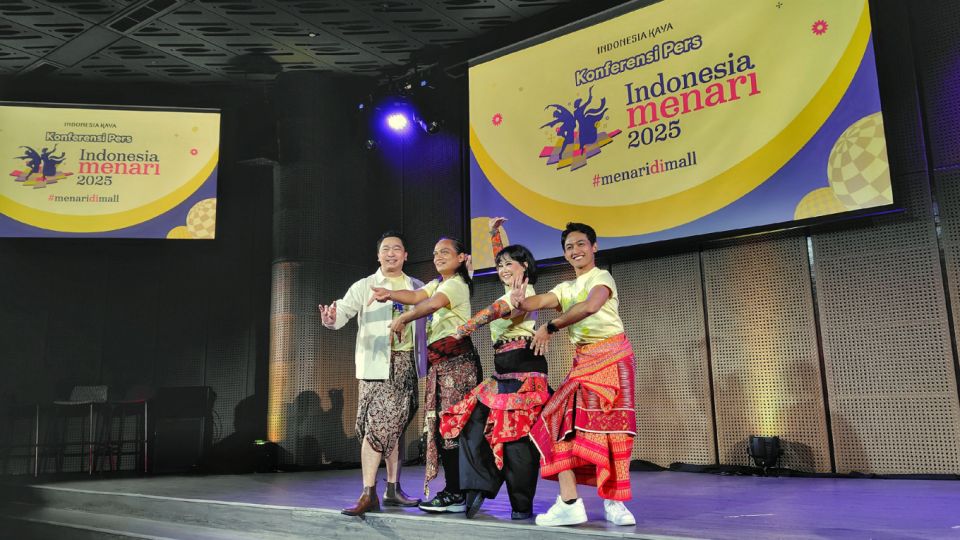
“In response to the public’s tremendous enthusiasm, we are proud to bring back Indonesia Menari as part of the 12th-anniversary celebration of Galeri Indonesia Kaya [GIK],” Billy Gamaliel, program manager of the art space in Central Jakarta, told a press conference on Sept. 30 in the capital.
A cultural initiative of the Bakti Budaya Djarum Foundation, GIK launched the dance contest in 2012 to reconnect the public with traditional dances from across the country.
This year’s comeback edition was originally to be held in 12 cities, but Denpasar was dropped after the recent severe flooding in Bali and ultimately took place on Oct. 12 in 11 cities: Balikpapan, Bandung, Bekasi, Jakarta, Karawang, Makassar, Manado, Medan, Palembang, Semarang and Surabaya.
The winning team in each city received prize money, shopping vouchers and gifts.
Relatable moves
The return of Indonesia Menari was met with overwhelming public enthusiasm as more than 35,000 people registered between Aug. 12 and Sept. 26, with millennials aged 25-35 comprising 42 percent, Gen Zers aged 16-24 making up 30 percent and Gen Alphas under 15 around 20 percent, while participants aged 36 and above made up 8 percent.
“The demographic composition was similar to [that of] previous years,” said Billy. “What has changed is the surge in registration and the wider age range, from 5 to 88.”
“As long as they can follow the choreography, they are welcome,” he added.
The dance-off involves teams of five to seven members, staying true to Indonesia Menari’s inclusive spirit that also welcomes dancers and nondancers alike, including people with disabilities.
In the end, the event hosted around 9,000 participants who competed simultaneously in the 11 selected cities.
The core dance was created by choreographer Bathara “Ara” Saverigadi Dewandoro, 28, who was raised in a family of traditional dancers. Winner of the Indonesia Mencari Bakat 2021 and a gold medalist at the 2024 National Games, Bathara is now artistic director at Swargaloka, an art and culture foundation based in East Jakarta that promotes traditional performing arts.
His four-minute sequence blended movements from eight provinces: North Sumatra, West Java, Jakarta, East Java, East Kalimantan, North Sulawesi, South Sulawesi and Maluku.
“The challenge was making it simple enough for nondancers, yet engaging for trained performers,” said Bathara.
The dance opens with the hands held before the chest, one up, one down, before they are extended outward in a circular movement until the palms meet in the universal gesture for greeting or prayer. The graceful movement then shifts to an energetic burst, to end with raised hands and a joyful shout: “Cinta budaya, cinta Indonesia (Love culture, love Indonesia)!”
Bathara was confident the moves were accessible.
Tradition in motion
Beyond spectacle, the choreography incorporated symbolic gestures rooted in meaning.
“The ukel hand movement, where the wrist twists upward to form a circle, represents the Moon,” explained Rianto, a maestro of Javanese lengger, who was on the judges’ panel. “Meanwhile, the rotating hip movement symbolizes the Earth’s rotation.”
Most youths danced for fun, “but traditional dances carry philosophical values that can enrich [our] lives”, he said.
The teams were free to design their own floor patterns in following the set choreography, though they were prohibited from performing lifts and using the canon technique, where dancers perform identical movements at intervals or in an overlapping sequence.
Fellow judge Gianti Giadi, founder of Gigi Art of Dance, looked for joy above all else.
In Jakarta, around 600 participants performed at 12 designated spots in the Grand Indonesia shopping mall on Jl. Thamrin, with the winners of each spot advancing to the final at the Fountain Atrium in the West Mall.
By bringing traditional dance into shopping malls, organizers hoped to bridge tradition and urban life.
Since its debut 13 years ago, the event has helped sustain traditional dance studios nationwide.
“Many studios told us they gained new members after performing,” Billy said, adding that the diverse choreography of past editions had become popular teaching tools.
“Several schools even asked to use previous sequences for practice,” he said. “The spirit keeps spreading.”
Looking ahead, Billy hopes the energy continues.
“We don’t just want winners,” he said.
“We want participants who’ll keep dancing, so Indonesia’s traditional dances stay alive and appreciated.”