

July 15, 2026
TOKYO – The Disaster Management Agency, a new disaster response organization, is expected to be launched as early as November.
The agency will serve as the government’s central command center, which is responsible for promoting measures to mitigate damage in preparation for disasters such as earthquakes and heavy rains.
However, challenges regarding its effectiveness, personnel development and other such issues remain.
“By promoting thorough disaster prevention measures in advance, we will minimize damage from events such as a Nankai Trough earthquake,” Prime Minister Sanae Takaichi said.
Takaichi has emphasized the significance of establishing this new agency in the current Diet session.
The establishment of the Disaster Management Agency was first proposed by former Prime Minister Shigeru Ishiba, who set up an office to examine the organizational structure immediately after becoming prime minister in October 2024. The Takaichi administration took over the initiative after Ishiba stepped down.
Currently, the Disaster Management section is part of the Cabinet Office. The section will be independent from the Cabinet Office and will become the agency. The new entity will comprise four divisions: comprehensive policy, disaster response, disaster prevention planning and regional disaster prevention.
The main focus of the new agency will be disaster prevention in order to mitigate damage. Disaster risks will be assessed in each region to identify vulnerabilities and determine priority measures.
If any issues are not adequately addressed, the agency will use its authority to issue recommendations to urge relevant ministries and agencies to take necessary action.
Although these recommendations are not legally binding, ministries and agencies are required to give due respect to them.
The Cabinet Office’s Disaster Management section previously served as coordinator between relevant ministries and agencies, but after the new agency is launched, its role will shift to one that leads the other government entities.
Permanent staff
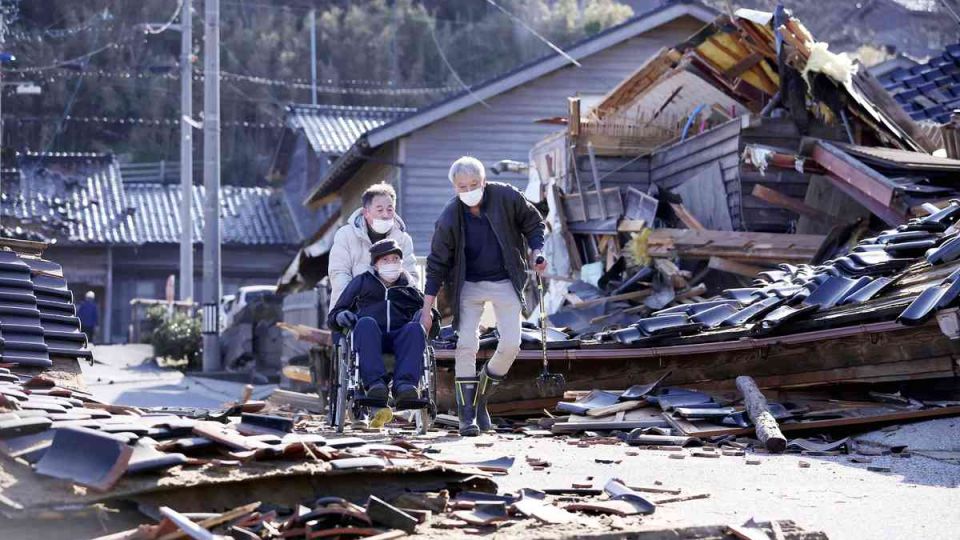
The number of agency staff will be 352, 60% more than the section’s 220 staff members, to enhance the agency’s response capabilities. This is because after the Noto Peninsula Earthquake in January 2024, the section was so overwhelmed with coordinating the transport of relief supplies that reviewing the Nankai Trough earthquake’s damage estimates was suspended for several months.
It has been pointed out that the Cabinet Office’s Disaster Management section — comprising personnel seconded from various ministries and agencies who return to their original workplaces in a few years — is unable to accumulate expertise.
For this reason, the Disaster Management Agency will also hire permanent staff. It is also considering establishing a “disaster management academy,” a training facility for staff and local government officials.
After a disaster, affected local governments have had to coordinate with relevant ministries and agencies depending on the situation, such as for road repairs or disaster waste disposal, creating a significant burden. The Disaster Management Agency aims to become a one-stop service for consultations.
An official from the disaster prevention division of the municipal government in Wajima, Ishikawa Prefecture, which was affected by the Noto Peninsula Earthquake, welcomed the move, saying, “If the agency becomes the point of contact, it will make it easier for local governments to seek advice, even during non-emergency times.”
‘A pie in the sky’
One challenge is to ensure the effectiveness of the Disaster Management Agency’s recommendations. The agency will not make recommendations that would require the Finance Ministry to take budgetary measures.
“Without strong fiscal measures from the central government to address weaknesses in disaster response, this [the Disaster Management Agency] will amount to nothing more than ‘a pie in the sky,’” Katsuya Onishi, mayor of Kuroshio, Kochi Prefecture, where a 34-meter tsunami is projected to hit in the event of a Nankai Trough earthquake, said at a House of Councillors Special Committee on Disasters on June 19. The mayor urged the need to exercise the authority to issue budgetary recommendations to the Finance Ministry as well.
In response, Minister for Reconstruction Takao Makino, who is also the minister in charge of preparations for establishing the Disaster Management Agency, said at another meeting of the committee on June 26, “We are not considering giving [the agency] the authority to make recommendations regarding the budget formulation process itself.”
A senior official at the Cabinet Office said, “Budget formulation must be considered, including funding sources, but interfering in that process goes beyond the scope of disaster management.”
Regarding staffing, while 46 of the 352 positions have been filled by “hometown disaster prevention officers” secured from the private sector and local governments, these positions need to be filled every three years — when their terms end — in principle. The recruitment of permanent staff is expected to be limited to about 15 people in the next fiscal year.
“The Disaster Management Agency has to look at the entire country as a whole and determine what is needed and formulate strategies, and each ministry and agency has to carefully consider those decisions, including those on budgetary measures,” said Yu Hiroi, a professor of urban disaster prevention at the University of Tokyo.
“Another question is how to secure and develop personnel capable of formulating strategies with specialized expertise,” he added.