

June 30, 2026
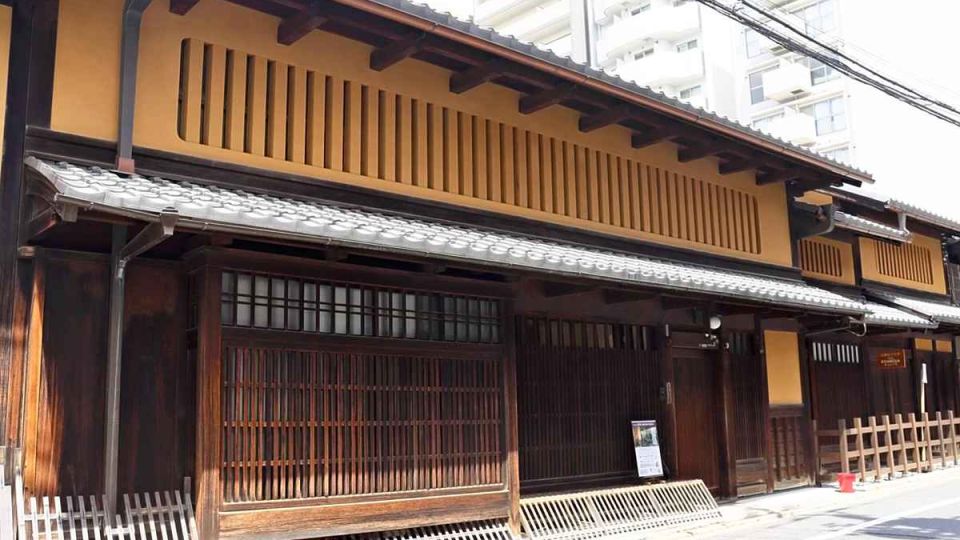
KYOTO – The Kyoto cityscape was once lined with traditional wooden townhouses known as Kyo-machiya, but for years now these historic buildings have been steadily disappearing. In an effort to address this problem, the municipal government has made early revisions to its ongoing plan to promote the maintenance and preservation of these houses, increasing the budget for this work to five times what it was in the previous fiscal year.
Kyo-machiya townhouses are an integral part of the city’s traditional culture and landscape. However, upkeep and property taxes can place a heavy burden on their owners, prompting many of them to consider selling or demolishing the buildings. It is said that these structures are disappearing at a rate of two per day.
Building of Kyo-machiya went on until 1950, when the Building Standards Law came into effect. In 2017, the city enacted an ordinance to promote the maintenance and preservation of these buildings. The ordinance stipulated a set of structural and design requirements that a building must meet to be considered a Kyo-machiya, including having at least one of a list of characteristics particular to these houses, such as a “tori-niwa” (an earthen floor extending from the entrance area to the backyard) or a “hibukuro” (an atrium in the kitchen area).
Rising maintenance costs
According to a survey conducted by the city and other entities in fiscal 2024, 34,580 Kyo-machiya buildings remained in the city at that time. This represented a loss of over 5,500 since fiscal 2016, when 40,146 existed, indicating an ongoing decrease at an annual average rate of 1.73%.
According to the city’s Regional Revitalization and Creation Promotion Office, the cost of maintaining Kyo-machiya is increasing due to rising commodity prices and land values, as well as a shortage of workers with the necessary skills to repair them. Owners of Kyo-machiya in the city center face intense pressure from real estate developers for reasons including their convenient locations and the scarcity of available land. For these and various other reasons, some owners have sold or demolished their townhouses.
Upkeep alone is difficult
The path to preservation is also arduous.
The Sugimoto Residence, a Kyo-machiya townhouse in Shimogyo Ward that has been designated as a national Important Cultural Property, is a good example.
“We have to spend an endless amount of money on upkeep,” said Setsuko Sugimoto, 61, secretary general of the Naraya Memorial Sugimoto Residence Preservation Society, a public interest incorporated foundation that manages the building.
The Sugimoto family started their kimono sales business in 1743, and the current building, one of the largest Kyo-machiya, was constructed in 1870. The building’s age necessitated major repairs in 2021. The entire structure was repaired, including extensive reroofing and seismic reinforcement. The work cost ¥250 million, and, although the Cultural Affairs Agency subsidized it, the Preservation Society had to cover about ¥50 million on its own.
Although the townhouse is opened to the public annually to allow people to experience events that have been held over the years by the Sugimoto family, the revenue from these events was insufficient to cover the repair costs. The Preservation Society solicited donations, including holding four crowdfunding campaigns by 2025, and received financial support from about 2,000 people, as well as a substantial donation from a local financial institution.
Sugimoto, however, revealed mixed feelings, saying, “While these donation campaigns provided an opportunity for many people to learn about the building’s importance as a cultural property, I was also embarrassed about publicly disclosing our funding shortfall.”
Although they made it through that round of repairs, preserving the building will require continued repair and maintenance work and funding.
Sugimoto said, “While the necessary systems are in place, the maintenance costs are so high that it will be difficult for the Preservation Society to continue covering them solely through its own efforts.”
Use of raised accommodation tax
Against this backdrop, the city revised its “Kyo-machiya maintenance and preservation promotion plan” at the end of April, ahead of schedule. The original plan was formulated in fiscal 2019 and intended to cover the period through fiscal 2027.
The new plan, which will be in effect through fiscal 2035, includes for the first time a provision to consider measures for lowering property tax or other taxes to alleviate the financial burden on Kyo-machiya owners. The current system requiring the owners to notify the city of planned demolitions will also be reviewed. The loss rate and the increase in the proportion of citizens that are interested in this matter are set as evaluation metrics.
In conjunction with revising the plan, the city has increased the initial budget for relevant measures to ¥462 million for this year, taking advantage of the accommodation tax increase implemented in March.
The city will establish a financial support system for Kyo-machiya owners, as well as a public-private partnership tentatively named the Kyo-machiya Maintenance and Preservation Fund. It will also implement a sublease program administered by the public interest incorporated foundation Kyoto Center for Community Collaboration to encourage the use of Kyo-machiya.
The city further plans to consider amending the Kyo-machiya ordinance, which serves as the foundation of all these measures, within this fiscal year.
At a regular press conference in April, Mayor Koji Matsui emphasized: “Until now, we haven’t provided sufficient measures to alleviate the hardships faced by townhouse owners. In accordance with the increase in the accommodation tax, we will take more substantial measures.”
To ensure the continued existence of Kyoto’s precious cityscape with Kyo-machiya, it will be necessary to view it as a shared heritage of all the residents and take urgent action rather than leaving the matter to the owners alone.
Expert: Detailed systems needed
The Yomiuri Shimbun asked Keiji Yano, a human geography expert and professor at Ritsumeikan University who researches Kyo-machiya, about measures for their preservation and maintenance.
Yano said, “There are various types of Kyo-machiya, and they all should be preserved, but we must also consider the economic realities surrounding them, which vary based on their locations, characteristics and ownership status.”
He added: “One approach is to design a highly granular support system rather than a single blanket solution. It may also be a good idea to designate certain particularly important districts or streets [where Kyo-machiya are located] and put extra emphasis on their preservation.”
Yano used to visit sites in person to examine the exteriors and other features of Kyo-machiya. In fiscal 2024, he used the Geospatial Information System, which can streamline data collection and analysis, for the first time.
“We are now able to continuously monitor the current conditions [in an area]. This may help us to pinpoint issues that will have a greater impact on policymaking,” Yano said with anticipation.