

February 24, 2026
PETALING JAYA – Fasting in Malaysia offers a more enriching experience for two Muslim foreigners, even after having lived in the country for several years.
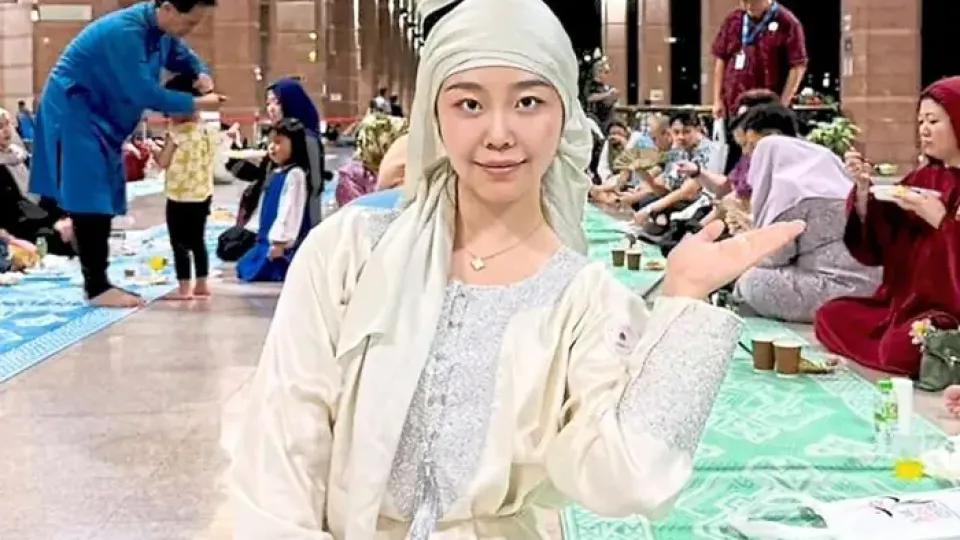
A Chinese national who experienced Ramadan in Malaysia for the first time last year said the fasting month is visibly different from practices in China.
Lydia Liu, 33, from Taiyuan in China’s Shanxi province, said fasting during Ramadan here is more structured and widely observed compared with the more individualised approach among Muslim communities in China.
“Back home, the fasting practices vary from family to family. In Malaysia, I notice that the atmosphere during Ramadan is embraced by everyone, and there are even public holidays for Hari Raya, which are not available in China,” she said when contacted.
Liu, who is a postgraduate student pursuing education management, said the Ramadan bazaars are among the highlights of the fasting month.
“My favourite food at the bazaar is tauhu bakar. I have also tried nasi kerabu. There are so many food choices, unlike in China. But local dishes here are a bit sweet, or they are mostly fried,” she said.
She also observed differences in mosque culture between Malaysia and China, adding that the mosques here are more open to visitors, including non-Muslims.
Liu also expressed hope to document local customs across 11 states through a self-funded film project in collaboration with the Muslim tourism authorities.
“I want to experience and record the local culture. Being here during Ramadan feels like celebrating a festival every day,” she said.
Sana Saleh, 34, from Canada, is spending her third Ramadan in Malaysia and has expressed a sense of peace and comfort in practising her faith.
In Malaysia, Sana mentioned that she and her family felt welcomed as they observed fasting and fulfilled other Islamic obligations without attracting undue attention.
“Our experience so far has been great. It is nice to practise without having to explain ourselves, and we do not stick out like a sore thumb.
“It is a predominantly Muslim-majority country, and so when you are walking around, you know everybody is in the same boat,” she said.
The entrepreneur said that her Ramadan experience has been significantly enhanced by the ease of access to mosques, citing her family’s frequent visits to the Steel Mosque (Tuanku Mizan Zainal Abidin Mosque) and the mosques in Putrajaya.
“It is really nice. Experiencing the accessibility of mosques here, the community gatherings, and the always-crowded bazaars has been really cool because these types of things do not really exist in Canada,” she said.
Since relocating to Malaysia, Sana also described how Ramadan in the country has subtly reshaped daily rhythms.
While fasting itself was not an issue for her family, she noticed a difference in how public spaces felt during the holy month.
“In Canada, you are fasting, but the malls are still full. But here, during the day, it feels emptier,” added Sana.