

January 14, 2026
DHAKA – Sakrain, also known as Poush Sankranti, one of Old Dhaka’s oldest living traditions, is set to be celebrated tomorrow (Wednesday), with preparations gathering pace across the historic neighbourhoods of the capital.
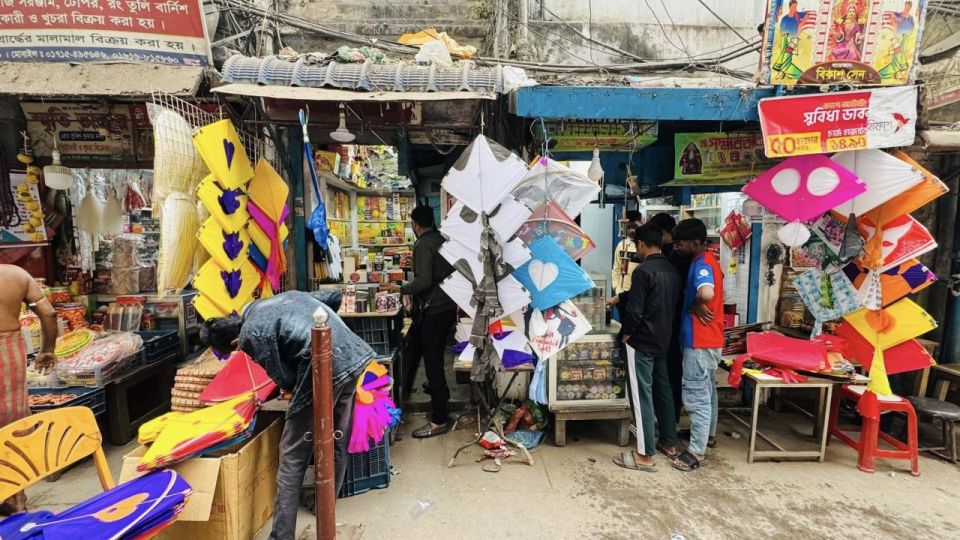
Popularly recognised as the kite-flying festival, Sakrain has already transformed the narrow alleys, rooftops and markets of the old city.
By day, the sky is expected to fill with colourful kites, while from evening until midnight, the Buriganga riverbank areas will glow with fireworks and flying lanterns.
A visit to Sutrapur, Nawabpur, Dhupkhola, Shyambazar, Shankhari Bazar, Tantibazar, Lakshmibazar, Sadarghat, Gandaria, Lalbagh and Chawk Bazar reveals a distinctly festive mood.
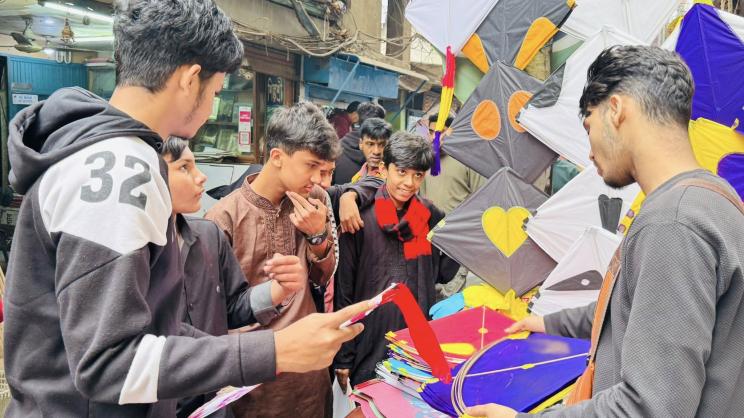
Kite trading is brisk, alongside preparations to decorate rooftops with bamboo frames, boxes and temporary canopies.
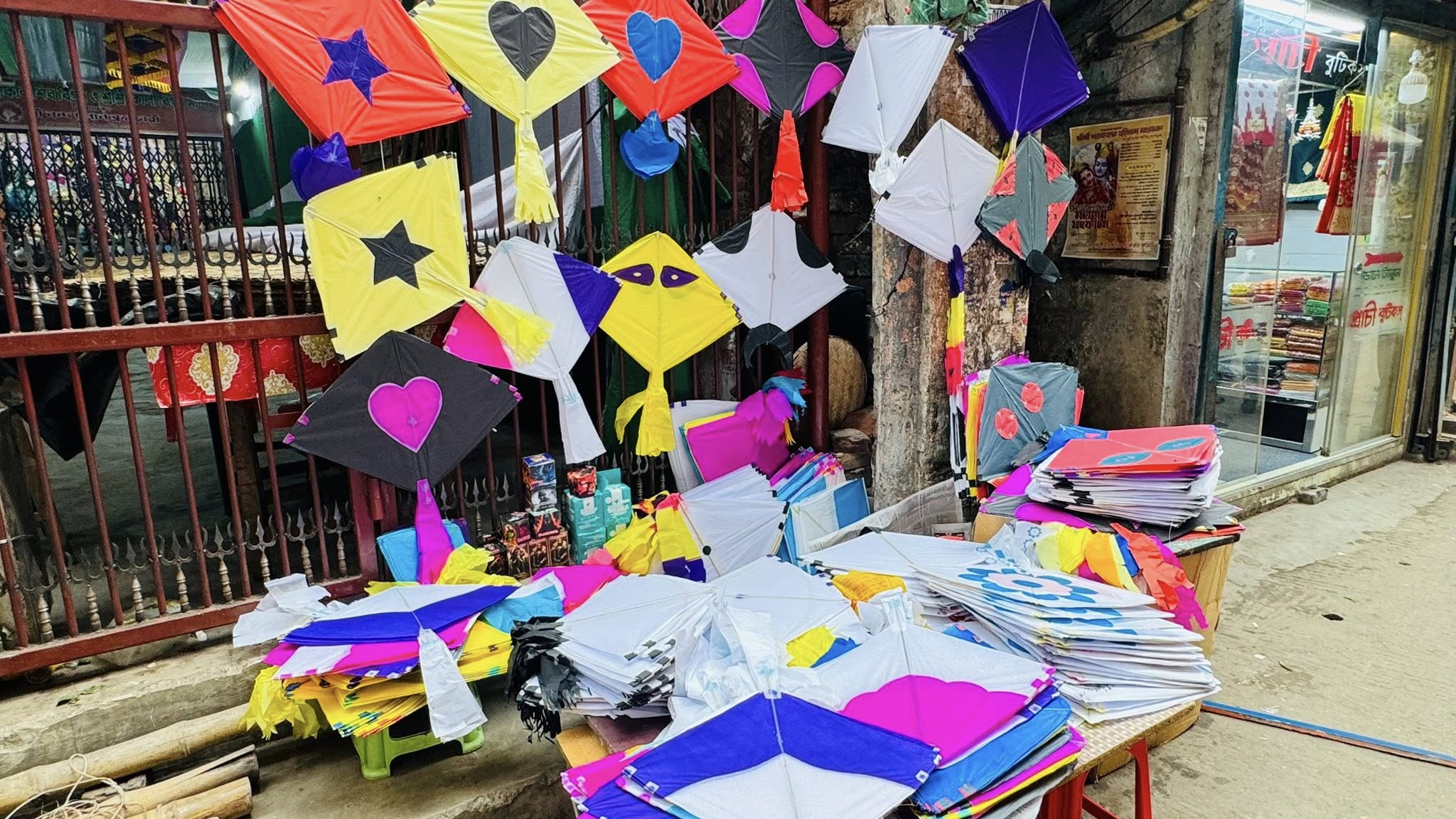
Shops are offering a wide range of locally named kites, including Chokhdar, Rokdar, Gorudar, Machlenja, Fitalenja, Chantara and box kites.
Shankhari Bazar remains a major hub, selling designs such as Chashmadar, Kautadar, Pankhiraj, Prajapati, Eagle, Bat, Love kites, Tekka and Maladar, along with several foreign-patterned varieties. Prices range from Tk5 to Tk25 for ordinary kites, while special designs sell for between Tk100 and Tk300.
Demand for spools and strings has also risen. Wooden, iron and Chabadi spools are priced between Tk100 and Tk1,000, while strings such as Dragon, Bhut and Bilai cost between Tk50 and Tk500.
Fireworks—including five-shot and twelve-shot items, Kadam Phool, Tarabati, rockets and lanterns—are available, though many traders sell them discreetly to avoid police scrutiny.
Seventh-grade student Taim, who came to buy kites, said Sakrain feels like Eid. “We wait the whole year for this day. I’ve bought many kites. It’s going to be a lot of fun,” he said.
Saim Ahmed, who travelled from Postogola, said he came mainly for his son.
“We flew kites when we were young. Now it’s their turn. I just want to make my child happy,” he said.
Residents say Sakrain is marked by small family gatherings alongside kite flying. “We also arrange children’s games in our area,” said Shyam Narayan, a long-time resident of Old Dhaka.
Another resident, Mizanur Rahman, urged restraint during celebrations.
“There should be control over loud sound systems and risky fire activities. We want to celebrate peacefully with our families,” he said.
Traders, however, say sales have not fully recovered. Many describe the ancestral business as slower than in previous years, with a comparatively subdued festive atmosphere. Still, they remain hopeful with the festival approaching.
“Sales are average, not like before, but wholesale buying is slightly better,” said Dilip Nag, a shopkeeper at Pabitra Bhandar in Shankhari Bazar.
Historical records suggest Sakrain began in Old Dhaka around 1740 during the Mughal period, under Naib-e-Nazim Nawajesh Mohammad Khan. Over the centuries, it has evolved into one of the city’s most cherished cultural festivals, celebrated not only in Bangladesh but also across parts of South and Southeast Asia.