

June 10, 2026
PHNOM PENH – The upcoming ASEAN-Russia Commemorative Summit, scheduled for June 17–19, in Kazan, Russia, arrives at a critical juncture for both regional architecture and global diplomacy. Marking the 35th anniversary of ASEAN-Russia dialogue relations and eight years of their Strategic Partnership (established in 2018), this high-level gathering offers a unique window of opportunity to recalibrate engagement.
For Cambodia and its fellow ASEAN member states, navigating accelerated great-power rivalry, rising geopolitical fragmentation and the deep securitisation of trade requires labyrinthine strategic pathways to protect sovereignty, foster economic growth and maintain policy autonomy. Concurrently, the regional primacy of ASEAN is being challenged by the emergence of minilateral security alliances (such as AUKUS and the Quad), triggering vital debates over ASEAN’s enduring utility as a central diplomatic convening platform.
I. The Kazan Summit: A Multilateral Framework for Next-Gen Cooperation
While individual bilateral relationships within the bloc vary, the formal multilateral agenda for the 2026 Kazan Summit focuses on systemic, institutional frameworks designed to bypass geopolitical fractures.
Senior officials have finalised a core agenda centred on three pillars.
First, with the foundational 2021–2025 Comprehensive Plan of Action (CPA) expiring, negotiations are underway for a successor New CPA (2026–2030) to guide political, security, and socio-humanitarian ties. Simultaneously, the summit will initiate a 10-year Strategic Program on Trade and Investment Cooperation (2026–2035).
Second, Moscow is pushing into high-tech sectors where ASEAN is rapidly expanding. The summit will likely focus on joint initiatives regarding smart city technologies, cybersecurity frameworks, digital economy architecture and concrete workarounds for financial transactions using alternative messaging systems and national currencies.
Third, Russia most probably will reiterate its support for “ASEAN Centrality” in the Asia-Pacific region, serving as a rhetorical counterweight against Western-led minilateral alignments.
Furthermore, amid global supply chain unpredictability, the summit aims to secure stable logistics corridors for agricultural exports (fertilisers and grains) to Southeast Asian markets. Nevertheless, because the bloc operates strictly on consensus, official summit statements will likely remain highly economic and functional, focusing entirely on pragmatic mutual benefits.
II. The Subregional Crucible: Managing the Cambodia-Thailand Border Peace Architecture
It is easy to gather during times of regional stability to discuss grand, aspirational projects. However, the true efficacy of an international organisation is forged in the crucible of active crises. Today, ASEAN’s institutional utility is being fundamentally tested by its historical inability to decisively resolve localised bilateral friction points, such as the flare-up of tensions along the Cambodia-Thailand border.
Mainland Southeast Asia remains a strategically sensitive subregion where domestic political shifts, unresolved border demarcations, and major power interventions intersect. The recent escalation demonstrates how deep-seated, historical territorial conflicts — rooted in the complex colonial mapping and border demarcations of 1904 and 1907 — can mutate into regional security and humanitarian hazards.
The failure of various external diplomatic initiatives to broker a sustainable, permanent peace framework has left a conspicuous diplomatic vacuum. Washington has previously fallen short of yielding a sustainable structural framework for long-term peace. Beijing, despite its massive regional clout and “iron-clad” friendship with Phnom Penh, has appeared hesitant to make a bolder, definitive political intervention. France’s efforts to provide historical clarity by sharing colonial-era mapping details from the Archives Nationales d’Outre-Mer proved insufficient to break the diplomatic deadlock.
When the border conflict escalated into armed clashes and a humanitarian crisis in late July 2025, Russia demonstrated its capacity for rapid, balanced diplomatic outreach. The Russian Ministry of Foreign Affairs promptly called for restraint and peaceful dialogue, emphasising that any solution must mirror the “spirit of unity and solidarity inherent in ASEAN”.
Simultaneously, Moscow backed its rhetoric with active fieldwork. Russian diplomatic representatives personally visited displaced person camps in the Oddar Meanchey and Siem Reap provinces to directly assess the humanitarian fallout. By actively welcoming the ceasefire and urging both capitals to adhere strictly to the armistice, Moscow positioned itself as an objective actor capable of engaging both sides without historical baggage.
III. Russia’s Evolving Asian Pivot: The Strategic Context
The structural breakdown of Russia’s relations with the West – accelerated by sanctions following the 2014 Crimea referendum and the complete diplomatic rupture in 2022 has fundamentally transformed Moscow’s foreign policy calculus.
The adoption of the revised Russian Foreign Policy Concept in March 2023 formalised a structural pivot, elevating the Global South, BRICS, the Shanghai Cooperation Organisation (SCO), and Southeast Asia to the centre of Moscow’s strategic planning. While trade linkages with Beijing and New Delhi have naturally expanded, the Mekong subregion represents a vital frontier for establishing a truly multipolar architecture.
IV. The Reality of Fragmented Bilateralism and Strategic Pragmatism
Russia operates a highly fragmented, three-tiered regional strategy that shifts fluidly from deep defence integration to strict economic transactionalism.
The first group of cooperating partners includes Vietnam and Myanmar. Vietnam remains the bedrock of Russia’s presence in Southeast Asia, reinforced by an elevated “Comprehensive Strategic Partnership”. Bilateral trade has surged toward $5 billion, anchored by joint energy ventures (Vietsovpetro) and a landmark 2026 agreement with Rosatom to revive Vietnam’s nuclear energy sector. While Hanoi strictly maintains its multi-vector, neutral “Bamboo Diplomacy”, it resists unilateral sanctions on Moscow. Since the 2021 military takeover, Naypyidaw and Moscow have formed a symbiotic alliance born out of shared global isolation, formalised by a comprehensive five-year military cooperation pact signed in early 2026.
The second group of pragmatic Economic Partners includes Indonesia, Malaysia, Thailand and Laos. With Indonesia under President Prabowo Subianto, trade skyrocketed by over 20% to reach $4.8 billion. As a full BRICS member, Jakarta acts as an economic diversification hub for Moscow, focusing on agricultural trade, LPG supplies and civil nuclear energy partnerships. Malaysia approaches Moscow with cold economic pragmatism, firmly rejecting unilateral sanctions to protect its high-tech and industrial supply chains. As a BRICS “partner country”, Kuala Lumpur is exploring alternative payment mechanisms to bypass Western financial blocks. Thailand maintains highly balanced, transactional ties with Russia. Bangkok acts as an economic safety valve for Moscow via its booming tourism sector, with millions of Russian travellers supporting the Thai economy. Geopolitically, Thailand is a BRICS “partner country” looking to expand agricultural logistics ahead of the Kazan summit. Laos maintains deeply rooted, historical ties with Moscow, relying heavily on Russia for military equipment, technician training and discounted petroleum products to stabilise its fragile economy.
The third group of Distant and Cautious States includes Singapore, The Philippines, Brunei and Timor Leste. Singapore is unique within ASEAN as the only state to impose direct, unilateral sanctions against Russian banks following Russia’s 2022 special military operation in Ukraine. Political relations are practically frozen. With the Philippines bilateral relations are heavily strained under the administration of Ferdinand Marcos Jr., who has firmly realigned Manila with the US. With Brunei bilateral ties are minimal but cordial, shaped by Brunei’s strict adherence to absolute regional neutrality and independence as an energy exporter. Relations with Timor-Leste have historically thin and constrained by dependency on Western and Australian developmental aid. However, its recent full accession to ASEAN has forced a diplomatic shift, participating as a full member in the ASEAN-Russia Senior Officials’ Meeting in Kazan in April 2026.
Cambodia’s approach is marked by a careful dichotomy between principled international stance and functional diplomacy.
Under Prime Minister Hun Manet, Phnom Penh maintains a steadfast international position upholding state sovereignty and the UN Charter — frequently voting to condemn territorial violations at the United Nations. Concurrently, Phnom Penh keeps the door open for practical, non-sanctioned economic bilateral ties. Current relations focus on modest trade in textiles and agriculture, alongside ongoing historical debt settlement discussions.
V. Strategic Mechanics: The Cambodia-Thailand-Russia Nexus
To successfully engage as a constructive partner in the region, Russia may need to balance its unique historical levers in Phnom Penh with its growing commercial relationship with Bangkok.
The economic relationship between Moscow and Phnom Penh remains largely aspirational and asymmetric; Russia ran a negative trade balance exceeding $179 million with Cambodia in recent cycles. However, Russia possesses a profoundly resilient asset in Cambodia: human capital.
Over 8,000 Cambodian nationals have graduated from Soviet and Russian academic institutions. A significant portion of these alumni now occupy senior ministerial positions, influential bureaucratic offices and dominant commercial roles within contemporary Cambodian politics.
The Russian House and Embassy in Phnom Penh actively engage this network, maintaining a deep foundation of institutional trust that transcends pure economic transaction. While Cambodia has not explicitly requested external mediation — relying heavily on the US market (which consumes roughly 40% of its exports) and its iron-clad friendship with China — the Cambodian leadership remains open to alternative multilateral avenues that protect its sovereign interests.
Concurrently, Russia enjoys a strengthening relationship with Thailand, backed by robust tourism and growing energy reliance. Historically, Thai political factions have occasionally leveraged nationalist friction with Cambodia to consolidate domestic, military-backed leadership. Russia, as an established global military power, can offer Bangkok an alternative, prestigious path: winning political points through expanded military-technical cooperation, defence modernisation and strategic dialogue with Moscow, rather than through border friction.
The Kazan Matrix for Face-Saving Diplomacy
In Asian statecraft, the cultural paradigm of “saving face” is paramount. Direct bilateral communication between Phnom Penh and Bangkok has frequently stalled due to domestic political optics. They require an external, honourable venue to resume engagement, and Russia can provide exactly that without triggering accusations of heavy-handed intervention.
The timing of the Kazan Summit matches perfectly with ASEAN’s internal leadership rotation. The Philippines is currently leading ASEAN’s peacebuilding agenda. By offering a supportive diplomatic venue in Kazan, Russia directly reinforces Manila’s leadership. Singapore and Thailand are slated to assume the upcoming ASEAN chairmanships in 2027 and 2028, respectively. It is in Bangkok’s direct institutional interest to resolve its immediate border liabilities before taking the helm of the regional bloc. Russia can pitch the Kazan discussions as a sophisticated preparatory platform to clean the slate for Thailand’s upcoming term.
VI. Policy Recommendations for Cambodia-Russia Engagement
To maximise its impact at the Kazan Summit and deliver tangible benefits to mainland Southeast Asia, the partnership should introduce a comprehensive, actionable socio-economic and technical agenda.
Cambodia is currently navigating a crucial development transition, preparing to graduate from the Least Developed Country (LDC) category into a developing economy. To build stronger state institutions and clean up its international image regarding regional cyber-scam networks, Phnom Penh requires robust technological partnerships. Russia can offer specialised human capital training and digital governance solutions to help Cambodian law enforcement combat transnational cybercrime.
Recognising that Cambodia is actively working to modernise its power grid (evidenced by recent $52 million clean energy loans from the Asian Development Bank), Russia’s Rosatom can expand on its existing Nuclear Information Center initiatives in Phnom Penh. Offering long-term technical training in civil nuclear energy, research reactors and high-tech infrastructure can build lasting technical ties without violating international regimes.
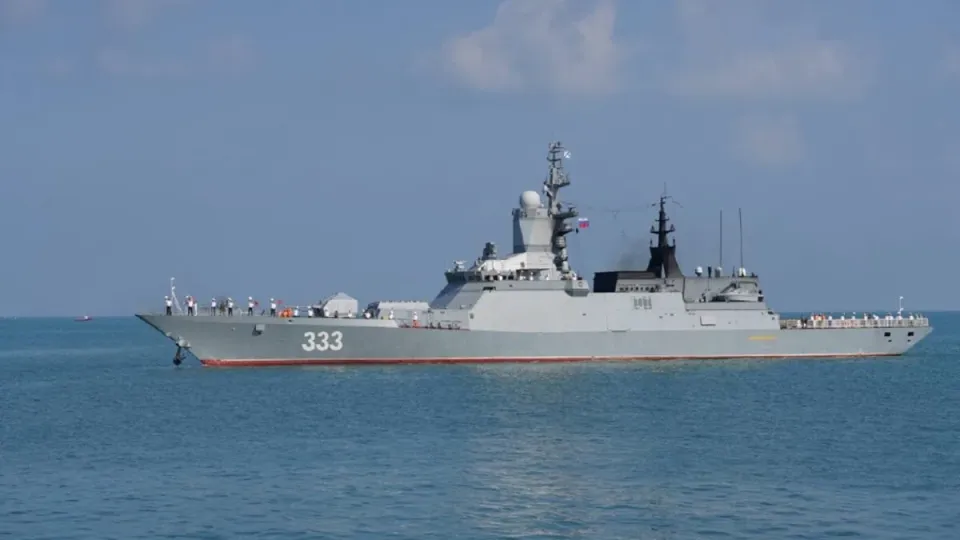
While direct military projection in the Gulf of Thailand is naturally limited, Russia can strategically expand its military-technical footprint through non-traditional security exercises. Building on the 2023 Sihanoukville port call of the Admiral Panteleyev and the June 2024 Land Forces Memorandum on Cooperation, focus should may be placed on a) joint exercises focused on counter-terrorism, maritime piracy and transnational drug trafficking mitigation; b) intelligence-sharing frameworks through the ASEAN Regional Forum (ARF) and the ASEAN Defence Ministers’ Meeting-Plus (ADMM+).
Leveraging Russia’s resilience as a leading energy and agricultural exporter, the summit may design joint emergency response mechanisms. This positive agenda can focus on food security, agricultural technology transfers and climate-induced disaster relief — areas where Cambodia, Laos, and Myanmar face shared subregional vulnerabilities.
Conclusion: A Multi-Vector Path Forward
The Kazan Summit provides a timely opportunity for Russia to assert itself as a constructive partner in a changing international environment, and for Cambodia to reinforce its multi-vector foreign policy. By providing a neutral, prestigious backdrop that helps stabilise subregional friction between Cambodia and Thailand, the Kazan framework can help preserve the practical relevance of the ASEAN format.
Ultimately, by transforming a long-standing political dialogue into a tangible victory for regional stability and economic diversification, Cambodia and its partners can demonstrate the practical value of a balanced, multipolar world order where regional sovereignty is respected, and crises are managed through mutual respect.
Dr. Bulat Akhmetkarimov is an associate professor of International Relations, based in Phnom Penh, Cambodia. The views and opinions expressed are his own.