

December 17, 2025
SEOUL – The South Korean government is considering hosting a large-scale K-pop concert in China early next month, local media reported Monday, raising renewed speculation over a possible easing of Beijing’s restrictions on Korean cultural content.
President Lee Jae Myung is reportedly weighing a visit to China in January as a reciprocal gesture following his recent summit with Chinese President Xi Jinping on the sidelines of the Asia-Pacific Economic Cooperation meeting held in Gyeongju, North Gyeongsang Province, last month. A K-pop concert held in China would widely be viewed as a symbolic step toward lifting China’s ban on Korean culture. Imposed after Seoul’s deploymed the US THAAD missile defense system in 2016, the ban effectively halted K-pop concerts, television appearances and other cultural exports in the country for years.
Industry sources suggest the concert could be linked to Lee’s potential visit, though no official confirmation has been made.
The presidential office denied that any plans had been finalized, stressing that there was “nothing confirmed” regarding the event.
Still, the four major K-pop agencies — Hybe, JYP Entertainment, SM Entertainment and YG Entertainment — on Monday told The Korea Herald that they had received inquiries from the government regarding artists’ availability during the period in question.
All four agencies provided the same response, saying “There was no formal casting or confirmed event, but there were brief inquiries about artists’ schedules in January.”
Lee has repeatedly emphasized the importance of expanding cultural cooperation and people-to-people exchanges between South Korea and China. In a written interview with China’s Xinhua News Agency last month, he said the two countries should strengthen collaboration in areas such as culture and the environment, while continuing to expand human exchanges to improve the quality of life.
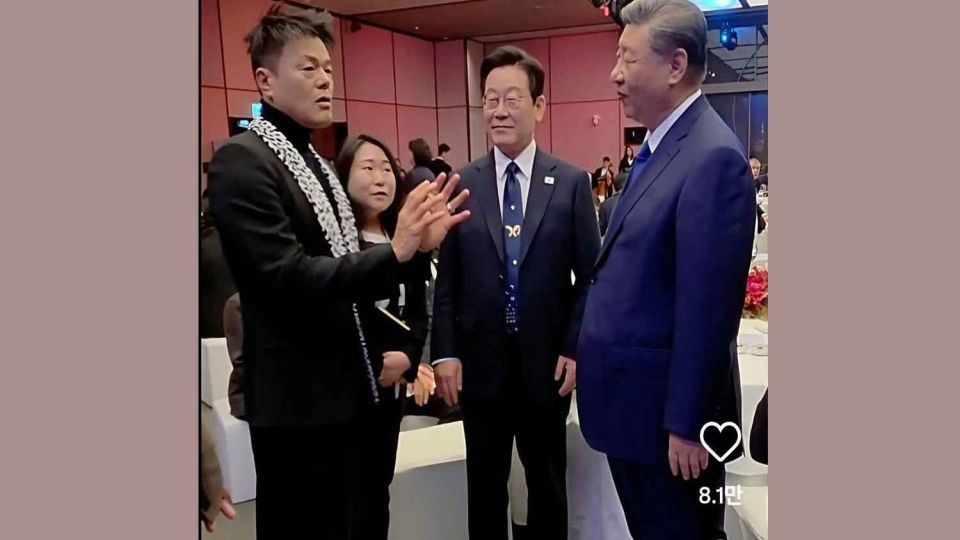
During a state banquet held in connection with the APEC meetings in October, Lee introduced J. Y. Park, cochair of the Presidential Committee on Popular Culture Exchange, to President Xi. Kim Young-bae, a lawmaker from the National Assembly’s Foreign Affairs and Unification Committee who also attended the banquet. He later wrote on social media that Xi had expressed interest in hosting a large-scale performance in Beijing and appeared to instruct Chinese Foreign Minister Wang Yi accordingly.
Kim added that he hoped the exchange could mark a turning point not only for easing restrictions but also for the broader expansion of Korean cultural activities in China.
The Presidential Committee on Popular Culture Exchange, however, played down expectations then, saying the exchange between Xi and Park amounted to a general greeting and polite remarks during a diplomatic event.
“It would be premature and excessive to interpret it beyond that,” the committee said, adding that the improved atmosphere following the summit could nonetheless pave the way for more active cultural exchanges in the future.