

July 1, 2026
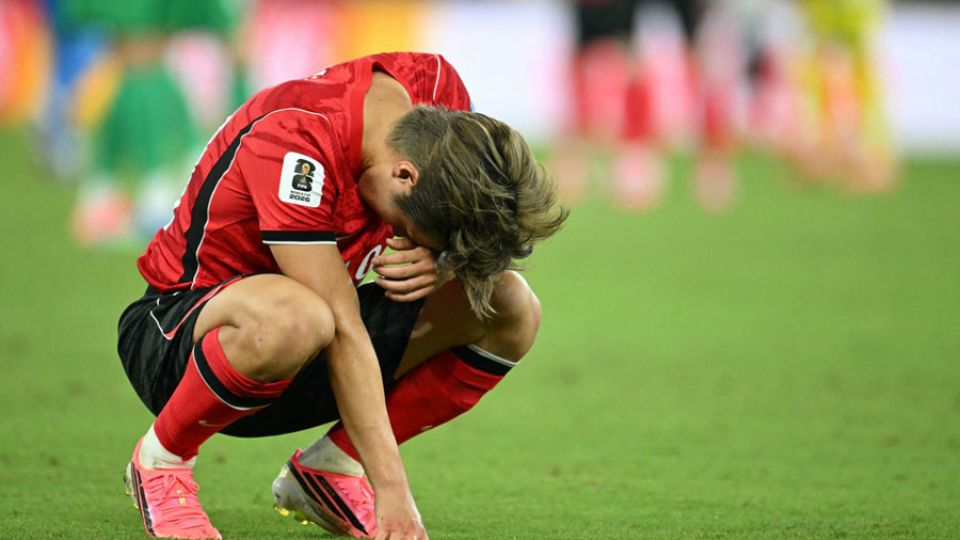
SEOUL – The shock from South Korea’s early exit from the World Cup is reverberating far and wide, with President Lee Jae Myung calling for a national inquest into the national team’s leadership and the Korea Football Association (KFA).
The deep disappointment has cast a spotlight on entrenched problems relating to the governance of one of South Korea’s most popular sports.
Many lament the Taegeuk Warriors’ failure to make the knockout stages as an unconscionable squandering of talent in what is widely regarded as its strongest-ever squad.
“When favouritism and cronyism take precedence over competence in selecting a commander, the result is as predictable as fire burning paper,” President Lee said in an X.com post on June 28.
Expressing “utter bewilderment” at the unexpected outcome, which he said appeared to be “a failure of organisation and personnel”, Lee also called for an investigation into the team’s failings and a reform of the country’s football administration.
The Taegeuk Warriors were expected to make it out of the group stage but were foiled in the final group match by a surprise defeat to South Africa on June 24, a team ranked more than 20 spots lower in the world rankings.
South Korea also lost to co-host Mexico after starting the competition with a 2-1 victory over the Czech Republic. They eventually finished third in Group A, but failed to qualify for the Round of 32 as one of top-eight third-ranked teams with its inferior goal difference.
National team coach Hong Myung-bo’s resignation in the aftermath has failed to quell public anger.
Images of a convenience store and a restaurant displaying signs prohibiting Hong’s entry have been spreading online, while police are investigating online death threats levelled against the coach.
South Korean soccer fans told The Straits Times that Hong, 57, was never right for the job.
This was despite his legendary status as a defender who represented the country at four consecutive World Cups between 1990 and 2002, even captaining the team to its historic fourth-place finish on home soil in 2002.
Hong Seong-hun, 54, who runs a table tennis equipment business in Seoul, watched all three matches live, as matches kicked off in the morning in South Korea.
He told ST he grew increasingly exasperated with each match, spending the whole time cursing coach Hong’s decisions.
“It was the most uninspiring football I’ve ever watched. The frustration is like stuffing yourself with 10 sweet potatoes without a single sip of soda afterwards – the feeling of being completely clogged up and suffocated,” said the avid football fan.
The national coach’s decision to bench national captain Son Heung-min in the crucial match against South Africa was a major point of contention. That was the first time Son, in his fourth World Cup, had not started a World Cup match.
Affectionately known as “Sonny” and hailed as the greatest Asian footballer of his generation, Son was the first Asian player to win the Premier League Golden Boot while playing for Tottenham Hotspur.
Now plying his trade for Los Angeles FC since August 2025, Son is regarded as the emotional leader and “talisman” of the national team, revered for his leadership, prolific scoring record and a knack for being able to change the course of a match.
Yet, under national team coach Hong, the ace struggled to make his usual impact. Son was also substituted in the second half of South Korea’s matches against the Czech Republic and Mexico.
Office worker Park Young-min, 36, has fond memories of South Korea’s celebrations during their historic 2002 World Cup run and had expected the national team to at least reach the Round of 32 this year.
But expectation soon turned into disappointment and anger.
“When I went for lunch with my colleagues (after the match against South Africa), everyone in the restaurant was talking about football. People were saying that it was so embarrassing… you could feel the anger everywhere, online, in the office, and even over lunch,” said Park.
Instead, South Koreans can only look ruefully at neighbouring Japan’s progress to the knockout stages.
Both were seen as Asia’s best teams at the World Cup. Japan’s Samurai Blue are often admired for their technical sophistication and well-developed football ecosystem, while the Taegeuk Warriors have earned a reputation for their physical intensity and mental resilience.
While Japan made it past the group stage to face five-time champions Brazil, South Korea’s premature elimination has been described by local media as the country’s worst-ever World Cup performance and a “national humiliation”.
After all, the 2026 squad boasts a core of players starring for some of Europe’s biggest clubs, such as Bayern Munich defender Kim Min-jae and Paris Saint-Germain midfielder Lee Kang-in.
KFA chairman Chung Mong-gyu, who has led the association for the past 13 years, is also under intense scrutiny. He is also the chairman of real estate developer and construction company HDC Hyundai Development Company.
Chung’s detractors accuse him of running the KFA like his personal fiefdom.
The 65-year-old has faced criticism over his alleged role in the controversial appointment of Hong as national team coach in 2024, with a government audit unearthing multiple irregularities in the coach-selection process.
Amid mounting pressure, Chung had earlier announced in May that he would step down in July.
Another football fan, philosophy professor Chung Ki-sun, 64, fears that South Korean football could be on a path to long-term decline, with the KFA at the heart of the rot.
“The decline stems from arbitrary decision-making, reliance on personal connections in personnel appointments, and incompetent administration,” he said.
Without meaningful reform, he warned that South Korean football risks becoming “little more than a paper tiger in Asia”.