

June 17, 2026
TOKYO – There is a growing trend to utilize wasabi fields — located in mountainous areas renowned for their pristine spring water and lush greenery — as hubs for regional revitalization. As Japanese cuisine grows in popularity overseas, these fields are gaining more attention from foreign tourists.
“The way you grind it changes its sharp flavor,” said Tatsuya Tsunoi, a 40-year-old wasabi farmer in Okutama, Tokyo.
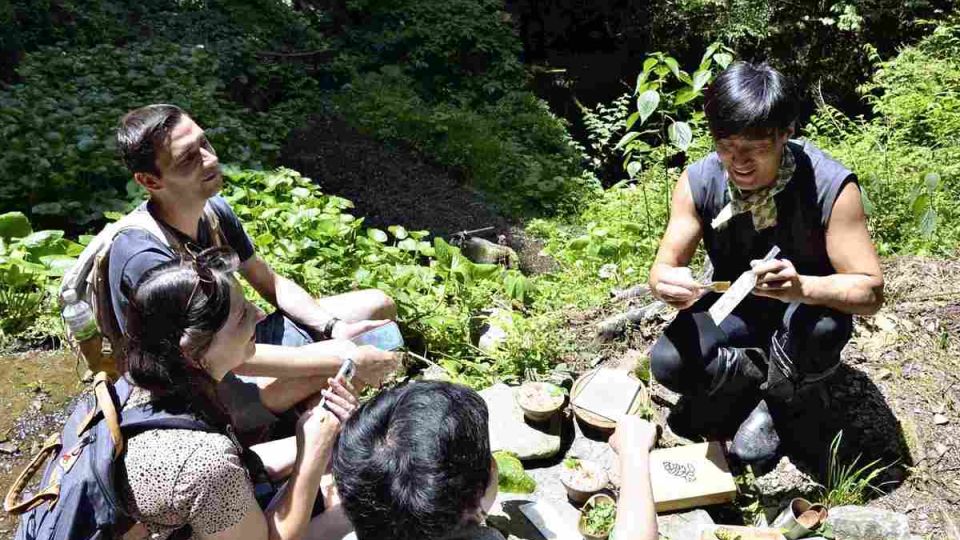
In mid-May, he spoke with tourists from France at a terraced wasabi field nestled in the mountains of Ome, Tokyo. As Tsunoi grated the freshly harvested water-grown wasabi with a specialized tool, a sharp, refreshing aroma filled the air. The tourists immediately placed some on their rice and took a bite.
Tsunoi and his older brother, Hitoshi, 43, who moved to the town in 2016, leased wasabi fields that had fallen into disrepair due to a lack of successors and natural disasters, and revitalized them by rebuilding stone walls and taking other measures.
In addition to supplying fresh wasabi to Japanese and French restaurants in central Tokyo, the brothers have been offering tours of their wasabi fields since 2019. Limited to one group per day, the tours aim “to share the charm of the Okutama region.”
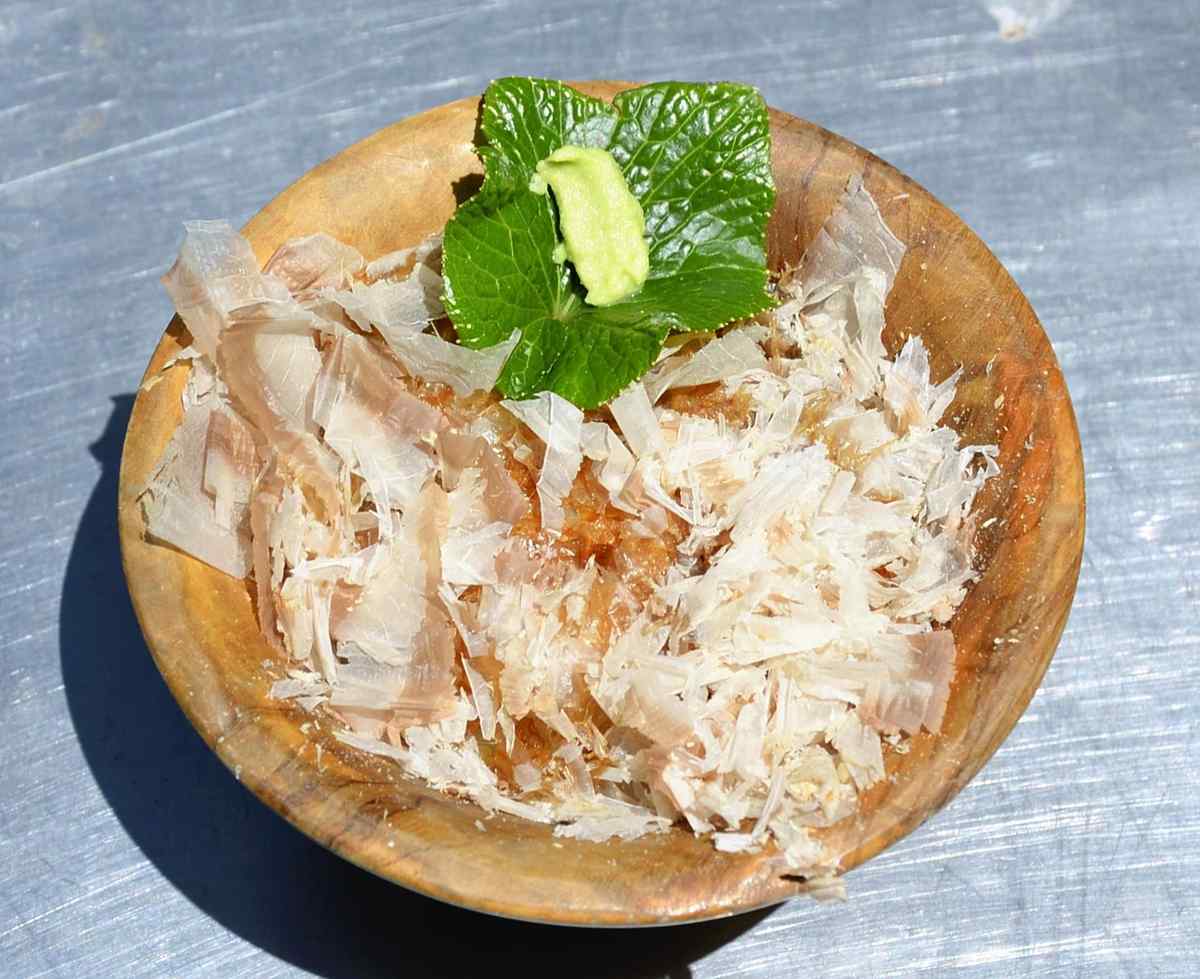
Freshly harvested wasabi grated and served over rice with shaved bonito flakes. PHOTO: THE YOMIURI SHIMBUN
Half of the tour participants are foreign tourists, including from Europe, the United States and Southeast Asia. The tours are reportedly gaining popularity on social media because they allow visitors to enjoy a harvesting experience while immersing themselves in the rich natural surroundings and deepening their connections with local residents.
“I love Japanese food, but I rarely get to eat fresh wasabi,” said Hoy Oceane, one of the participants. “It was very interesting to learn how to eat it and how it’s grown. I want to tell my friends about it.”
Water-grown wasabi is cultivated in wasabi fields. Production has long been on a downward trend due to limited growing regions — which require high-quality spring water and a cool climate — and a decline in producers caused by a shortage of successors.
However, overseas demand has increased following 2013 designation of washoku cuisine as an Intangible Cultural Heritage of Humanity by UNESCO and the 2018 designation of “Traditional Wasabi Cultivation in Shizuoka” as a Globally Important Agricultural Heritage System by the Food and Agriculture Organization of the United Nations.
According to a survey by the Agriculture, Forestry and Fisheries Ministry, the amount of water-grown wasabi produced in 2024 reached 1,034 tons, an increase of about 30% from the previous year. As efforts to revive wasabi fields spread, the number of foreign tourists interested in not only eating wasabi but also visiting its production areas is growing.
Azumino in Nagano Prefecture, which boasts one of the highest wasabi production volumes in the country, is actively promoting itself to foreign tourists. Since fiscal 2023, the city has set up dedicated booths at Japanese promotional events in Singapore and invited travel agencies and influencers from the country to visit the city.
Daio, which operates the Daio Wasabi Farm in Azumino, acquired the naming rights to a soccer stadium in Belgium in 2023 to promote wasabi. The number of foreign visitors to the farm is growing, accounting for about 30% of the nearly 1 million visitors last year, and their countries of origin are becoming more diverse.
“We want visitors to explore the nearby attractions as well, thereby enhancing the appeal of the entire production region,” said president Daisuke Fukazawa, 43.
At the Izu Wasavisitor Center in Izu, Shizuoka Prefecture — a major production area for water-grown wasabi — staff are reminding visitors of proper conduct in response to the increase in tourists touring the wasabi fields, including prohibiting littering and entering the fields.
“By thoroughly enforcing proper etiquette, we’ve been able to welcome tourists without any incidents,” said the center director Takaaki Ishii, 70.
“Wasabi, a symbol of Japanese cuisine, has great potential as a tourism resource,” said Prof. Nobuhiko Tanaka of Tokai University’s Faculty of Tourism. While many regions have not fully utilized their wasabi fields as tourist destinations because they are located deep in the mountains, it would be advisable to consider creating a system where the entire community welcomes visitors, such as by converting vacant houses in the area into guesthouses or restaurants.”